
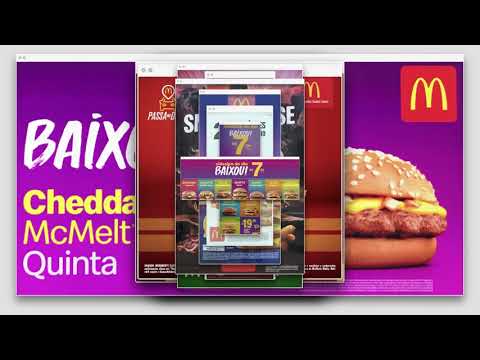
Remember when watching a commercial meant sitting back and passively absorbing a message? Those days are fading fast. Today's most innovative brands understand a fundamental truth: people don't just want to watch stories—they want to live them.Interactive storytelling in advertising transforms viewers into participants. It turns a bus stop into a window to another world, a furniture catalog into your living room, and a competitor's billboard into a treasure map. By inviting us to play, explore, and even destroy, these campaigns create memories that last far longer than any 30-second spot. Let's dive into four iconic examples that redefined what advertising can be.🔥 Burger King's "Burn That Ad": When Rivalry Became a GameIn the history of competitive advertising, few campaigns have been as audaciously brilliant as Burger King's 2019 "Burn That Ad" in Brazil. It took the age-old burger war and turned it into an interactive game with a delicious reward.The story you control: Here was the proposition: download the Burger King app, point your phone at any advertisement from their rival McDonald's, and watch the magic happen. On your screen, the competing ad would burst into digital flames, burning away to reveal a coupon for a free Whopper. Burger King didn't just ask you to choose their brand; they invited you to actively participate in the rivalry, to become an agent in their ongoing battle against the golden arches.The genius of "Burn That Ad" was its perfect alignment with Burger King's brand identity. They've always positioned themselves as the rebellious, edgy alternative. This campaign didn't just say that—it proved it by gamifying the conflict. Every McDonald's billboard, bus ad, and poster became a potential Burger King treasure chest. Commuters walked down the street with their phones out, scanning for targets like hunters in a digital game.By offering an immediate, tangible reward—a free sandwich—the campaign drove both app downloads and foot traffic. It transformed passive observers into active participants, creating a shared experience that generated massive buzz far beyond Brazil. "Burn That Ad" understood that the most powerful stories are the ones we help tell.🔗 Watch the "Burn That Ad" case study here:
🖥️ Apple's "1984": The Story That Invited You to a Revolution
Before augmented reality and smartphone apps, there was pure cinematic storytelling. And in 1984, Apple crafted a narrative so powerful that it didn't just tell a story—it invited an entire generation to join a movement.
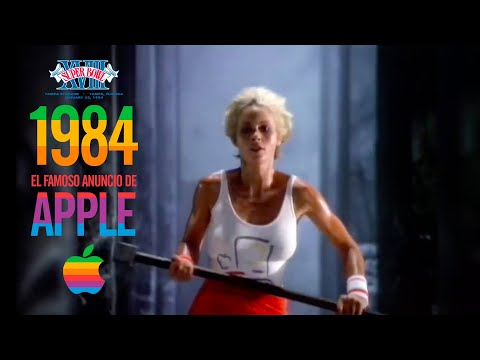
The story you join: Directed by Ridley Scott, fresh off Blade Runner, the "1984" commercial aired exactly once during the Super Bowl. It depicted a dystopian future of gray, mindless conformity—an army marching in lockstep toward a giant screen where a menacing "Big Brother" figure delivered propaganda. Then, a vibrant young woman in athletic wear ran down the aisle, swung a sledgehammer, and shattered the screen. The narrator announced: "On January 24th, Apple Computer will introduce Macintosh. And you'll see why 1984 won't be like '1984.'"
This wasn't just a commercial; it was an invitation. Apple positioned itself not as a computer company, but as the force that would liberate humanity from conformity. By using George Orwell's iconic dystopia as a backdrop, they created a narrative that every viewer instantly understood. The choice was clear: remain a faceless drone, or join the revolution.
"1984" invited viewers to become part of something bigger. It didn't just sell a product; it sold an identity. And by airing it only once, Apple turned the commercial itself into an event—a shared cultural moment that people discussed for decades. The story didn't end when the screen went black. It continued in every conversation, every news article, and ultimately, in every person who bought a Macintosh and felt they were part of the rebellion.
🔗 Watch Apple's legendary "1984" commercial here:
🛋️ IKEA Place: Your Home, Your Story
The most personal interactive stories are the ones we tell about ourselves. And when it comes to our homes, we're all storytellers. IKEA understood this with IKEA Place, an app that didn't just show you furniture—it let you imagine your own life in new ways.
The story you write: IKEA Place uses augmented reality to let users visualize true-to-scale 3D furniture models in their actual rooms. Point your phone at your empty corner, select a sofa, and watch it appear on your screen, perfectly rendered and casting realistic shadows. You can walk around it, view it from different angles, and see how it looks in your unique lighting.
This is interactive storytelling at its most personal. IKEA doesn't tell you what your home should look like. Instead, they give you the tools to tell your own design story. Will that bookshelf go here? Does this table work with my chairs? The app lets you experiment, play, and discover—all without moving a single piece of furniture.
By removing the uncertainty from furniture shopping, IKEA Place builds trust and empowers customers. It transforms the shopping experience from a guessing game into a creative act. And in doing so, it ensures that every piece of furniture purchased becomes part of a story the customer helped write.
🔗 Watch IKEA Place in action here:

The Power of Participation
What connects these four seemingly different campaigns? Each one transforms the viewer from a passive recipient into an active participant.
Burger King made you an agent in their brand war. Pepsi Max dropped you into a moment of wonder. Apple invited you to join a revolution. IKEA empowered you to design your own space.
In each case, the story doesn't exist without you. Your action—scanning, watching, choosing, placing—completes the narrative. And that's why these campaigns are so memorable. We don't just remember the ads; we remember what we did.
As technology continues to evolve, the line between advertising and experience will only blur further. The brands that succeed will be those that understand a simple truth: people don't want to be told stories. They want to live them.
Discover effective strategies for conducting market research to enhance your campaigns. Learn how to gather insights that drive successful marketing decisions.
Discover how visuals enhance advertising effectiveness, capturing attention and driving engagement. Explore the science behind impactful visual strategies.
Discover the art of crafting a compelling brand story that connects with your audience. Learn essential tips to elevate your brand's narrative and impact.
Discover how augmented reality is revolutionizing advertising and transforming marketing strategies. Explore the impact of AR on consumer engagement and brand loyalty.
Discover the intriguing world of commercials that cleverly incorporate hidden messages. Uncover the secrets behind these captivating advertisements today!
Discover the fascinating world of unique advertisements that were released only once. Explore their impact and the stories behind these rare marketing gems.
Discover the power of reverse psychology in advertising. Explore iconic ads that cleverly influenced audiences and changed marketing strategies forever.
commercials that transcended advertising to become iconic pop culture catchphrases. Explore their impact and lasting legacy
Explore fascinating ads that foresaw the future of technology. Discover how visionary marketing shaped innovations we rely on today.
Discover commercials that cleverly break the fourth wall, engaging viewers in unique ways. Explore iconic ads that redefine advertising creativity.
Discover the evolution of commercials into captivating short films. Explore this new genre that blends storytelling with advertising in innovative ways.