
Have you ever watched a commercial from decades ago and felt a chill of recognition? That moment when a grainy, old advertisement describes a device or service that feels like it was pulled from your daily life is a strange and wonderful experience. It's a reminder that the future doesn't just arrive—it is imagined, designed, and sold to us long before it becomes real.Some of the most iconic tech predictions didn't come from science fiction novels or futuristic films. They came from television commercials. These were corporate visions, designed to sell products, but they accidentally (or intentionally) sketched out the blueprint of our modern world. Let's travel back in time to explore four remarkable advertising campaigns that peered into the future with astonishing accuracy, predicting everything from video calls and AI assistants to smart homes and our total dependence on mobile connectivity.🌐 AT&T's "You Will" Campaign (1993): The Internet Before the InternetIn 1993, the internet as we know it was still in its infancy. The World Wide Web had been publicly announced only two years prior, and most people had never heard of it. Yet, AT&T's iconic "You Will" campaign painted a vivid picture of a connected future that would take nearly two decades to fully realize.The vision: A series of cinematic commercials depicted ordinary people using technology that seemed magical at the time. A father scans a news article from a screen and sends it to his daughter's handheld device. A woman checks a map on a car dashboard to find the nearest ATM. A student researches an elephant for a school project without leaving her desk. A doctor consults with a patient via video call.The narration, delivered with calm certainty, asked: "Have you ever sent a fax from the beach? Have you ever borrowed a book from a library thousands of miles away? You will."What makes these ads so breathtaking in retrospect is their casual depiction of technologies that didn't exist commercially: videophones, GPS navigation, e-readers, tablets, telemedicine, and digital news delivery. They didn't just predict the features; they predicted the behaviors. The way we now instinctively reach for our phones to check maps, read books, or video chat with family is precisely the world AT&T envisioned over thirty years ago. It's a powerful testament to how advertising can shape not just consumer desires, but our collective imagination of what's possible.🔗 Watch the "You Will" campaign here:

🏠 Philco-Ford's "Year 1999 A.D." (1967): The Smart Home of the 20th Century
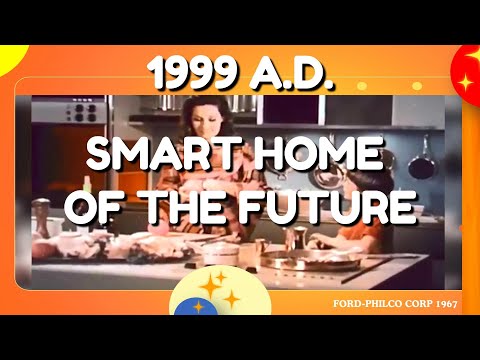
To find truly ambitious future-gazing, we need to go back even further. In 1967, to celebrate its 75th anniversary, Philco-Ford produced a 22-minute documentary film titled "Year 1999 A.D." It envisioned life in the "house of the future" at the turn of the millennium. For a world still decades away from the personal computer, its predictions are nothing short of astonishing.
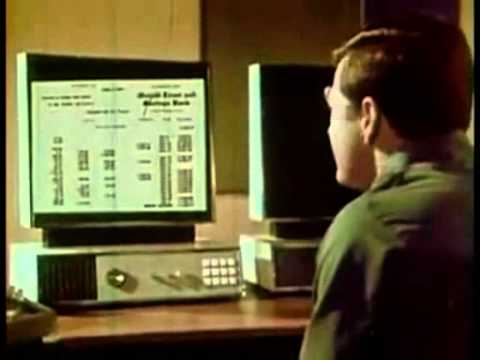
The vision: The film follows a typical American family living in a modular, automated home. The mother uses a "home computer" to manage the household. She shops for groceries by browsing items on a screen and placing orders electronically—a clear prediction of e-commerce and online grocery delivery. The father checks his family's bank balance and pays bills through the same system, anticipating online banking by nearly three decades.
Throughout the home, there are flat-screen monitors on walls, displaying news headlines, weather forecasts, and personal schedules. Family members communicate with each other via intercoms and video screens. The home is climate-controlled and energy-efficient, powered by a fuel cell.
What makes "1999 A.D." so remarkable is its optimistic, human-centered view of technology. It didn't just predict gadgets; it predicted how those gadgets would integrate into the rhythms of daily family life. The film correctly foresaw that the future of the home would be digital, connected, and screen-based. It imagined the infrastructure of our modern lives—e-commerce, online banking, digital information—with a clarity that is genuinely spooky for a film made during the Lyndon B. Johnson administration.
🔗 Watch the short film here:
🔗 Watch the full 22-minute documentary here:
📞 Motorola's "StarTAC" (1996): The Dawn of Total Mobility
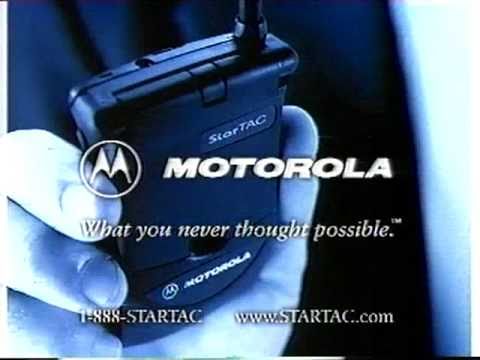
Sometimes, predicting the future isn't about imagining fantastical new technologies, but about recognizing the profound behavioral shift that a single product can unleash. In 1996, Motorola released the StarTAC, one of the world's first truly successful flip phones. But more important than the phone itself was the vision sold in its advertising.
The vision: The StarTAC commercials didn't focus on technical specifications or battery life. They focused on a single, powerful idea: absolute mobility and constant connectivity. The ads showed stylish, successful people taking calls anywhere—on the street, in cars, at events. The message was clear: you no longer needed to be at home or in the office to be reachable. You could take your life with you.
The tagline, "The official phone of the world," captured the ambition. Motorola was selling not just a communication device, but a new way of being in the world—one where you were always localizable, always available, always connected.
Looking back, these ads were the opening chapter of the story we're still living. They anticipated our current reality, where the smartphone is not just a device but an extension of ourselves. They foresaw a world where being unreachable feels strange, where we sleep next to our phones, and where the expectation of constant connectivity shapes our work, our relationships, and our psychology. The StarTAC didn't just predict the smartphone era; it helped launch it.
🔗 Watch the original StarTAC commercial here:
Why These Predictions Matter
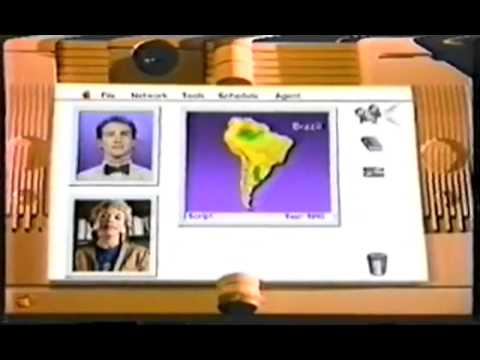
Looking back at these four campaigns, spanning from 1967 to 1996, we see a common thread: they all understood that technology is ultimately about human behavior. AT&T saw us consulting maps on dashboards. Apple saw us talking naturally to intelligent assistants. Philco-Ford saw us shopping and banking from our living rooms. Motorola saw us embracing the freedom (and burden) of constant connection.
These commercials weren't just selling products; they were selling permission to imagine a different future. They made the strange feel familiar, the futuristic feel inevitable. And in doing so, they didn't just predict the world to come—they helped build it.
Discover effective strategies for conducting market research to enhance your campaigns. Learn how to gather insights that drive successful marketing decisions.
Discover how visuals enhance advertising effectiveness, capturing attention and driving engagement. Explore the science behind impactful visual strategies.
Discover the art of crafting a compelling brand story that connects with your audience. Learn essential tips to elevate your brand's narrative and impact.
Discover commercials that cleverly break the fourth wall, engaging viewers in unique ways. Explore iconic ads that redefine advertising creativity.
Discover the evolution of commercials into captivating short films. Explore this new genre that blends storytelling with advertising in innovative ways.
Discover the stunning locations where the Samsung Galaxy "Flip Your World" commercial was filmed. Uncover the creative backdrop behind this iconic ad.
Discover who directed the latest Google Pixel Super Bowl-style ad and explore the creative vision behind this captivating commercial.
Discover the classical song featured in the Apple MacBook Air commercial. Uncover its history and why it perfectly complements the ad's message.
Discover the identity of the dad in the Amazon Alexa 2026 family commercial. Uncover insights and details about this engaging advertisement today.
Discover the deeper meaning behind the Meta Quest 3 VR commercial. Explore themes, visuals, and messages that redefine virtual reality experiences.
Discover the identity of the girl featured in the YouTube Premium "No Ads" commercial. Uncover her story and what makes her stand out in this captivating ad.