
What if the best way to sell something was to tell people not to buy it? What if admitting your product tastes awful made it fly off the shelves? What if celebrating your status as the underdog made you a winner?
This is the paradoxical world of reverse psychology in advertising. It's a high-risk, high-reward strategy that deliberately contradicts every instinct of traditional marketing. Instead of shouting about greatness, these ads whisper about flaws. Instead of demanding attention, they earn trust through radical honesty. And when it works, it doesn't just sell products—it builds legacies. Let's explore five legendary campaigns that mastered this counterintuitive art, proving that sometimes the most effective way forward is to go backward.
🧥 Patagonia's "Don't Buy This Jacket" (2011): The Black Friday Miracle
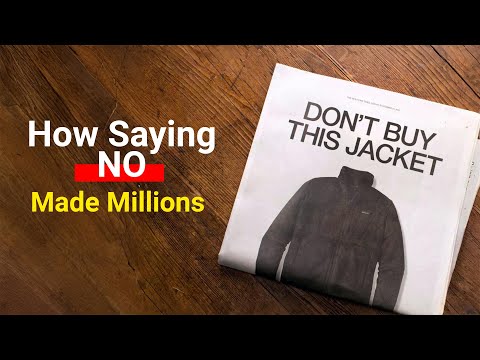
The date was Black Friday, 2011—the biggest shopping day of the year, a frantic orgy of consumerism. And on that day, outdoor clothing giant Patagonia took out a full-page ad in The New York Times featuring a stunning photograph of one of their most popular products. The headline, displayed prominently above the jacket, read: "DON'T BUY THIS JACKET."
The tactic: The ad was a manifesto against overconsumption. Patagonia explained the environmental cost of manufacturing its R2 fleece jacket—135 liters of water, 20 pounds of carbon dioxide, enough waste to fill a garbage truck. They urged customers to think carefully before purchasing, to repair their old clothes, to buy only what they truly needed. They were, in essence, telling people not to buy their product.
The result? Sales skyrocketed. The campaign generated an estimated $10 million in media coverage and increased Patagonia's revenue by nearly 40% in the following year.
Why? Because the honesty was so radical, so unexpected, that it built an almost unshakeable trust. Patagonia wasn't just selling jackets; they were demonstrating a commitment to values that resonated deeply with their target audience. By telling people not to buy, they positioned themselves as the rare company that cared more about the planet than about profit. And in doing so, they became the only company people wanted to buy from. The "Don't Buy This Jacket" campaign is a masterclass in how transparency can be the ultimate selling point.
🔗 Watch an explanation of the campaign here:
🚗 Avis' "We Try Harder" (1962): Celebrating Second Place
In the early 1960s, the car rental market was dominated by a single giant: Hertz. Avis was a distant, struggling number two, losing money year after year. Then they hired a new advertising agency, Doyle Dane Bernbach, which proposed a strategy so counterintuitive it seemed insane: admit they were number two.
The tactic: The now-legendary campaign launched with the headline: "Avis is only No. 2 in rent a cars. So why go with us?" The answer was brilliantly simple: "We try harder." The ads explained that because Avis wasn't the biggest, they couldn't afford to give customers dirty ashtrays, half-empty gas tanks, or worn-out wiper blades. They had to be better just to survive.
This was a stunning admission of weakness that was immediately reframed as a strength. By openly acknowledging their underdog status, Avis positioned themselves as the harder-working, more customer-focused alternative to the complacent giant. The campaign was a phenomenal success. Within a year, Avis turned its first-ever profit, and within four years, their market share had increased from 11% to 35%.
"We Try Harder" worked because it tapped into a universal human preference for the underdog. We root for the person who has to work for it, who doesn't have everything handed to them. By embracing their second-place status with honesty and humility, Avis won the hearts (and rental contracts) of millions.
🔗 Watch a classic Avis commercial here:
🤢 Buckley's Mixture: "It tastes awful. And it works."
Imagine launching a product by telling people it tastes terrible. That's exactly what the Canadian cough syrup brand Buckley's Mixture did, and it turned them into a beloved national institution.
The tactic: For decades, Buckley's built its entire brand identity around the slogan: "It tastes awful. And it works." The commercials were unapologetically honest. They featured people trying the syrup, grimacing at the intense, unpleasant flavor, and then explaining that this very awfulness was proof of its effectiveness. The logic was simple: if it tastes this bad, it must be powerful medicine.
This was reverse psychology operating on multiple levels. First, by admitting the product's most obvious flaw, Buckley's disarmed potential criticism. You couldn't complain about the taste—they already told you it was awful. Second, they transformed that flaw into a feature. The terrible taste became a badge of authenticity, a guarantee of medicinal potency in a world of sweet, candy-like alternatives that seemed less serious.
The campaign was a massive success, making Buckley's a dominant player in the Canadian cough and cold market for generations. It proved that honesty about a product's limitations, when framed correctly, can be far more persuasive than any exaggerated claim of perfection.
🔗 Watch a classic Buckley's commercial here:
🍋 Volkswagen's "Think Small" and "Lemon" (1959): The Revolution Begins
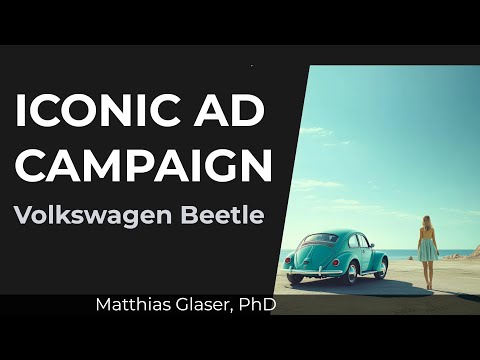
To understand the power of reverse psychology in advertising, we must return to the campaign that started it all. In 1959, the Volkswagen Beetle was a strange, small, German import in an American market dominated by massive, chrome-laden, gas-guzzling dreams on wheels. Conventional advertising wisdom demanded that you highlight size, power, and luxury. Volkswagen's agency, once again Doyle Dane Bernbach, did the exact opposite.
The tactic: The "Think Small" campaign featured a tiny photograph of the Beetle surrounded by vast white space—a visual admission of its smallness. The copy was humble, honest, and witty, explaining the practical benefits of a car that was easy to park, sipped fuel, and didn't go out of style.
But the most audacious ad in the campaign was titled "Lemon." In the auto industry, "lemon" was the dreaded term for a defective car. Volkswagen used it proudly. The ad explained the rigorous inspection process at the factory, where one inspector rejected a car because a chrome strip on the glove compartment was blemished. "This Volkswagen missed the boat," the ad read. "The chrome strip on the glove compartment is blemished and must be replaced... We pluck the lemons; you get the plums."
By voluntarily using a negative word like "lemon" and turning it into a testament to their quality control, Volkswagen executed a stunning piece of reverse psychology. They admitted to being small, humble, and even fallible—and in doing so, they became one of the most trusted and beloved car brands in America. This campaign didn't just sell Beetles; it revolutionized the entire advertising industry, proving that radical honesty could be the most powerful sales tool of all.
🔗 Watch a history of the "Think Small" campaign here:
The Psychology Behind the Strategy
Why does reverse psychology work so brilliantly in advertising? It taps into several deep-seated human biases:
The Trust Paradox: When a brand admits a flaw, it signals honesty. And a brand we trust is a brand we're more likely to buy from. The admission of a small negative (like awful taste) makes us more likely to believe the positive claims (like "it works").
The Underdog Effect: Humans are hardwired to root for the underdog. By acknowledging they're not the biggest or the best, brands like Avis and Volkswagen invite us to support their struggle.
The Scarcity Principle (Reversed): Patagonia's "Don't Buy This Jacket" created a form of psychological scarcity. By suggesting you shouldn't buy, they made the act of buying feel more meaningful and deliberate, appealing to customers who value ethical consumption.
Surprise and Attention: In a world of hyperbolic claims, a humble or self-deprecating message stands out. It stops us from scrolling, makes us think, and earns our attention through sheer unexpectedness.
Conclusion: The Power of Radical Honesty
Patagonia, Avis, Buckley's, and Volkswagen each took a tremendous risk. They went against every instinct of traditional marketing. They admitted flaws, celebrated weakness, and told people not to buy. And each time, that risk paid off spectacularly.
These campaigns remind us that in an age of skepticism, the most valuable currency a brand can hold is trust. And sometimes, the most direct path to building that trust is to stop trying so hard to look perfect. By embracing imperfection, these brands achieved something far more valuable than a single sale: they built enduring relationships with their customers, based on a foundation of radical, disarming, unforgettable honesty.
Discover effective strategies for conducting market research to enhance your campaigns. Learn how to gather insights that drive successful marketing decisions.
Discover how visuals enhance advertising effectiveness, capturing attention and driving engagement. Explore the science behind impactful visual strategies.
Discover the art of crafting a compelling brand story that connects with your audience. Learn essential tips to elevate your brand's narrative and impact.
commercials that transcended advertising to become iconic pop culture catchphrases. Explore their impact and lasting legacy
Explore fascinating ads that foresaw the future of technology. Discover how visionary marketing shaped innovations we rely on today.
Discover commercials that cleverly break the fourth wall, engaging viewers in unique ways. Explore iconic ads that redefine advertising creativity.
Discover the evolution of commercials into captivating short films. Explore this new genre that blends storytelling with advertising in innovative ways.
Discover the stunning locations where the Samsung Galaxy "Flip Your World" commercial was filmed. Uncover the creative backdrop behind this iconic ad.
Discover who directed the latest Google Pixel Super Bowl-style ad and explore the creative vision behind this captivating commercial.
Discover the classical song featured in the Apple MacBook Air commercial. Uncover its history and why it perfectly complements the ad's message.
Discover the identity of the dad in the Amazon Alexa 2026 family commercial. Uncover insights and details about this engaging advertisement today.