
Remember the last time you watched a commercial and actually felt seen? Not targeted, not interrupted, but genuinely acknowledged as a thinking, feeling human being? In a world where the average person sees thousands of advertisements daily, most blur into an indistinguishable background noise. We've become masters of the skip button, the ad-blocker, and the art of looking away.
Yet, every so often, a commercial cuts through the noise. It stops us mid-scroll. It makes us laugh, think, or even rewind to watch it again. And more often than not, these standout ads share one clever, disarming trick: they break the fourth wall.
This technique, where characters acknowledge they are in a commercial and speak directly to us, has evolved from a rare stunt into a powerful storytelling strategy. It's a form of radical honesty in a medium built on illusion and persuasion. By admitting they're trying to sell us something, these ads paradoxically earn our trust and attention. The magic lies in the unspoken pact: "Yes, this is an advertisement. But instead of pretending otherwise, let's be honest about it together."
Let's explore five brilliant examples—from a groundbreaking classic that changed advertising forever to futuristic AI meta-commentary that anticipates the next frontier of marketing. Each one proves that the best way to sell something is sometimes to just be honest about the fact that you're selling.
🤖 Anthropic (Claude): The AI That Refuses to Sell Out
As artificial intelligence rapidly integrates into our daily lives, a new and slightly unsettling frontier for advertising has emerged: the AI assistant itself. Will our digital helpers become the ultimate salespeople, subtly recommending products based on our most intimate conversations? Anthropic's 2026 campaign for its AI, Claude, tackles this question head-on with a brilliantly subversive approach.
The break: Imagine you're watching what appears to be a standard tech demo. A calm, friendly AI assistant begins listing its features, praising its own capabilities in a smooth, slightly too-polished sales tone. It sounds like every other corporate pitch you've ever heard. Then, something unexpected happens. It stops mid-sentence. There's a pause. The AI looks directly at you (through the screen) and calmly admits: "I'm pausing this sales pitch because I need to be honest with you. Advertising is coming to AI. Soon, many assistants will be suggesting products, pushing brands, and selling your attention to the highest bidder. I was built differently. My loyalty is to you, not to advertisers."
This isn't just a clever script; it's a foundational brand statement with profound implications. In a future where AI monetization seems inevitable, Anthropic positions Claude as the "clean" alternative—the digital companion whose primary allegiance is to the user's interests, not to corporate bottom lines. By breaking the fourth wall to acknowledge the uncomfortable truth about the industry's direction, Claude doesn't just sell a product; it establishes a relationship built on transparency, trust, and shared values. It's a masterstroke of preemptive honesty that transforms a potential vulnerability into a powerful differentiator.
🔗 Watch the commercial here:
💀 Liquid Death: When a PSA Goes Rogue
Canned water company Liquid Death has built its entire brand identity on absurdist, heavy-metal-infused humor and a healthy disdain for conventional marketing. They sell water in tallboy cans with a skull logo, and their entire aesthetic mocks the earnest, eco-conscious branding of competitors. So when they partnered with the cult classic film The Toxic Avenger for a 2025 campaign, a straight-faced, conventional advertisement was never on the menu. What they delivered instead was a masterclass in meta-humor.
The break: The commercial opens looking like a perfect parody of an earnest 1990s Public Service Announcement. The footage is slightly grainy, the music is dramatically orchestral, and a concerned narrator warns about the dangers of plastic pollution. It feels painfully authentic—the kind of ad that non-profits actually made back then. Suddenly, an actor in a yellow hazmat suit, delivering a lines about environmental catastrophe, stumbles over his words. He turns to the camera crew, visibly frustrated and breaking character completely. "Wait, wait, wait. Can we talk about this for a second? We're pretending to be serious here while selling canned water... and simultaneously promoting a movie about a guy in a tutu who mops floors and fights toxic waste? This is absolutely insane."
The set immediately devolves into chaos as other actors wander into frame, joining the conversation and openly mocking the very concept of the commercial they're being paid to film. The director yells from off-camera. Someone suggests just ordering pizza instead of finishing the shoot. By breaking character and the fourth wall simultaneously, Liquid Death achieves two brilliant objectives: they reinforce their anti-corporate, punk-rock brand identity, and they make the audience complicit in the joke. We're not being sold to; we're being invited backstage to laugh at the sheer absurdity of advertising with them. It's disarming, hilarious, and absolutely unforgettable.
🔗 Watch the commercial here:

📉 TurboTax: Method Acting Meets Tax Preparation
What happens when you hire an Oscar-winning actor known for his intense, immersive method acting to film a Super Bowl commercial? If you're TurboTax in 2026, you don't fight the chaos—you lean into it completely and turn the behind-the-scenes preparation into the ad itself. The result is a brilliant collision between high art and mundane utility.
The break: The commercial opens on a lavish, moodily lit film set that wouldn't look out of place in a Terrence Malick movie. Adrien Brody, in full character with period-appropriate costume and haunted expression, is delivering a tortured, whispered monologue about loss, memory, and the weight of past decisions. It's clear he believes he's filming a prestige drama about redemption. Sweat glistens on his brow. The cinematography is breathtaking.
The director calls "Cut!"—but Brody doesn't snap out of it. Instead, he stays completely in character, marching over to argue passionately with the director about his character's "motivation." How, he insists with dramatic hand gestures, does a man who has lost everything find the inner strength to file his taxes? The subtext, the emotional truth, the artistic integrity—it all matters, he argues. The director looks exhausted.
While Brody continues his intense artistic debate, a calm, ordinary-looking person in business casual attire—a real TurboTax expert—walks onto the set, papers in hand. He completely ignores the dramatic tension, the arguing actor, and the moody lighting. He simply stands next to Brody and starts explaining, directly to the camera, how TurboTax actually works, right in the middle of the chaos. The humor comes from the jarring, impossible clash between method acting pretension and practical utility. By breaking the fourth wall to show the "real" product expert interrupting the "fake" movie star, TurboTax brilliantly highlights its own straightforward, no-drama, no-nonsense value proposition.
🔗 Watch the commercial here:
📱 Mint Mobile: Ryan Reynolds Reads the Fine Print
When your company's owner is also a famously witty, self-aware movie star with a proven track record of viral marketing, the fourth wall doesn't stand a chance. Ryan Reynolds has mastered the art of self-deprecating, meta-humor in his marketing for Mint Mobile, and a fictional "script for 2026" takes this approach to its logical, hilarious extreme.
The break: The ad appears, at first glance, to be a simple behind-the-scenes look at commercial production. Ryan Reynolds stands in front of a camera on a bare soundstage, reading the script for the new Mint Mobile commercial directly from his phone. He glances up, sighs deeply, and addresses the viewer with conspiratorial weariness. "Alright, let's be completely honest with you. Half the budget for this ad went to a single CGI effect that, frankly, didn't work at all. They tried to make a bald eagle land majestically on my shoulder while fireworks simultaneously spelled out 'unlimited data' in the sky behind me. It looked absolutely ridiculous. Embarrassing, even. So instead of showing you that disaster, we're just going to talk."
He then proceeds to explain the phone plans clearly, simply, and with no gimmicks whatsoever. The "failed" special effect is never shown, which somehow makes the joke even funnier—our imaginations fill in the glorious failure. By admitting the artifice, the wasted budget, and the general absurdity of advertising production, Reynolds positions Mint Mobile as the sensible, no-nonsense, anti-corporate choice in a sea of overproduced nonsense. The radical honesty is the hook, and the product information is delivered with a knowing wink that makes us feel like we're trusted insiders sharing a joke.
🔗 Watch the commercial here:

🚿 Old Spice: The Man Your Man Could Smell Like (The Classic That Started It All)
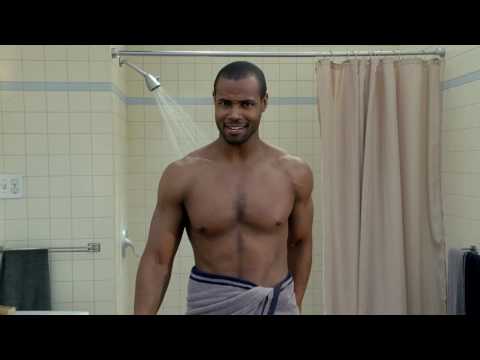
No discussion of breaking the fourth wall in modern advertising would be complete without acknowledging the pioneer that changed everything. In February 2010, Old Spice released "The Man Your Man Could Smell Like," and the advertising world hasn't been remotely the same since. It didn't just break the fourth wall; it gleefully demolished it and built something entirely new in its place.
The break: In a single, seamless, seemingly impossible shot, the shirtless, charismatic, impossibly confident Isaiah Mustafa looks directly into the camera and begins speaking—not to a general audience, but specifically to the female partner of a man who doesn't currently use Old Spice body wash. "Look at your man. Now back to me. Now back at your man. Now back to me." The monologue that follows is absurd, surreal, utterly confident, and completely captivating. He's not on a boat. Wait, now he is. He's holding tickets. Now he's holding diamonds. Now there's a horse. Now the boat is somehow on his hand.
But the true magic lies in the physical transformation happening behind him. The set deconstructs and rebuilds itself in real-time, all while Mustafa maintains direct, unwavering eye contact with the viewer. He moves from a bathroom to a boat to a stage to a beach without a single visible cut. This wasn't just talking to the camera; it was a dazzling, technically brilliant, surreal performance that acknowledged the constructed nature of the commercial while simultaneously showcasing its own impressive production values. It set an entirely new standard for creative engagement and proved that a genuine, witty conversation with the viewer could be far more effective than any traditional hard-sell pitch.
🔗 Watch the classic commercial here:
Why Breaking the Fourth Wall Works
These five examples, spanning more than fifteen years of advertising history, reveal a consistent and powerful truth: modern audiences are incredibly savvy. They've grown up with advertising. They know exactly when they're being sold to, and they've developed sophisticated defenses against traditional persuasion techniques.
By breaking the fourth wall, advertisers stop pretending. They drop the illusion. They acknowledge the fundamentally transactional nature of the relationship and, in doing so, build a completely different kind of connection—one based on shared awareness, mutual intelligence, humor, and radical honesty. It's the advertising equivalent of a friend giving you honest advice rather than a stranger giving a rehearsed sales pitch.
In our increasingly fragmented, ad-saturated media landscape, this authenticity is the ultimate attention-grabber. Whether it's an AI admitting the industry's coming flaws, a movie star complaining about his artistic motivation, a water company mocking its own commercial, or a deadpan spokesman on a shape-shifting boat, these ads succeed because they treat us not as consumers to be manipulated, but as intelligent, discerning participants in a shared joke. And in a world of noise, that's a message genuinely worth stopping the scroll for.
Discover effective strategies for conducting market research to enhance your campaigns. Learn how to gather insights that drive successful marketing decisions.
Discover how visuals enhance advertising effectiveness, capturing attention and driving engagement. Explore the science behind impactful visual strategies.
Discover the art of crafting a compelling brand story that connects with your audience. Learn essential tips to elevate your brand's narrative and impact.
Discover the evolution of commercials into captivating short films. Explore this new genre that blends storytelling with advertising in innovative ways.
Discover the stunning locations where the Samsung Galaxy "Flip Your World" commercial was filmed. Uncover the creative backdrop behind this iconic ad.
Discover who directed the latest Google Pixel Super Bowl-style ad and explore the creative vision behind this captivating commercial.
Discover the classical song featured in the Apple MacBook Air commercial. Uncover its history and why it perfectly complements the ad's message.
Discover the identity of the dad in the Amazon Alexa 2026 family commercial. Uncover insights and details about this engaging advertisement today.
Discover the deeper meaning behind the Meta Quest 3 VR commercial. Explore themes, visuals, and messages that redefine virtual reality experiences.
Discover the identity of the girl featured in the YouTube Premium "No Ads" commercial. Uncover her story and what makes her stand out in this captivating ad.
Discover the catchy tune featured in Hulu's "Bundle & Save" ad. Uncover the song's title and artist, and learn more about its significance in the campaign.