

In 1958, Lucky-Goldstar began manufacturing radios in post-war South Korea. It was a company built on utility—devices that worked, lasted, and were affordable. Seven decades later, LG Electronics has become a global architect of the connected home. Yet its most impressive engineering feat may not be a washing machine or an OLED panel; it is the emotional architecture of its advertising. From the functional promises of the 1950s to the optimistic mantra "Life's Good" and the AI-driven ecosystems of today, LG’s campaigns reveal a consistent thesis: technology is not an end in itself, but a medium for human flourishing.
This is the story of how LG transformed itself from a component manufacturer into a lifestyle narrator, and how its advertising taught the tech industry that smart devices must feel warm.
Act I: Building Trust Through Utility (1950s–1990s)
Before LG could inspire, it had to prove itself. The company’s early advertising was not glamorous—it was testimonial. Refrigerators that didn't spoil food. Washing machines that didn't tear clothes. Radios that picked up distant signals. These were not campaigns about desire; they were about relief.
In a rapidly industrializing South Korea, LG positioned itself as the reliable partner of the modern household. The imagery was domestic, the language was technical, and the promise was simple: this machine will not fail you. This strategy built a foundation of trust that would later allow the brand to pivot toward aspiration.
Act II: The Optimism Engine – "Life’s Good" (2000s)
The turn of the millennium marked a philosophical shift. LG recognized that technology was no longer scarce; it was ubiquitous. Consumers no longer needed persuasion that a product worked—they needed to know what it meant for their lives.
Enter "Life’s Good." Launched globally in the early 2000s, the slogan was deceptively simple. Two words. No verbs. A period of quiet confidence. It was not a command or a question; it was a statement of fact. The campaigns that followed reframed refrigerators as enablers of family gatherings, televisions as portals to emotion, and washing machines as reclaimers of time.
Link: LG Life’s Good Campaign (2000s):

Act III: The Intelligent Home – ThinQ AI (2010s)
As artificial intelligence moved from science fiction to living rooms, LG faced a new challenge: how to make algorithms feel hospitable. The ThinQ AI platform was introduced not as a showcase of processing power, but as a silent butler—anticipating needs, learning habits, and disappearing into the background.
The advertising for ThinQ avoided the cold, blue aesthetics common in tech commercials. Instead, it showed families moving seamlessly through their days. A refrigerator suggesting recipes based on its contents. A washing machine selecting the optimal cycle for delicate fabrics. The message was radical in its restraint: you shouldn't have to think about your technology at all.
Link: LG ThinQ AI Smart Home Ad:

The WashTower: Choreography of Convenience
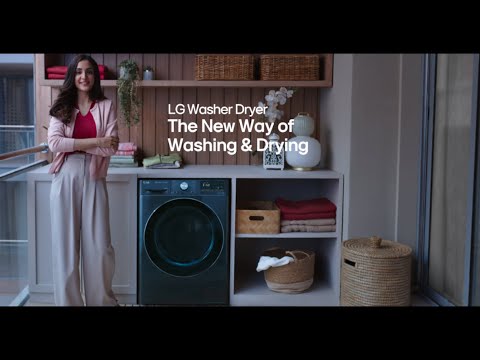
Perhaps no LG campaign better illustrates the translation of specification into sensation than the WashTower. The product itself is a feat of engineering—a stacked washer-dryer with AI Direct Drive that senses fabric weight and softness. But the advertising did not lead with megabytes or motor torque. It led with time.
The tagline "No Rubbing, No Scrubbing" was a direct address to the millions of people—disproportionately women—for whom laundry is not a chore but a second shift. The campaign understood that efficiency is not a technical metric; it is emotional liberation.
Link: LG WashTower “No Rubbing, No Scrubbing”:
OLED: The Canvas of Emotion
LG’s OLED television campaigns represented a different kind of challenge. Here, the product category is saturated with claims of "best picture." To differentiate, LG turned to art. The brand commissioned cinematic ads featuring dancers like Misty Copeland, whose movements were rendered in exquisite detail by OLED’s perfect blacks and infinite contrast.
The message was subtle: LG does not sell televisions; it sells access to transcendence. The technology disappears, leaving only the emotion.
Link: LG OLED TV Cinematic Ad:
Act IV: The Responsible Future – Sustainability and Wellness (2020s)
In the 2020s, LG recognized that "Life’s Good" could no longer be a passive statement. In an era of climate crisis and public health awareness, optimism must be earned. The company relaunched its iconic slogan in 2023 with a younger, more dynamic visual language and a renewed commitment to environmental responsibility.
The Smart Cottage: Architecture of Tomorrow
The Smart Cottage campaign represents LG’s most ambitious narrative to date. It is not a single product but a complete ecosystem: a modular, sustainable home powered by LG’s energy-efficient appliances, solar integration, and recycled materials. The advertising presents not a gadget, but a manifesto.
This is a significant strategic evolution. LG is no longer selling components of a house; it is selling a philosophy of habitation. The Smart Cottage is aspirational yet plausible—a glimpse of a future where comfort and sustainability coexist.
Link: LG Smart Cottage Sustainability Concept:

Healthy Home Solutions
Parallel to the sustainability narrative, LG expanded its wellness portfolio. Air purifiers, water filtration systems, and hygiene-focused appliances were marketed not as accessories but as essential infrastructure for modern life. The advertising tone shifted from optimism to protection. LG positioned itself as a guardian of the domestic sphere
Comparative Table: LG’s Advertising Evolution
| 1950s–1990s | Durability, affordability | "It works" | Trust |
| 2000s | "Life’s Good" | "It improves your life" | Optimism |
| 2010s | ThinQ AI, WashTower | "It learns from you" | Liberation |
| 2010s | OLED TV | "It moves you" | Transcendence |
| 2020s | Smart Cottage, Relaunch | "It protects the future" | Responsibility |
Expert Analysis: The Architecture of Aspiration
1. From Specification to Sensation
LG’s genius lies in its translation layer. Engineers create features; advertisers create feelings. LG ads rarely dwell on processor speeds or pixel density. Instead, they show a parent watching their child dance on an OLED screen, or a couple reclaiming a Sunday afternoon thanks to an AI-powered washer. The technology is present but transparent.
2. The Consistency of "Life’s Good"
Few corporate slogans survive two decades. "Life’s Good" has endured because it is not a tagline—it is a compass. Every campaign, whether for a $2,000 television or a $50 air purifier, is measured against this philosophy. Does it make life better? Does it contribute to optimism? This consistency has given LG a cohesive identity across dozens of product categories.
3. Competitive Positioning
In the technology sector, brands often define themselves through opposition. Samsung emphasizes speed and innovation. Apple emphasizes design and exclusivity. Sony emphasizes heritage and craftsmanship. LG, uniquely, emphasizes integration and well-being. It is the brand that asks not "What can this device do?" but "How will this device care for you?"
4. The Sustainability Tightrope
LG’s 2020s campaigns face a credibility challenge. Aspirational sustainability advertising risks greenwashing if not matched by measurable action. The company has responded by grounding its campaigns in specific, verifiable initiatives: recycled materials in appliances, carbon-neutral manufacturing targets, and energy-efficient product certifications. The Smart Cottage is not a fantasy; it is a prototype.
Industry Impact: The Humanist Turn in Tech Advertising
LG’s influence extends beyond its own campaigns. The broader technology sector has shifted from specification wars to lifestyle narratives. Samsung’s "Do What You Can’t" echoes LG’s aspirational tone. Google’s Nest campaigns emphasize quiet, intuitive assistance—a direct parallel to ThinQ AI. Even Apple, long focused on product fetishism, has increasingly centered its advertising on human outcomes rather than hardware.
LG demonstrated that in a world where all smartphones are fast and all televisions are sharp, the only remaining differentiator is emotional resonance.
Conclusion: The Philosophy of the Familiar
LG’s advertising journey is a case study in strategic patience. The company spent four decades building trust through reliability before it earned the right to speak of optimism. It spent another two decades proving that optimism could be sustained across technological revolutions. Now, it is translating that optimism into a covenant of responsibility.
"Life’s Good" is not a boast. It is an invitation. LG’s advertising does not claim that technology can solve every problem. It claims that within the boundaries of the home—the kitchen, the laundry room, the living room—technology can create small, repeated moments of grace.
In the history of advertising, most technology campaigns age poorly. Specifications become obsolete. Design languages date. But a campaign centered on how a machine makes you feel does not age. It only deepens.
LG understood that the smart home is not smart because it contains processors. It is smart because it understands that a washing machine is never just a washing machine. It is time. It is rest. It is a parent’s love, translated into clean clothes.
That is the final lesson of LG’s advertising: the most advanced technology is the technology you forget. And the best life is, simply, good.
Discover the talented actress featured in the LG smart home appliances ad. Uncover her background and other roles that showcase her impressive skills.
Discover how LG is transforming smart home advertising with innovative technology and strategies that enhance consumer engagement and drive sales.

Discover the impact of iconic Adidas campaigns on urban fashion. Explore how these bold designs shaped street style and influenced culture worldwide.

Discover how Toshiba's innovative advertising strategies reshaped tech marketing, influencing trends and consumer engagement in the digital age.

Explore Microsoft's advertising journey in software innovation, highlighting key strategies, advancements, and the impact on the tech industry.

Discover Volvo's innovative advertising journey in safety campaigns, showcasing their commitment to protecting lives and redefining automotive safety standards.

Explore the influence of Chevrolet ads on the automotive industry. Discover how innovative marketing shapes consumer perceptions and drives sales.

Discover how Lenovo is shaping the future of technology advertising, driving innovation and expanding market reach in the digital landscape.

Discover how to leverage viral challenges on TikTok to create impactful ads that engage audiences and boost your brand's visibility effectively.

Discover the iconic Adidas commercials that shaped basketball advertising, showcasing legendary athletes and unforgettable moments in sports marketing history.