

For a century, advertising operated on a simple contract: brands paid for access to audiences' attention. A 30-second spot during prime time. A full-page spread in the Sunday newspaper. A billboard on the highway. The audience's role was reception.
TikTok tore up this contract. On the world's fastest-growing social platform, the most effective advertising does not seek attention—it earns participation. A viral challenge is not watched; it is joined. The brand does not broadcast; it initiates. And the consumer is not a target; they are a co-creator.
This is not merely a new advertising format. It is a paradigm shift in the relationship between brands and the people who encounter them. This article examines how TikTok's viral challenge ads have rewritten the rules of marketing, the landmark campaigns that defined the medium, and what this evolution means for the future of brand communication.
The Architecture of Participation
Why do viral challenges work on TikTok while similar efforts flounder on other platforms? The answer lies in four interconnected dynamics:
1. Emotional Resonance as Entry Point
Traditional advertising often interrupts mood; TikTok challenges extend it. A user scrolling through skincare routines is not disrupted by a Peter Thomas Roth ad styled as a GRWM ("Get Ready With Me") video. They are served more of what they already want. The ad does not feel like an interruption; it feels like discovery.
2. Community as Amplifier
When a brand launches a challenge, it does not rely solely on paid distribution. It recruits voluntary evangelists. Each participant who films their own response becomes a node in an organic distribution network. User-generated content is not a byproduct of successful campaigns; it is the engine.
3. Algorithmic Symbiosis
TikTok's For You Page rewards engagement velocity. A challenge that generates rapid participation is algorithmically boosted, creating a self-reinforcing cycle of visibility. Brands that understand this do not simply create content; they engineer conditions for viral propagation.
4. Authenticity Through Mimicry
The most effective TikTok ads are often indistinguishable from native content. They use the same transitions, audio tracks, and editing rhythms that users employ. This mimicry is not deception; it is cultural fluency. Brands that speak the platform's language are granted access to its conversations.
Landmark Campaigns: The Canon of Participation
Peter Thomas Roth (2025): The GRWM Conversion Engine
The skincare brand's 2025 campaign appeared, at first glance, to be another influencer GRWM video. A creator applied products in real time, discussing texture, absorption, and results. Only the subtle "Sponsored" indicator revealed the content's origin.
The campaign's brilliance was its refusal to announce itself as advertising. Peter Thomas Roth understood that on TikTok, authenticity is not a value; it is a format requirement. By perfectly replicating the aesthetic of organic content, the brand achieved what conventional advertising cannot: suspension of defensive skepticism. Viewers did not mentally classify the video as an ad until after they had already absorbed its message.
Link: [Peter Thomas Roth – GRWM Skincare Routine Ad: Search YouTube: "Peter Thomas Roth TikTok GRWM"]
Stradivarius (2025): Fashion as Game
The Spanish fashion retailer transformed shopping into interactive entertainment. Its "Interactive Shopping Challenge" presented users with rapid-fire style choices, gamifying the selection process. Participants voted on outfits, created virtual looks, and were seamlessly directed to purchase pages.
This campaign dissolved the boundary between engagement and transaction. The game was the advertisement; the advertisement was the store. Stradivarius recognized that for Gen Z consumers, shopping is not a chore to be optimized but an expressive activity to be enjoyed. The campaign simply formalized that enjoyment.
Link: Stradivarius – Interactive Shopping Challenge:

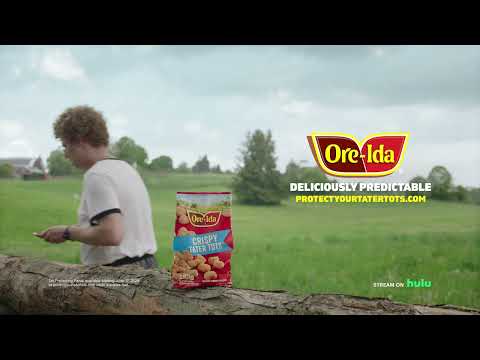
Ore-Ida (2024): Nostalgia as Viral Fuel
The frozen potato brand resurrected Napoleon Dynamite's iconic dance scene—20 years after the film's release—in a 15-second spot that generated millions of views and widespread media coverage.
Ore-Ida's campaign demonstrated that cultural memory is a viral asset. Gen X and millennial users shared the ad as a nostalgic artifact; Gen Z users discovered it as fresh comedy. The brand did not attempt to manufacture relevance; it simply retrieved relevance from the cultural archive and presented it with minimal alteration.
Link: Ore-Ida – Napoleon Dynamite Meme Ad:
Taco Bell (2024): Self-Parody as Positioning
Taco Bell's "Crunchwrap Tech Parody" treated a folded tortilla with the reverential seriousness of a Silicon Valley product launch. The ad mimicked Apple's minimalist aesthetic, complete with dramatic close-ups, ambient music, and earnest voiceover—all in service of a menu item.
This campaign succeeded because Taco Bell understood that self-awareness is a form of authority. By parodying tech culture, the brand implicitly claimed membership in it. The joke was not at Taco Bell's expense; it was at the expense of an industry that takes itself too seriously. Taco Bell positioned itself as the cool observer rather than the earnest supplicant.
Link: Taco Bell – Crunchwrap Tech Parody:

John Deere (2024): The Incongruity Principle
Perhaps no campaign better illustrates TikTok's democratizing effect than John Deere's "Tractor Love" parody. The agricultural equipment manufacturer—hardly a native TikTok brand—embraced the platform's surreal humor, setting romantic slow-motion footage of tractors to a yearning love song.
The ad's virality derived from incongruity. Audiences were surprised that a 187-year-old industrial company could produce content that felt genuinely native to TikTok. That surprise translated into shares, comments, and extensive earned media. John Deere demonstrated that brand heritage need not be a constraint; it can be a comedic asset.
Link: [John Deere – Tractor Love Parody: Search YouTube: "John Deere Tractor Love TikTok"]
RSPB Bird of the Week (2024): Purpose Through Play
The Royal Society for the Protection of Birds achieved what few nonprofit organizations have managed: virality without sentimentality. Its "Bird of the Week" challenge presented European bird species with meme-style commentary, humorous rankings, and irreverent descriptions.
The campaign generated 37 million views and 190% follower growth—not by appealing to duty or guilt, but by making conservation feel like fandom. Participants did not share the content to signal virtue; they shared it because it was genuinely entertaining. The RSPB recognized that on TikTok, purpose must be delivered through play, not preached through appeals.
Link: [RSPB Bird of the Week (2024): Search YouTube: "RSPB Bird of the Week TikTok"
Comparative Table: The Mechanics of Virality
| Peter Thomas Roth | 2025 | GRWM imitation | Authenticity camouflage | Ads indistinguishable from content evade skepticism |
| Stradivarius | 2025 | Gamified shopping | Interaction as conversion | Participation can be a direct sales channel |
| Ore-Ida | 2024 | Meme resurrection | Nostalgia amplification | Cultural memory is renewable viral fuel |
| Taco Bell | 2024 | Tech parody | Self-aware irony | Parody signals cultural membership |
| John Deere | 2024 | Incongruity humor | Surprise as attention | Heritage brands benefit from subverting expectations |
| RSPB | 2024 | Educational meme | Purpose through play | Serious missions require playful messengers |
Expert Analysis: The TikTok Doctrine
1. Authenticity Is Format, Not Feeling
Brands often misinterpret TikTok authenticity as a requirement to be "real" or "vulnerable." In fact, authenticity on TikTok is primarily a formal property. Videos that use the platform's native editing conventions, audio tracks, and pacing are perceived as authentic regardless of their commercial intent. Peter Thomas Roth succeeded not by being more honest than other advertisers but by looking like it belonged.
2. Incongruity Is a Distribution Strategy
John Deere and Taco Bell both leveraged surprise as a viral mechanism. Audiences shared their content not because it was perfectly on-brand but because it was unexpectedly off-brand. This suggests that for legacy companies, strict brand consistency may be less valuable than occasional, deliberate deviation.
3. Participation Replaces Persuasion
Traditional advertising attempts to persuade consumers through argument or emotional appeal. TikTok challenges bypass persuasion entirely. They do not convince users to buy; they invite users to play. The purchase, when it occurs, is a byproduct of participation rather than the objective of communication.
4. The Meme Is the Message
Ore-Ida's Napoleon Dynamite campaign succeeded because it recognized that memes are not illustrations of messages; they are messages themselves. The brand did not use the meme to make a point about frozen potatoes; the meme was the point. This requires a fundamental reorientation of how brands conceptualize meaning. On TikTok, meaning is not encoded in content and decoded by audiences. Meaning is co-constructed through shared cultural references.
Industry Impact: The Platformization of Advertising
TikTok's viral challenge format has influenced every major social platform:
Instagram Reels has aggressively adopted TikTok's participation mechanics, including duet-style responses and trending audio.
YouTube Shorts now features challenge-based advertising formats and creator partnership models.
Snapchat and Pinterest have integrated gamified shopping experiences directly modeled on campaigns like Stradivarius's.
More significantly, TikTok has redefined the creative brief for a generation of marketers. Agencies no longer ask: "What is our message?" They ask: "What is our invitation?" The shift from broadcast to participation is not a tactical evolution; it is an epistemological break in how advertising conceives of its audience.
Conclusion: The End of the Interruption
For most of advertising history, the fundamental unit of communication was the message. Brands encoded meaning into commercials, print ads, and billboards; consumers decoded that meaning in private, individual moments of reception. The relationship was inherently unequal: the brand spoke; the consumer listened.
TikTok's viral challenges dissolve this asymmetry. When a brand launches a challenge, it does not complete the communication; it initiates a conversation. Users complete the message by participating, remixing, and distributing. The brand is no longer the sole author of its advertising; it is the proposer of a collaborative text.
This has profound implications for how we understand advertising's cultural role. A Peter Thomas Roth GRWM video is not a representation of skincare culture; it is an instance of it. A Taco Bell tech parody is not a commentary on product launch culture; it is a contribution to it. The boundary between advertising and culture, always permeable, has become indistinguishable.
The legacy of TikTok's viral challenge ads is not merely a set of clever campaigns or impressive metrics. It is the demonstration that advertising, at its most effective, ceases to be recognizable as advertising. It becomes, instead, what people are already doing—getting ready, shopping, laughing, learning, sharing.
The brands that succeed on TikTok are not the ones with the biggest budgets or the cleverest strategists. They are the ones that understand that on this platform, you do not interrupt culture. You join it.
Discover the reasons behind the trending TikTok commercial in the US. Explore its impact on culture, marketing strategies, and audience engagement today.
Discover the artist behind the catchy tune in the TikTok 2026 commercial. Uncover the details and insights about the music that sets the trend!

Discover the iconic Adidas commercials that shaped basketball advertising, showcasing legendary athletes and unforgettable moments in sports marketing history.

Discover how Intel's innovative advertising strategies revolutionized computer marketing, shaping industry trends and consumer perceptions.

Discover how Huawei is transforming mobile advertising with innovative strategies and technologies, driving growth and engagement in the digital landscape.

Explore the impact of Adidas ads in football campaigns, showcasing innovative strategies and iconic moments that elevate brand engagement in the sport.

Discover Pizza Hut's most creative advertising slogans that have captured hearts and appetites. Explore the clever phrases that define their brand identity.

Discover how LG is transforming smart home advertising with innovative technology and strategies that enhance consumer engagement and drive sales.

Discover how Netflix leverages drama in its advertising campaigns to captivate audiences and enhance viewer engagement. Explore the art of storytelling in ads.

Discover the iconic Adidas ads that shaped Olympic campaigns, showcasing creativity and athleticism. Explore the impact of these memorable marketing moments.