

For over a century, Chevrolet has sold more than cars. It has sold the idea of America itself. From the tailfin optimism of the 1950s to the rugged individualism of the 1990s and the electric inclusivity of today, Chevy’s advertising campaigns have functioned as a mirror—reflecting how Americans see themselves, and sometimes, how they wish to be seen.
This is not accidental. While other automakers competed on horsepower or luxury appointments, Chevrolet consistently tied its vehicles to national narratives: freedom, resilience, community, and reinvention. Its slogans did not merely describe products; they entered the vernacular. Its jingles did not fade with the campaign; they became cultural artifacts.
This is the story of how one brand learned to sell identity, not transportation.
Act I: The Open Road (1950s–1960s)
"See the USA in Your Chevrolet"
In the postwar era, America was constructing itself. Highways unfurled across the continent. Suburbs materialized on former farmland. A new middle class acquired mobility as both a literal capability and a symbolic birthright.
Chevrolet’s response was a jingle. Sung by Dinah Shore with warm, conversational ease, "See the USA in Your Chevrolet" was not a command but an invitation. The message was deceptively simple: America is beautiful. America is yours. And the best way to claim it is from the driver’s seat of a Chevy.
The campaign transformed the automobile from a consumer durable into a passport. It did not discuss engine displacement or suspension geometry. It showed families picnicking at national parks, couples driving coastal highways, children pressing noses to windows in wonder. The car was present in every frame but never the subject. The subject was the journey.
Link: See the USA in Your Chevrolet (Dinah Shore, 1950s):

Act II: The Patriotic Pulse (1980s)
"Heartbeat of America"
By the 1980s, America had endured a decade of economic stagnation, energy crises, and geopolitical anxiety. Confidence needed restoration. Chevrolet responded with a campaign that literalized the brand’s relationship to national identity.
The "Heartbeat of America" commercials were visceral patriotism. They opened with an echocardiogram pulse, accompanied by a bass drum mimicking a heartbeat. The montage: factory workers, farmers, families, small-town Main Streets. The tagline: "Heartbeat of America — Today’s Chevrolet."
This was not subtle advertising. It was anthemic branding. Chevrolet positioned itself not as a beneficiary of American prosperity but as its source. The campaign implicitly argued that buying a Chevy was not a commercial transaction; it was a civic act.
Critics noted the irony: Chevrolet was then owned by General Motors, a multinational conglomerate with factories abroad. But the campaign’s emotional logic overwhelmed its factual accuracy. Americans wanted to believe their car purchases could sustain the national pulse. Chevrolet gave them permission.
Link: Heartbeat of America (1980s):

Act III: The Enduring Icon (1991–2004)
"Like a Rock"
If the 1980s were about collective national identity, the 1990s were about individual authenticity. Chevrolet’s "Like a Rock" campaign, set to Bob Seger’s 1978 song, captured this shift with precision.
The commercials were minimalist: slow-motion footage of Chevy trucks navigating mud, rock, and incline, accompanied by Seger’s gravelly meditation on aging, memory, and persistence. There was no voiceover. No explicit sales pitch. Just the truck, the terrain, and the music.
"Like a Rock" succeeded because it borrowed meaning from a pre-existing cultural artifact. Bob Seger’s song was already about durability—not of machines, but of character. Chevrolet simply translated that durability into automotive terms. The campaign did not claim the truck was indestructible. It claimed the truck was worthy of your trust.
The campaign ran for 13 years—an eternity in advertising. By its end, the song and the brand were inseparable. Seger performed at Chevrolet events. The phrase entered the lexicon as shorthand for dependability. Chevrolet had achieved what few brands manage: it had colonized a metaphor.
Link: [Like a Rock – Chevy Trucks (1991–2004): Search YouTube: "Chevy Like a Rock Bob Seger"]
Act IV: The Nostalgia Pivot (2010)
"Chevy Runs Deep"
The 2008 financial crisis and General Motors’ bankruptcy left Chevrolet with a credibility deficit. Consumers who had grown up with "Heartbeat of America" and "Like a Rock" were now skeptical of corporate messaging. Trust had to be re-earned.
"Chevy Runs Deep" was a deliberate retreat into heritage. The campaign acknowledged that Chevrolet’s present was uncertain but asserted that its past was unassailable. The commercials featured brief flashes of iconic models—the Bel Air, the Corvette, the Silverado—intercut with contemporary vehicles. The message: We have been here before. We will be here again.
Critics noted the campaign’s defensive posture. It looked backward rather than forward. But in the context of bankruptcy, nostalgia was not evasion; it was evidence of survival. Chevrolet was telling consumers: we are still the company your grandfather trusted. That continuity matters.
Link: Chevy Runs Deep (2010):
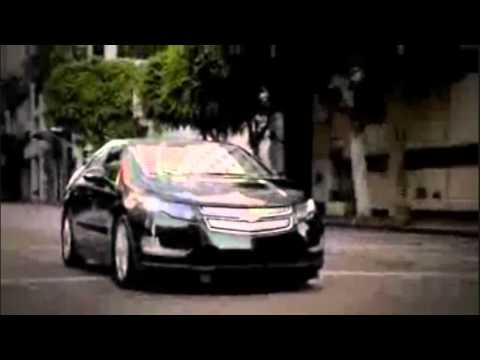
Act V: The Forward Motion (2013–2023)
"Find New Roads"
By 2013, Chevrolet could no longer sustain a heritage-only strategy. The automotive landscape was transforming: Tesla had demonstrated that electric vehicles could be desirable; ride-sharing was challenging car ownership itself; and a new generation of consumers viewed automobile advertising with institutional suspicion.
"Find New Roads" was Chevrolet’s attempt to reorient its narrative axis from past to future. The slogan was deliberately open-ended—not a destination but an orientation. The campaign featured Chevrolet’s first serious electric vehicle messaging, alongside traditional truck and SUV advertising.
The tension was evident. Chevrolet wanted to honor its legacy while signaling reinvention. "Find New Roads" acknowledged that the roads Chevrolet helped build were no longer sufficient. New roads—electrified, autonomous, shared—required new vehicles. Chevrolet claimed it was ready to build them.
Link: Find New Roads (2013):

Act VI: The Collective Turn (2023–Present)
"Together, Let’s Drive"
Chevrolet’s current campaign reflects a fundamental shift in American cultural discourse. The hyper-individualism of "Like a Rock" and the patriotic collectivism of "Heartbeat of America" are replaced by quiet, inclusive togetherness.
"Together, Let’s Drive" features diverse families, multi-generational households, and community groups. The tone is gentle, almost therapeutic. The cars are present but not dominant. The message: mobility is connection, and connection is healing.
This campaign is Chevrolet’s response to political polarization, social isolation, and climate anxiety. It acknowledges that the open road is no longer an uncomplicated symbol of freedom—roads require maintenance, generate emissions, and divide communities. Chevrolet’s new promise is not escape but presence.
Whether this campaign achieves the cultural permanence of its predecessors remains uncertain. But it demonstrates Chevrolet’s enduring instinct: when America changes, Chevrolet changes with it
Comparative Table: Chevrolet’s Cultural Narratives
| See the USA in Your Chevrolet | 1950s–60s | Optimism, exploration | Postwar abundance, manifest destiny |
| Heartbeat of America | 1980s | Patriotism, resilience | Reagan-era confidence, industrial pride |
| Like a Rock | 1991–2004 | Individual durability | Gen-X authenticity, anti-corporate sentiment |
| Chevy Runs Deep | 2010 | Nostalgia, continuity | Post-crash anxiety, longing for stability |
| Find New Roads | 2013–23 | Innovation, possibility | Tech optimism, EV transition |
| Together, Let’s Drive | 2023– | Unity, inclusivity | Post-pandemic healing, collective action |
Expert Analysis: The Chevrolet Formula
1. Values Over Specifications
Chevrolet’s most successful campaigns are almost entirely feature-agnostic. They do not discuss horsepower, torque, or fuel economy. They discuss freedom, durability, and belonging. This abstraction allows the brand to remain relevant across product cycles and technological revolutions.
2. Cultural Borrowing
"Like a Rock" and "Heartbeat of America" succeeded by annexing pre-existing cultural assets—Bob Seger’s song, the iconography of the American flag. This strategy reduces advertising resistance; consumers are not being sold a car but reminded of something they already value.
3. Consistent Inconsistency
Chevrolet has never maintained a single slogan for more than a decade. This is often framed as a weakness, but it reflects the brand’s sensitivity to cultural context. Chevrolet changes because America changes. The brand’s consistency is not at the level of message but at the level of orientation: always the car of the people, however "the people" are currently defined.
4. The Heritage Paradox
Chevrolet’s greatest asset is also its greatest liability. Its history provides emotional depth and credibility, but it also creates backward gravity. Campaigns like "Find New Roads" struggle to escape the gravitational pull of "See the USA" and "Like a Rock." The brand’s future depends on its ability to make heritage a foundation for reinvention rather than a substitute for it.
Industry Impact: The Automotive Narrative Template
Chevrolet’s advertising influenced not only competitors but the category itself:
Ford adopted patriotic and rugged messaging in response to Chevrolet’s dominance.
Ram Trucks borrowed the "Like a Rock" formula with its "Built to Serve" campaigns.
Toyota and Honda,长期 perceived as utilitarian brands, began investing in emotional storytelling after observing Chevrolet’s success.
More broadly, Chevrolet demonstrated that automotive advertising need not be about automobiles. The car is a prop. The protagonist is the driver’s identity, aspirations, and values.
Conclusion: The Company That Sold America to Itself
Chevrolet’s advertising journey is a century-long conversation between a brand and a nation. When America was building highways and suburbs, Chevrolet provided the soundtrack. When America needed reassurance of its industrial strength, Chevrolet provided the pulse. When America sought authenticity in an age of mass production, Chevrolet provided the rock.
The brand’s critics argue that this is manipulation—that Chevrolet has consistently profited from emotional appeals while manufacturing vehicles of merely adequate quality. There is truth in this critique. But it misses a larger point.
Chevrolet’s advertising succeeded not because it deceived Americans but because it articulated what Americans already believed about themselves. The open road was beautiful. Hard work did deserve durable rewards. Community is worth preserving. Chevrolet did not invent these values; it simply recognized them, honored them, and claimed a relationship to them.
This is the final lesson of Chevrolet’s advertising: the most powerful brands are not creators of meaning but custodians of it. They do not tell consumers what to value; they demonstrate that they value what consumers already do.
"See the USA in Your Chevrolet" is no longer on air. "Heartbeat of America" is a relic of the Reagan era. "Like a Rock" fades with Bob Seger’s retirement. But the essential Chevrolet proposition—we are the car of the people, whoever the people are, wherever they are going—endures.
Because America endures. And as long as there are roads, Chevrolets will be on them. Not because the cars are superior, but because the stories are.
Discover the actor featured in the Chevrolet Silverado EV "Future of Trucks" ad. Uncover insights about their role and the ad's impact on the automotive industry.
Explore Chevrolet's profound influence on advertising and culture, showcasing iconic campaigns that shaped perceptions and connected with audiences worldwide.

Discover how Lenovo is shaping the future of technology advertising, driving innovation and expanding market reach in the digital landscape.

Discover how to leverage viral challenges on TikTok to create impactful ads that engage audiences and boost your brand's visibility effectively.

Discover the iconic Adidas commercials that shaped basketball advertising, showcasing legendary athletes and unforgettable moments in sports marketing history.

Discover how Intel's innovative advertising strategies revolutionized computer marketing, shaping industry trends and consumer perceptions.

Discover how Huawei is transforming mobile advertising with innovative strategies and technologies, driving growth and engagement in the digital landscape.

Explore the impact of Adidas ads in football campaigns, showcasing innovative strategies and iconic moments that elevate brand engagement in the sport.

Discover Pizza Hut's most creative advertising slogans that have captured hearts and appetites. Explore the clever phrases that define their brand identity.

Discover how LG is transforming smart home advertising with innovative technology and strategies that enhance consumer engagement and drive sales.