

For decades, basketball advertising had a clear hierarchy. Nike owned the icons—Michael Jordan, LeBron James, Kobe Bryant. Its commercials were cinematic coronations, anointing athletes as demigods. The implication was unmistakable: to wear Nike was to touch greatness.
Adidas could not compete on this terrain. It did not have Jordan. It did not have a signature franchise that rivaled Air. So it chose a different battle: not for the crown, but for the heart.
Adidas basketball commercials have never tried to convince viewers that its athletes are superhuman. They have insisted, instead, that athletes are human—that greatness is not a birthright but an earned condition. This philosophy has sustained the brand through two decades of competition with a dominant rival. It has elevated role players into cultural icons and transformed rookies into movement starters.
This is the story of how Adidas learned to stop worshiping heroes and start believing in people.
Act I: The Declaration (2004)
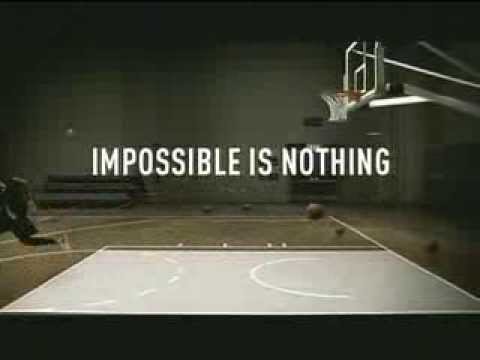
"Impossible Is Nothing"
Before 2004, Adidas basketball advertising was respectable but forgettable. The brand had credible athletes but no unifying philosophy. It needed a statement of purpose that could stand alongside Nike's "Just Do It" without imitating it.
"Impossible Is Nothing" was that statement. But the campaign's genius was not its slogan; it was its subjects. Tracy McGrady and Gilbert Arenas were not the NBA's most decorated players. McGrady had never won a playoff series. Arenas was a second-round pick who had been told he would never be a star.
The commercials did not hide these facts. They built narratives around them. McGrady's ad traced his journey from overlooked high school prospect to scoring champion. Arenas's ad featured him recounting the doubters—"You will never start," "You will never be an All-Star"—with each prediction displayed on screen before being shattered.
This was a radical departure from sports advertising convention. Nike's commercials presented greatness as inevitable; Adidas presented it as improvised. The message was not "be like Mike." It was "become yourself."
Link: Impossible Is Nothing – Tracy McGrady:
Act II: The Acceleration (2011)
"Adidas Is All In"
By 2011, Adidas had established its philosophical foundation. Now it needed cultural velocity. Derrick Rose provided it.
Rose was the youngest MVP in NBA history—an explosive, acrobatic guard who seemed to defy physics. His Adidas commercials matched his playing style: rapid cuts, kinetic typography, a soundtrack that pulsed with urgency. The "Adidas Is All In" campaign positioned Rose not as a quiet leader but as a force of nature.
Yet the campaign's most significant innovation was integration. Rose's commercials did not exist in isolation; they were nodes in a larger network of Adidas content featuring musicians, fashion designers, and street culture figures. The message was clear: basketball was no longer a sport adjacent to culture. It was culture itself.
Adidas recognized that Derrick Rose's appeal extended beyond fans of the Chicago Bulls. He represented a style of movement—explosive, improvisational, fearless—that resonated with dancers, skaters, and creators in other domains. By positioning Rose within this broader ecosystem, Adidas made basketball advertising legible to audiences who did not follow the NBA.
Link: Adidas lo apuesta todo – Derrick Rose:

Act III: The Consolidation (2014)
"All In or Nothing"
The 2014 "All In or Nothing" campaign represented Adidas's maturation as a basketball marketer. The slogan was declarative, the visuals were cinematic, and the roster featured the brand's deepest athlete lineup to date.
Yet the campaign's true significance was structural. Adidas had spent a decade building individual athlete narratives; now it was weaving those narratives into a collective identity. The commercials intercut Damian Lillard's clutch shooting, Dwight Howard's defensive dominance, and John Wall's breathtaking speed. Each athlete retained his distinct story, but those stories now served a larger argument: Adidas is the brand of competitors who leave nothing on the court.
This was Adidas's most direct challenge to Nike's team-oriented marketing. If Nike was the Dream Team, Adidas was the All-Underdogs Team—players who had been underestimated, overlooked, or dismissed, and who had responded with relentless productivity.
Act IV: The Individualists (2018)
"Create the Answer"
By 2018, the NBA had transformed. Positionless basketball, pace-and-space offense, and player empowerment had redefined what stardom looked like. Adidas responded with its most intellectually confident campaign.
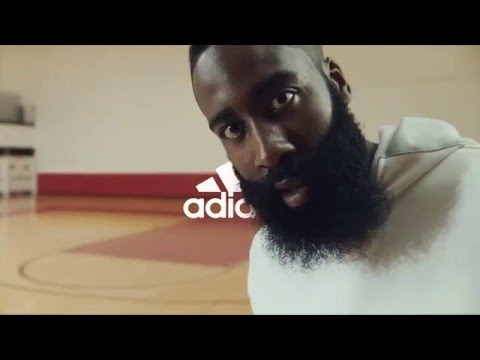
"Create the Answer" featured James Harden and Damian Lillard—two players who could not be more different in style but who shared a fundamental trait: they solved problems that others could not. Harden's step-back three, Lillard's deep range, their capacity to generate offense against perfectly executed defense—these were not athletic gifts but creative achievements.
The campaign's visual language reflected this emphasis on cognition. Close-ups of eyes, hands, and the geometry of the court. Slow-motion sequences that revealed the calculus within each movement. The message was subtle but unmistakable: Adidas is the brand for players who think differently.
This positioning was strategically brilliant. Nike owned athletic supremacy; Adidas could never credibly claim to have more physically dominant players. But creativity is not a hierarchy; it is a spectrum. By claiming creativity as its territory, Adidas created a category it could lead rather than a competition it would lose.
Link: Create the Answer – James Harden:
Act V: The Succession (2024–2025)
"Scary Good" and the Anthony Edwards Era
Every generation, a player arrives who does not merely excel within the league's existing conventions but threatens to explode them. Anthony Edwards is that player for the 2020s.
Adidas's 2024 "Scary Good" campaign captured Edwards's unique menace. The commercials emphasized his power, his confidence, his apparent inability to recognize pressure as a constraint. But they also emphasized something rarer: joy. Edwards plays basketball with visible delight—a quality that Adidas framed not as naivety but as sovereignty.
The 2025 campaign, "We All Need Someone to Make Us Believe," extended this narrative. It acknowledged that Edwards is not yet LeBron James or Stephen Curry. He has not won championships or accumulated individual accolades. But he has something arguably more valuable in contemporary culture: authentic belief in himself.
Adidas's bet is that this belief will be contagious. That fans who watch Edwards will not merely admire his talent but will adopt his confidence. The commercials are not documentation of achievement; they are prophecy.
Link: Scary Good – Anthony Edwards (2024):

Link: We All Need Someone to Make Us Believe – Adidas Basketball (2025): https://www.youtube.com/watch?v=Al3h1DXwwR
Comparative Table: Adidas Basketball's Narrative Evolution
| Impossible Is Nothing | 2004 | Tracy McGrady, Gilbert Arenas | "Greatness is earned" | Established brand philosophy |
| Adidas Is All In | 2011 | Derrick Rose | "Basketball is culture" | Expanded audience beyond sport |
| All In or Nothing | 2014 | Damian Lillard, John Wall | "Collective identity" | Challenged Nike's team narrative |
| Create the Answer | 2018 | James Harden | "Creativity is superiority" | Differentiated through cognition |
| Scary Good / Believe | 2024–25 | Anthony Edwards | "Confidence is contagious" | Secured next-generation relevance |
Expert Analysis: The Adidas Basketball Formula
1. Narrative Over Achievement
Nike commercials celebrate what athletes have done. Adidas commercials speculate on what athletes might become. This distinction is not merely aesthetic; it is strategic. By focusing on potential rather than résumé, Adidas insulates itself from competitive outcomes. Tracy McGrady never won a championship, but "Impossible Is Nothing" remains powerful because it was never about winning—it was about persisting.
2. The Anti-Canonical Canon
Adidas has consistently built campaigns around players who were not consensus superstars. This was initially a constraint—Nike signed the transcendent talents—but it became a competitive advantage. Adidas's athletes are relatable in ways that Nike's demigods are not. Gilbert Arenas's insecurity, Derrick Rose's humility, Damian Lillard's underdog journey—these are not obstacles to overcome but narrative fuel.
3. Cultural Translation
Adidas basketball commercials do not assume viewers understand basketball. They translate athletic excellence into broader cultural currencies. Derrick Rose's explosiveness becomes a metaphor for creative breakthrough. James Harden's step-back becomes an emblem of intellectual unconventionality. Anthony Edwards's confidence becomes a template for self-belief in any domain.
4. The Succession Architecture
Adidas's handling of athlete transitions is arguably its most underappreciated achievement. The brand did not abruptly pivot from Derrick Rose to James Harden; it layered narratives, allowing each athlete's story to inform the next. This continuity gives Adidas basketball advertising the texture of an ongoing novel rather than a series of disconnected short stories.
Industry Impact: The Two-Path Model
Adidas's basketball advertising established that there are two viable strategies for competing with Nike:
The Direct Challenge (attempted by Under Armour with Stephen Curry) — Sign a transcendent talent and build campaigns around their supremacy.
The Indirect Approach (perfected by Adidas) — Sign players who embody compelling narratives and weave those narratives into a collective identity.
The direct challenge requires capturing lightning in a bottle; the indirect approach requires sustained narrative intelligence. Adidas has proven that the latter is replicable in ways the former is not. Curry is irreplaceable; the underdog narrative is endlessly renewable.
Conclusion: The Believers' Brand
Adidas basketball commercials have never been the most watched or the most awarded. They have never generated the same cultural combustion as Nike's landmark campaigns. But they have achieved something arguably more difficult: twenty years of consistent, coherent storytelling without a single transcendent superstar.
This required discipline. When Tracy McGrady's career plateaued, Adidas did not abandon the "Impossible Is Nothing" philosophy; it transferred it to Derrick Rose. When Rose's body betrayed him, the philosophy migrated to Damian Lillard and James Harden. Now it is being inscribed onto Anthony Edwards.
The athletes change. The sneakers evolve. The visual aesthetics shift with each decade's preferences. But the fundamental proposition remains constant: Adidas believes in people who believe in themselves.
This is not a claim about product performance. It is not even really a claim about basketball. It is a claim about human potential—that it is widely distributed, that it is often obscured, and that it can be activated through recognition and support.
Nike sells greatness. Adidas sells belief.
In a culture saturated with images of effortless superiority, belief is the scarcer resource. And scarcity, in advertising as in economics, creates value.
This is Adidas's enduring legacy in basketball marketing. Not the shoes. Not the slogans. Not the highlight reels. But the quiet, persistent insistence that the players who struggle, who doubt, who improvise—these players are not lesser than the gods. They are, perhaps, more human.
And that humanity, rendered with respect and cinematic care, becomes its own form of greatness.
Discover the song featured in the latest Adidas football commercial. Uncover the artist and track that sets the perfect tone for the game.
Discover the talented actress featured in the latest Adidas women's sportswear ad. Uncover her story and the impact of her performance in this campaign.
Discover the song featured in the Adidas "Impossible Is Nothing" commercial. Uncover the artist and the powerful message behind this iconic ad.

Discover how Intel's innovative advertising strategies revolutionized computer marketing, shaping industry trends and consumer perceptions.

Discover how Huawei is transforming mobile advertising with innovative strategies and technologies, driving growth and engagement in the digital landscape.

Explore the impact of Adidas ads in football campaigns, showcasing innovative strategies and iconic moments that elevate brand engagement in the sport.

Discover Pizza Hut's most creative advertising slogans that have captured hearts and appetites. Explore the clever phrases that define their brand identity.

Discover how LG is transforming smart home advertising with innovative technology and strategies that enhance consumer engagement and drive sales.

Discover how Netflix leverages drama in its advertising campaigns to captivate audiences and enhance viewer engagement. Explore the art of storytelling in ads.

Discover the iconic Adidas ads that shaped Olympic campaigns, showcasing creativity and athleticism. Explore the impact of these memorable marketing moments.

Discover how Samsung Ads revolutionized smartphone marketing, enhancing brand visibility and consumer engagement through innovative advertising strategies.