

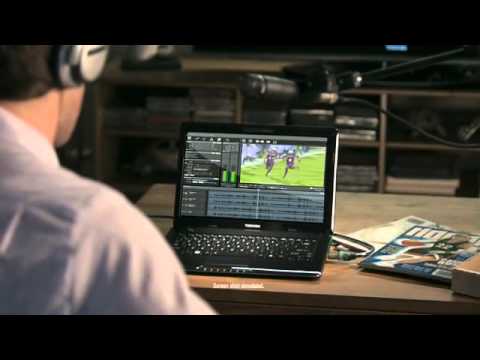
Before Apple told you to "Think Different," before Samsung built a "Smart Home," and before Microsoft put a cloud in every office, there was Toshiba. The Japanese multinational, founded in 1939, never cultivated the rebellious aura of Silicon Valley. It never sought celebrity endorsements or Super Bowl spectacle. Yet its advertising campaigns quietly established the vocabulary and syntax that every major technology brand now speaks.From the first mass-market laptops to sustainability narratives that anticipated today's climate imperatives, Toshiba's commercials taught the industry that technology marketing must balance three tensions: innovation with reliability, performance with lifestyle, and ambition with responsibility. This is the story of the advertising pioneer that the history books often forget—and the competitors who memorized its lessons.Act I: The Portable Promise (1980s–1990s)In 1985, Toshiba released the T1100, widely considered the first mass-market laptop computer. The device was a brick by today's standards—a magnesium-alloy suitcase with a monochrome screen. But Toshiba's advertising understood something profound: this was not merely a smaller computer. It was a liberation device.Early Toshiba laptop commercials did not dwell on processor speeds or memory specifications. Instead, they showed briefcases opening on airplane tray tables, businessmen reviewing spreadsheets in hotel lobbies, students typing notes in sunlit libraries. The message was radical in its simplicity: work was no longer a place; it was a portable activity.This was the birth of "lifestyle integration" in tech advertising. Toshiba did not invent the concept, but it was the first to apply it systematically to personal computing. The brand understood that professionals did not want a machine; they wanted autonomy. The laptop was the tool; mobility was the benefit.Link: Toshiba Laptop Commercial (1990s):
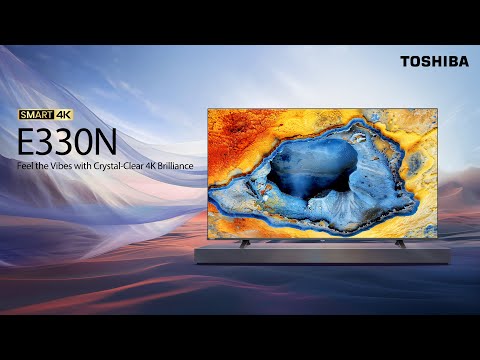
Link: Toshiba Notebook TV Ad (2000s):

Comparative Table: Toshiba's Advertising Archetypes
| 1980s–1990s | Laptop portability | "Work anywhere" | Lifestyle integration pioneer |
| 1990s–2000s | Consumer electronics reliability | "Built to last" | Trust as brand currency |
| 2000s | "Leading Innovation" | "Innovation is our system" | Multi-category brand coherence |
| 2000s | Regza television | "Technology becomes art" | Aesthetic premium positioning |
| 2010s–2020s | Sustainability & infrastructure | "Innovation for the planet" | CSR narrative integration |
Expert Analysis: The Invisible Influence
1. The Lifestyle Template
Before Apple's "Macintosh" campaigns showed computers in homes, Toshiba showed laptops in coffee shops. The brand normalized the idea that technology is ambient, not exceptional. This framing shifted the industry's rhetorical center of gravity from engineering achievement to human outcome.
2. The Reliability Doctrine
Toshiba's emphasis on durability created a consumer expectation that persists today. Every tech review that mentions "build quality" and every warranty extension owes something to Toshiba's 1990s advertising. The brand established that innovation without reliability is merely a prototype.
3. The Diversification Blueprint
Toshiba's "Leading Innovation" umbrella demonstrated that technology brands could address consumer, enterprise, and infrastructure markets without schizophrenia. The campaign's visual and verbal consistency proved that category breadth need not dilute brand identity—if the unifying idea is sufficiently abstract and authentic.
4. The Sustainability Precedent
Toshiba's infrastructure advertising in the 2010s was pre-emptive. It recognized that environmental responsibility would become a competitive differentiator before most technology brands were willing to make substantive commitments. This foresight positioned Toshiba as a credible voice in sustainability conversations, even as its consumer presence diminished.
Industry Impact: The Borrowed Legacy
Toshiba's advertising influence is most visible in the campaigns of its competitors:
Apple adopted Toshiba's lifestyle framing but replaced functionality with creativity. The "Think Different" campaign did not show computers being used; it showed computers enabling human expression.
Samsung replicated Toshiba's diversified portfolio strategy but added aggressive comparative advertising. Samsung did not just claim innovation; it claimed superiority over Apple.
Microsoft inherited Toshiba's enterprise reliability positioning but translated it for the cloud era. Azure's "Do More" campaign echoes the productivity promise of Toshiba's 1990s laptop commercials.
Toshiba's misfortune was not strategic failure but competitive intensity. The brand established the playing field; others arrived with larger budgets and sharper storytelling. Yet every pass thrown in that field follows rules that Toshiba helped write.
Conclusion: The Forgotten Architect
Advertising history has a bias toward spectacle. We remember the 1984 Super Bowl commercial. We remember "Just Do It." We remember Michael Jackson's hair catching fire. We do not remember the Toshiba executive who first decided to show a laptop on an airplane tray table.
But influence is not measured in memorability. It is measured in adoption. Toshiba's advertising strategies—lifestyle integration, trust signaling, diversified coherence, sustainability narrative—are now industry defaults. Every technology brand that shows its product in a home, that emphasizes durability, that balances consumer and enterprise messaging, that claims environmental responsibility, is speaking a language Toshiba helped codify.
The three stripes of Adidas, the bitten apple of Apple, the swoosh of Nike—these are the symbols advertising history celebrates. Toshiba's legacy is not a symbol. It is the grammar beneath all symbols.
"Leading Innovation" was not the most exciting slogan of its era. It did not inspire tattoos or protest signs. But it was a promise kept across decades and categories. And in the quiet persistence of that promise, Toshiba demonstrated something profound: the most influential advertising does not always look influential. Sometimes it just looks like work.
And then, years later, you notice everyone else is doing it.
Explore Microsoft's advertising journey in software innovation, highlighting key strategies, advancements, and the impact on the tech industry.

Discover Volvo's innovative advertising journey in safety campaigns, showcasing their commitment to protecting lives and redefining automotive safety standards.

Explore the influence of Chevrolet ads on the automotive industry. Discover how innovative marketing shapes consumer perceptions and drives sales.

Discover how Lenovo is shaping the future of technology advertising, driving innovation and expanding market reach in the digital landscape.

Discover how to leverage viral challenges on TikTok to create impactful ads that engage audiences and boost your brand's visibility effectively.

Discover the iconic Adidas commercials that shaped basketball advertising, showcasing legendary athletes and unforgettable moments in sports marketing history.

Discover how Intel's innovative advertising strategies revolutionized computer marketing, shaping industry trends and consumer perceptions.

Discover how Huawei is transforming mobile advertising with innovative strategies and technologies, driving growth and engagement in the digital landscape.