

For over seventy years, Dunkin' Donuts has sold more than coffee and pastries; it has sold the rituals of daily life. Founded in 1950 in Quincy, Massachusetts, the brand grew from a local doughnut shop into a national icon not merely through product quality, but through a lexicon of advertising phrases that became embedded in the American vernacular. From the groggy dedication of "Time to Make the Donuts" to the propulsive energy of "America Runs on Dunkin," the company's slogans have functioned as cultural shorthand for hard work, morning routines, and the quiet dignity of showing up. This is the story of how simple words, repeated with consistency, transformed a regional chain into a symbol of American perseverance.
Act I: The Dignity of Labor (1980s)
"Time to Make the Donuts" – The Birth of an Everyman Hero
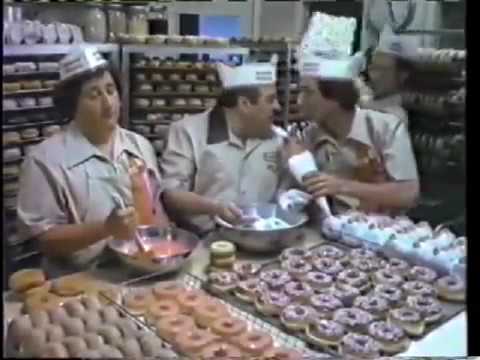
In 1981, Dunkin' Donuts introduced a character who would become one of the most beloved figures in advertising history. Fred the Baker, played by actor Michael Vale, was not a celebrity. He was not glamorous. He was tired. Dressed in a modest brown apron, his eyes heavy with sleep, Fred shuffled into the kitchen before dawn to prepare fresh doughnuts. His mantra, delivered with weary sincerity: "Time to make the donuts."
The campaign was revolutionary in its anti-spectacle. While other brands chased rock stars and supermodels, Dunkin' Donuts celebrated the ordinary. Fred represented every American who clocked in before sunrise—factory workers, nurses, bakers, truck drivers. The slogan transcended advertising; it became a cultural catchphrase for obligation, endurance, and quiet pride. It was quoted in Saturday Night Live sketches, used by comedians, and eventually named one of the greatest advertising slogans of all time.
Fred's retirement in 1998 was treated as a national event, complete with farewell commercials and widespread media coverage. The character had become so beloved that his exit felt like the departure of a trusted neighbor.
Link: “Time to Make the Donuts” (1981 original ad with Fred the Baker):
Act II: Value and Accessibility (1990s)
“It’s Worth the Trip”
As the 1990s brought economic uncertainty and the rise of discount competitors, Dunkin' Donuts pivoted to emphasize affordability without sacrificing quality. The "It's Worth the Trip" campaign reassured customers that the brand's coffee and doughnuts justified the journey. It was a subtle but important message: Dunkin' wasn't just convenient; it was worth it.
Link: Dunkin’ Donuts Value Campaign – “It’s Worth the Trip”:
“You ‘Kin Do It!”
This playful, motivational phrase was a linguistic wink. By truncating "Dunkin'" to "‘Kin," the slogan created an intimate, almost inside-joke relationship with consumers. It suggested that Dunkin' wasn't a corporation; it was a cheerleader. The message was simple: whatever your day holds, you can handle it—especially with a cup of coffee in hand.
Act III: Freshness and Control (2000s)
“We Don’t Make It Until You Order It”
As fast-food customization became a consumer expectation, Dunkin' Donuts responded with a slogan that promised tailored freshness. This phrase was a direct rebuttal to the perception of mass-produced, pre-made food. It positioned each cup of coffee and each doughnut as a personal transaction, not an assembly line output. In an era of impersonal efficiency, Dunkin' Donuts chose to highlight human responsiveness.
Act IV: The Modern Mantra (2006–Present)
“America Runs on Dunkin”
If "Time to Make the Donuts" was about the maker, "America Runs on Dunkin" is about the consumer. Introduced in 2006, this slogan marked a profound shift in brand positioning. Dunkin' Donuts was no longer just a place that made food; it was the fuel that powered the country.
The campaign recognized that for millions of Americans, the day does not begin until the first sip of Dunkin' coffee. It acknowledged the commute, the morning rush, the double-shift. The slogan was aspirational yet grounded—it suggested energy and momentum, but also reliability. It transformed coffee from a beverage into an infrastructure.
Over nearly two decades, "America Runs on Dunkin" has achieved that rarest of advertising feats: it has become a truism. Politicians use it. Comedians parody it. Consumers repeat it without irony because it feels true.
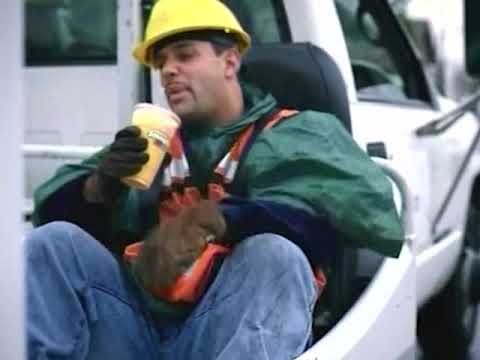
Link: “America Runs on Dunkin” (2006 launch campaign):
“Happiness in a Cup”
This campaign represented Dunkin' Donuts' full embrace of coffee culture. As Starbucks defined premium, artisanal coffee, Dunkin' Donuts claimed emotional coffee. The message was democratic: you don't need a PhD in espresso to enjoy great coffee; you just need a cup that makes you happy.
Link: Dunkin’ Donuts Coffee Ad – “Happiness in a Cup”: 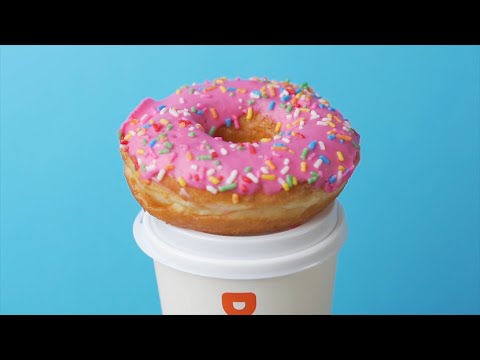
Comparative Table: Dunkin's Lexicon of Routine
| Time to Make the Donuts | 1980s | Freshness, labor dignity | Everyman icon; sitcom-level fame |
| It's Worth the Trip | 1990s | Value, accessibility | Reinforced affordability ethos |
| You 'Kin Do It! | 1990s | Motivation, intimacy | Playful brand-consumer bond |
| We Don't Make It Until You Order It | 2000s | Freshness, customization | Built trust in quality control |
| America Runs on Dunkin | 2006–present | Daily energy, routine | Enduring brand mantra |
| Happiness in a Cup | 2000s | Coffee, emotion | Expanded beyond doughnuts |
Expert Analysis: The Mechanics of Memorability
1. Simplicity as Strategy
Dunkin' Donuts' most successful phrases share a common structure: they are short, rhythmic, and colloquial. "Time to make the donuts" is six syllables. "America Runs on Dunkin" is seven. They fit comfortably in speech, which is why they migrated from commercials to conversations.
2. The Ritual Narrative
Unlike brands that sell transformation or escape, Dunkin' Donuts sells constancy. Its slogans rarely promise excitement; they promise reliability. This is a sophisticated emotional appeal. In a chaotic world, a predictable morning coffee is not boring—it is anchoring.
3. Character Over Celebrity
Dunkin' Donuts resisted the celebrity endorsement model for decades. Fred the Baker was fictional, ordinary, and unforgettable. This choice reinforced the brand's everyman identity. Even when Dunkin' later partnered with figures like Rob Gronkowski and Ben Affleck, the campaigns retained a self-aware, local-hero tone rather than Hollywood glamour.
4. Product-to-Lifestyle Evolution
The brand's linguistic journey traces the maturation of its category. Early slogans focused on production (fresh doughnuts). Mid-era slogans emphasized transaction (value, customization). Modern slogans address consumption (energy, happiness). This evolution reflects not just Dunkin's growth, but the mainstreaming of coffee culture itself.
Industry Impact and Legacy
Dunkin' Donuts' slogan strategy influenced an entire sector:
Starbucks adopted lifestyle narratives but maintained a premium distance.
McDonald's McCafé line borrowed Dunkin's emphasis on approachability and value.
Tim Hortons, the Canadian chain, built its identity around community and routine—directly echoing Dunkin's playbook.
The brand also demonstrated that consistency and evolution are not opposites. "America Runs on Dunkin" has endured since 2006 not because it remained static, but because it absorbed new meanings. In 2006, it was about morning commuters. Today, it also implies cultural ubiquity, digital presence, and even political identity.
Conclusion: The Poetry of the Ordinary
Dunkin' Donuts did not achieve advertising immortality through breakthrough technology or viral stunts. It achieved it through patience and observation. The brand recognized that the most universal human experiences are often the most overlooked: the alarm clock, the coffee cup, the drive to work.
By giving language to these silent rituals, Dunkin' Donuts transformed a transaction into a relationship. "Time to Make the Donuts" honored the worker. "America Runs on Dunkin" honored the worker's fuel. Together, these phrases form a folk poetry of American labor—unpretentious, durable, and deeply felt.
In the history of advertising, most slogans fade with the campaign. Dunkin' Donuts created slogans that faded into the language itself.
Discover the most memorable slogans from Dunkin’ Donuts that have captured hearts and taste buds. Explore the catchy phrases that define a brand!

Discover how LG is transforming smart device advertising with innovative strategies and cutting-edge technology to enhance user engagement and brand visibility.

Discover the impact of iconic Adidas campaigns on urban fashion. Explore how these bold designs shaped street style and influenced culture worldwide.

Discover how Toshiba's innovative advertising strategies reshaped tech marketing, influencing trends and consumer engagement in the digital age.

Explore Microsoft's advertising journey in software innovation, highlighting key strategies, advancements, and the impact on the tech industry.

Discover Volvo's innovative advertising journey in safety campaigns, showcasing their commitment to protecting lives and redefining automotive safety standards.

Explore the influence of Chevrolet ads on the automotive industry. Discover how innovative marketing shapes consumer perceptions and drives sales.

Discover how Lenovo is shaping the future of technology advertising, driving innovation and expanding market reach in the digital landscape.

Discover how to leverage viral challenges on TikTok to create impactful ads that engage audiences and boost your brand's visibility effectively.