

In 1991, the personal computer was a beige box. Consumers bought it based on price, screen size, and the reputation of Compaq or IBM. The component that actually performed the computation—the microprocessor—was an abstraction. It had no face, no voice, no identity.
Four years later, a remarkable transformation had occurred. Surveys showed that 80% of consumers could identify the Intel Inside logo. The five-note jingle was recognized with the same immediacy as the NBC chimes or the McDonald's arches. A hidden component, buried beneath plastic and silicon, had become a household name.
This was not inevitable. It was not the natural outcome of superior engineering or market dominance. It was the result of one of the most audacious advertising strategies ever conceived: the deliberate, sustained effort to brand the invisible.
This is the story of how Intel convinced the world to care about what it could not see.
Act I: The Problem of Invisibility (1980s)
Before Intel's advertising revolution, microprocessors were marketed through a B2B veil. Intel sold chips to OEMs—IBM, Compaq, Dell—who integrated them into complete systems. Consumers evaluated the finished product without awareness of its internal architecture. A 286-based PC looked identical to a 386-based PC. The performance differential was real, but it was uncommunicated.
Intel's early attempts to address this invisibility were technically sound but strategically timid. Print advertisements emphasized engineering superiority, using benchmarks and specifications to differentiate the 386 from its predecessor. These ads were effective within the industry trade press but failed to penetrate consumer consciousness.
The breakthrough came in 1988 with the Red X campaign. Intel placed full-page newspaper advertisements showing a 286 microprocessor crossed out in red, positioned against the superior 386. The visual was simple, almost crude. Its impact was immediate: consumer interest in processor specifications surged from 15% to 66%.
Intel had discovered a profound truth: consumers will care about components if you give them permission and vocabulary. The Red X provided both.
Act II: The Architecture of Ubiquity (1991)
"Intel Inside"
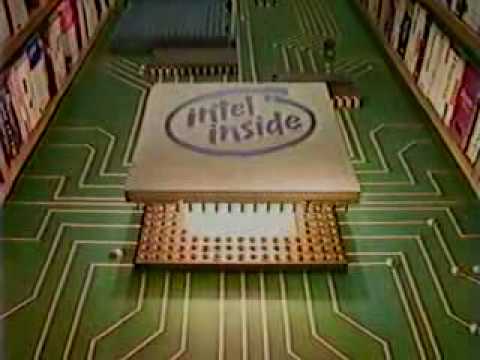
The Intel Inside campaign, launched in 1991, was not a single advertisement but a system of advertisements. Its architecture contained four interdependent innovations:
1. Ingredient Branding
Intel adapted a strategy previously reserved for consumer goods—think NutraSweet in diet soda or Teflon in cookware—and applied it to technology. The processor was repositioned from a component to an ingredient. This linguistic shift was critical: ingredients are chosen deliberately; components are merely present.
2. The Logo as Seal
The Intel Inside logo was designed to function as a certification mark, analogous to Underwriters Laboratories or the Good Housekeeping Seal. Its presence on a PC advertisement signified not just that the computer contained an Intel processor, but that the computer had passed Intel's quality standards.
3. The Audio Signature
The five-note jingle—D♭, D♭, G♭, D♭, A♭—was a masterwork of mnemonic engineering. It was short enough to be memorable, distinctive enough to be unmistakable, and adaptable enough to conclude commercials of any length or tone. Within months, listeners could identify the brand without visual reference.
4. Cooperative Advertising
This was Intel's most audacious innovation. The company subsidized PC manufacturers' advertising costs—up to 50%—in exchange for featuring the Intel Inside logo and jingle. By 1992, over 500 OEMs had enrolled, and nearly 70% of all PC advertisements carried Intel branding.
The cooperative model transformed Intel from an advertiser into an advertising infrastructure. The company was no longer competing for attention within PC manufacturers' commercials; it was underwriting those commercials and embedding its identity within them.
Link: Intel Inside Commercial (1991):
Act III: The Emotional Bridge (1993)
"Pentium"
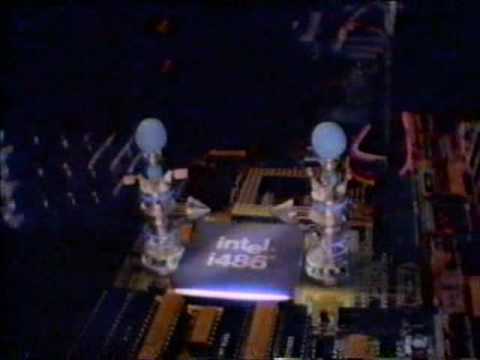
The Pentium launch represented Intel's transition from awareness generation to preference cultivation. Consumers now recognized Intel; Intel needed them to desire Intel.
The Pentium commercials abandoned technical demonstration entirely. They showed scientists visualizing data, architects rendering buildings, children exploring educational software. The processor was never visible; its effects were everywhere.
This was the campaign that transformed Intel from a component manufacturer into a facilitator of human potential. The message was no longer "our processor is faster." It was "our processor enables your aspirations."
Link: Pentium Launch Ad (1993):
Act IV: The Lifestyle Pivot (2003)
"Centrino"
By 2003, the personal computer was becoming personal in a new sense: it was leaving the desk. Laptops, once expensive compromises, were approaching desktop performance. Wireless networking was transitioning from novelty to expectation.
Intel's Centrino campaign addressed this shift with single-minded precision. The commercials showed travelers in airports, students in coffee shops, professionals in outdoor spaces—all connected, all productive, all liberated from Ethernet cables.
The Centrino brand was itself an advertising invention. It did not denote a single component but a platform: processor, chipset, and wireless adapter, engineered to work together. Intel had learned that consumers would embrace invisible technology if its benefits were rendered visible. Centrino's benefit was mobility, and the advertising never allowed viewers to forget it.
Link: Centrino Wireless Campaign (2003):
Act V: The Humanization (2010)
"Visual Life"
By 2010, Intel faced a paradox. Its processor branding was universally recognized, but that recognition had become mechanical. Consumers knew the logo and the jingle but felt no emotional connection to the brand.
The "Visual Life" campaign addressed this deficit through creative collaboration. Intel partnered with musicians, photographers, and designers, documenting their creative processes and the role of technology within them. The commercials were intimate, textured, and deliberately non-technical.
This was Intel's acknowledgment that the processor had completed its journey from invisibility to ubiquity—and now needed to become invisible again. Not invisible in the sense of unknown, but invisible in the sense of transparent: present but unnoticed, powerful but unobtrusive.
Link: Intel Visual Life Campaign (2010): https://www.youtube.com/watch?v=0rjC5XovVJ
Comparative Table: Intel's Strategic Evolution
| Red X | 1988 | Problem definition | "You should care about this" | Direct competitive comparison |
| Intel Inside | 1991 | Identity establishment | "This is what to look for" | Ingredient branding, co-op model |
| Pentium | 1993 | Emotional association | "This enables your aspirations" | Benefit visualization |
| Centrino | 2003 | Lifestyle integration | "This liberates your mobility" | Platform branding |
| Visual Life | 2010 | Cultural embedding | "This enables creativity" | Humanization through collaboration |
Expert Analysis: The Intel Doctrine
1. Ingredient Branding as Infrastructure
Intel's cooperative advertising model was its most imitated and least replicated innovation. The company spent approximately $7 billion on co-op advertising between 1991 and 2000—not as expenditure but as investment in distribution. Each subsidized OEM advertisement was simultaneously an Intel advertisement. This model transformed the entire PC advertising ecosystem, creating expectations that competitors could not meet and that OEMs could not resist.
2. The Mnemonic Advantage
The five-note jingle was not merely memorable; it was environmentally adaptive. It could be compressed into two seconds for broadcast, extended into full musical arrangements for events, and even played on ringtones and doorbells. Intel understood that audio branding operates through different cognitive pathways than visual branding, and exploited this distinction systematically.
3. The Abstraction Ladder
Intel's campaigns consistently moved up the abstraction ladder—from specifications (Red X) to certification (Intel Inside) to emotion (Pentium) to lifestyle (Centrino) to creativity (Visual Life). This progression was not reactive but architectural. Each campaign assumed the awareness established by its predecessor and added a new layer of meaning.
4. The Paradox of Visibility
Intel's ultimate achievement was making its product visible enough to be chosen, then invisible enough to be trusted without thought. The processor is now a background assumption in PC purchasing; consumers expect Intel performance without needing to verify it. This is the highest state of brand equity: not active preference but passive expectation.
Industry Impact: The Component Brand Revolution
Intel's success created an entirely new category of marketing: component consumer branding. Its influence is visible across technology:
Dolby adopted Intel's ingredient branding model, positioning its audio technology as a mark of quality in laptops, smartphones, and headphones.
NVIDIA built consumer awareness of graphics processors through the "GeForce" brand, directly inspired by Intel's Pentium strategy.
Qualcomm attempted similar branding with "Snapdragon," though without Intel's cooperative advertising infrastructure.
AMD spent decades struggling to match Intel's brand recognition, proving that engineering parity cannot compensate for advertising deficit.
The broader marketing industry recognized Intel Inside as one of the most influential campaigns of the 20th century—not because of its creativity, but because of its strategic architecture. It demonstrated that B2B technology companies need not accept invisibility. They could, through sustained investment and systematic execution, brand the unbrandable.
Conclusion: The Silence After the Jingle
In 2020, Intel began phasing out the Intel Inside jingle from its consumer advertising. The decision was not an admission of failure but an acknowledgment of completion. The processor no longer needed to announce itself. Its presence was assumed.
This is the final, paradoxical legacy of Intel's advertising revolution. The campaign that made the invisible visible succeeded so thoroughly that visibility became unnecessary. Consumers do not ask whether their computer has an Intel processor; they assume it does, or they assume the alternative is inferior. The brand has migrated from active consideration to structural expectation.
The five-note jingle still plays, occasionally, in nostalgic montages and retrospective documentaries. But its work is done. It transformed a commodity into a relationship, a component into a companion, a beige box into a vessel for human aspiration.
Intel Inside was never really about processors. It was about the belief that consumers deserve to know what powers their tools—and that companies willing to provide that knowledge, with consistency and integrity, earn something more valuable than market share.
They earn trust. And trust, once earned, is the only component that never becomes obsolete.
Discover the artist behind the captivating Intel Core Ultra campaign ad. Uncover the voice that brings innovation to life in this exciting promotion.
Discover how Intel transforms microchips into pop culture icons through innovative advertising. Explore the intersection of technology and creativity today.

Discover how Huawei is transforming mobile advertising with innovative strategies and technologies, driving growth and engagement in the digital landscape.

Explore the impact of Adidas ads in football campaigns, showcasing innovative strategies and iconic moments that elevate brand engagement in the sport.

Discover Pizza Hut's most creative advertising slogans that have captured hearts and appetites. Explore the clever phrases that define their brand identity.

Discover how LG is transforming smart home advertising with innovative technology and strategies that enhance consumer engagement and drive sales.

Discover how Netflix leverages drama in its advertising campaigns to captivate audiences and enhance viewer engagement. Explore the art of storytelling in ads.

Discover the iconic Adidas ads that shaped Olympic campaigns, showcasing creativity and athleticism. Explore the impact of these memorable marketing moments.

Discover how Samsung Ads revolutionized smartphone marketing, enhancing brand visibility and consumer engagement through innovative advertising strategies.

Discover how Jeep ads have shaped automotive culture, influencing trends and consumer perceptions. Explore the legacy of iconic campaigns and their impact.