

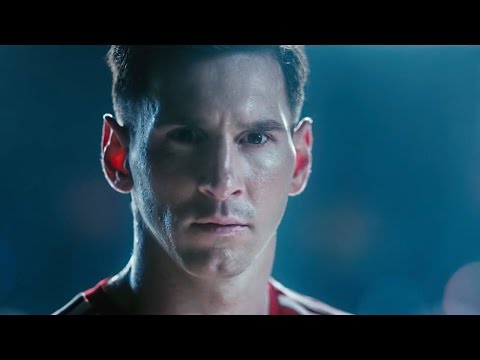
In 2016, Lionel Messi—widely considered the greatest footballer of his generation—signed an endorsement deal with a Chinese smartphone brand that most Western consumers had never heard of. The partnership was announced with billboards in Barcelona, television commercials across Latin America, and digital campaigns that reached hundreds of millions of football fans.
At the time, Huawei was already the world's third-largest smartphone manufacturer. But it was not yet a global brand. It lacked the cultural resonance of Apple, the ubiquity of Samsung, the heritage of Nokia. Messi changed that. Not overnight, and not through mere association. But his presence signaled something that advertising alone could not achieve: Huawei had arrived.
This is the story of how a Chinese technology company used celebrity, spectacle, localization, and platform innovation to transform itself from a manufacturer into a cultural institution—and how it sustained this transformation through geopolitical turbulence that would have crippled lesser brands.
Act I: The Human Interface (2016–2018)
"Lionel Messi and the Architecture of Aspiration"
When Huawei signed Lionel Messi, it was not acquiring a spokesperson. It was acquiring a translation layer.
Messi speaks no Mandarin. He has no expertise in smartphone engineering. His value to Huawei was not informational but emotional. He represented excellence achieved through persistence, genius expressed through humility, global fame maintained without scandal. These qualities were not specific to football; they were universally aspirational.
Huawei's Messi campaign did not attempt to connect the athlete to specific product features. The commercials showed Messi training, competing, celebrating—and, occasionally, holding a Huawei phone. The device was never the subject; it was the accompaniment. The message was subtle but unmistakable: Greatness trusts Huawei. Perhaps you should too.
The partnership was particularly effective in Latin America, where Messi's cultural stature approaches divinity. Huawei's market share in Argentina, Brazil, and Mexico increased substantially during the partnership period. More importantly, the brand acquired emotional permission to compete in markets where "Chinese technology" had previously been viewed with skepticism.
Link: Huawei Mate Series ft. Lionel Messi (2016):
Act II: The Product as Spectacle (2017)
"Mobile World Congress and the Event Horizon"
Product launch events are a standard component of technology marketing. Huawei transformed them into cultural spectacles.
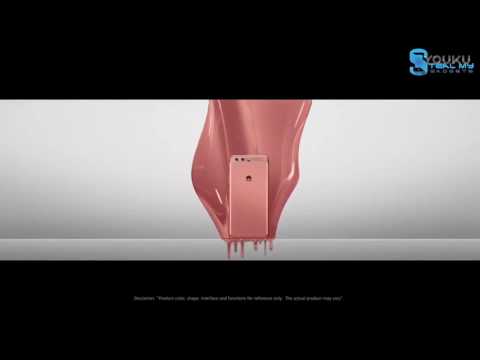
The P10 launch at Mobile World Congress 2017 demonstrated Huawei's mastery of multiplatform event marketing. The company secured Twitter's First View ad format, guaranteeing that its launch video was the first piece of content seen by millions of users when they opened the application. Simultaneously, Periscope streams broadcast the event live to audiences who could not attend in person.
The results were striking: 11.7 million impressions and a 50-fold increase in social media mentions within 24 hours. Huawei had demonstrated that a product launch need not be a press conference that consumers tolerate; it could be an event that consumers anticipate.
This insight extended beyond digital platforms. Huawei's subsequent launches incorporated holographic displays, celebrity performances, and immersive installation art. The product was never absent from these spectacles, but it was also never isolated. It existed within a carefully constructed emotional environment—and consumers were invited to enter.
Link: Huawei P10 Launch – Mobile World Congress 2017:
Act III: The Localization Imperative (2018)
"P20 Pro and the Cinema of Cultural Respect"
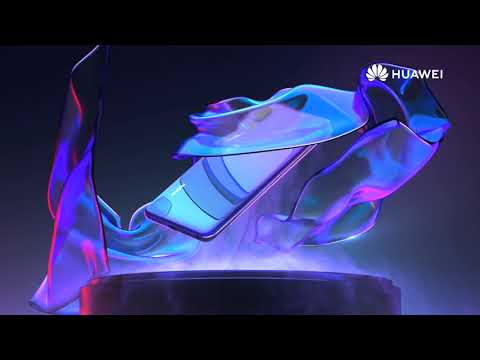
Huawei's 2018 cinema campaign for the P20 Pro in Saudi Arabia represented a strategic departure from conventional global advertising.
Most multinational brands practice "localization" as translation: the same advertisement, dubbed or subtitled for regional audiences. Huawei's Saudi campaign was not translated; it was reconceived. The commercials featured Saudi actors, Saudi settings, and narratives structured around Saudi cultural values. The product was present, but it was embedded within a locally authentic context.
This approach reflected Huawei's recognition that cultural respect is not expressed through accommodation but through deference. The brand did not present itself as a foreign company adapting to local conditions. It presented itself as a company that understood those conditions so thoroughly that adaptation was unnecessary.
The P20 Pro campaign was particularly effective because it addressed a demographic often underserved by technology advertising: affluent, culturally conservative consumers who value both technical sophistication and cultural continuity. Huawei offered both, without demanding that one be sacrificed for the other.
Link: Huawei P20 Pro Cinema Ad (Saudi Arabia, 2018):
Act IV: The Form Factor as Fashion (2019–2020)
"Mate X and the Aesthetics of Innovation"
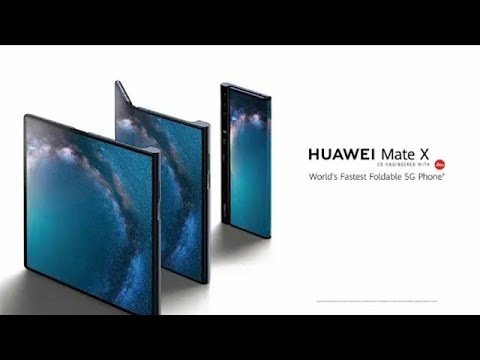
Foldable phones presented Huawei with a unique advertising challenge. The category was new, unproven, and expensive. Early adopters would need to be convinced not merely of the technology's functionality but of its desirability.
Huawei's Mate X campaigns addressed this challenge by reclassifying the product. The foldable phone was not presented as a tablet-phone hybrid or a productivity tool. It was presented as a fashion accessory.
The commercials emphasized the device's thin profile, its symmetrical folding mechanism, its visual harmony when opened and closed. Models handled the Mate X with the same reverential delicacy reserved for luxury watches or designer handbags. The message was unambiguous: This is not a gadget. This is a statement.
This positioning was strategically prescient. As the smartphone market matured, technical differentiation became increasingly difficult to perceive. Huawei recognized that the foldable form factor's true value was not functional but symbolic. It signaled that its owner was forward-looking, sophisticated, and willing to invest in the future of technology.
Link: Huawei Mate X Foldable Phone Campaign (2019):
Act V: The Platform Pivot (2021–Present)
"Petal Ads and the Architecture of Independence"
The imposition of U.S. sanctions on Huawei created an advertising crisis. The company lost access to Google Mobile Services, including the Google Play Store and the advertising ecosystem that supports it. For most smartphone manufacturers, this would have been fatal.
Huawei's response was Petal Ads—a proprietary advertising platform designed to provide the targeting, measurement, and optimization capabilities that Western brands had developed over decades.
The Petal Ads campaign was remarkable for its dual audience strategy. To consumers, Huawei presented Petal Ads as a seamless, privacy-respecting enhancement to the mobile experience. To advertisers and developers, Huawei presented Petal Ads as a high-performance alternative to Google's duopoly, with superior engagement metrics in Asia and emerging markets.
This campaign transformed Huawei from an advertising client into an advertising platform. The company that had spent billions purchasing media was now selling access to its own inventory, audience data, and targeting infrastructure. It was a strategic pivot of extraordinary ambition—and one that positioned Huawei for relevance regardless of its access to Western markets.
Link: Huawei Petal Ads Platform Promo (2021): https://www.youtube.com/watch?v=EVisfp-uGr
Comparative Table: Huawei's Strategic Evolution
| Celebrity Endorsement | Lionel Messi (2016) | Emotional translation | Established global cultural credibility |
| Event Spectacle | P10 at MWC 2017 | Multiplatform anticipation | Transformed launches into cultural events |
| Localized Storytelling | P20 Pro Saudi cinema (2018) | Cultural deference | Demonstrated respect through reconception |
| Form Factor Reclassification | Mate X (2019) | Fashion positioning | Redefined functionality as desirability |
| Platform Independence | Petal Ads (2021) | Advertising infrastructure | Converted crisis into capability |
Expert Analysis: The Huawei Method
1. Celebrity as Cultural Bridge
Huawei's use of celebrity endorsements differed fundamentally from Western practice. Western brands typically deploy celebrities as attention acquisition devices—famous faces that interrupt scrolling. Huawei deployed Messi as a legitimacy transfer mechanism. The partnership was not designed to make consumers notice Huawei; it was designed to make consumers trust Huawei.
2. Spectacle as Evidence
Huawei's event marketing addressed an unspoken consumer concern: Is a Chinese brand capable of producing premium products? Elaborate launch events, international press attendance, and high-production-value presentations functioned as evidence of sophistication. They demonstrated that Huawei operated at the same cultural and commercial level as Apple and Samsung.
3. Localization as Respect
Huawei's regional campaigns avoided the condescension that often characterizes Western brands' emerging-market advertising. The company did not present affordable technology as charity or treat non-Western consumers as unsophisticated. Its localized advertising assumed cultural competence on the part of its audience and demonstrated reciprocal competence on the part of the brand.
4. Platformization as Survival
Petal Ads represents the most sophisticated strategic response to geopolitical constraint in modern technology marketing. Huawei did not merely substitute for lost Western advertising infrastructure; it improved upon it for its core markets. The platform's emphasis on emerging-market optimization, regional payment integration, and culturally adapted analytics represents genuine innovation, not defensive imitation.
Industry Impact: The Challenger Template
Huawei's advertising strategies established a replicable template for non-Western technology brands seeking global relevance:
OnePlus adopted Huawei's event-spectacle model, creating launch anticipation through controlled scarcity and community engagement.
Xiaomi expanded Huawei's localized storytelling approach, developing market-specific product variants and advertising campaigns.
Transsion (parent company of Tecno, Itel, and Infinix) applied Huawei's emerging-market localization principles to dominate African smartphone markets.
More broadly, Huawei demonstrated that geopolitical disadvantage is not existential disadvantage. The company lost access to the world's most valuable consumer market and its most sophisticated advertising infrastructure. It responded by building its own infrastructure and deepening its presence in markets that remained accessible.
This is not the response of a company that views advertising as tactical communication. It is the response of a company that views advertising as strategic infrastructure—as essential to corporate survival as research and development or supply chain management.
Conclusion: The Brand That Refused Irrelevance
Huawei's advertising journey is a case study in strategic resilience. The company entered global markets as an unknown quantity, burdened by assumptions about Chinese manufacturing and consumer electronics. It established credibility through celebrity association, demonstrated sophistication through event marketing, earned trust through cultural deference, and secured independence through platform innovation.
Then it lost access to the markets where this infrastructure had been most carefully constructed.
Most brands, confronted with this sequence—years of investment followed by regulatory exclusion—would have accepted irrelevance. Huawei did not. It redirected its advertising investments toward markets where it could still compete, deepened its localization strategies, and transformed its advertising dependency into an advertising asset.
This is the final lesson of Huawei's advertising evolution: brands are not defined by the markets they lose but by the choices they make after loss. Huawei could have framed its exclusion from Western markets as defeat. Instead, it framed exclusion as liberation—freedom from dependency, opportunity for self-reliance.
The Messi billboards are gone. The MWC spectacles continue, but Huawei's presence is diminished. The Petal Ads platform, however, grows. And in that growth is evidence that Huawei's advertising strategy was never really about billboards, spectacles, or even footballers.
It was about the belief that a brand, properly constructed, can withstand any external shock. Not because it is invulnerable, but because it has learned to convert constraint into capability.
Huawei's advertising did not make Huawei invincible. It made Huawei adaptable. And adaptability, in advertising as in strategy, is the only permanent competitive advantage.
Discover how Huawei's innovative mobile campaigns are reshaping the global market, driving engagement, and setting new industry standards.
Discover how Huawei's mobile advertising has evolved, shaping the future of digital marketing with innovative strategies and cutting-edge technology.

Explore the impact of Adidas ads in football campaigns, showcasing innovative strategies and iconic moments that elevate brand engagement in the sport.

Discover Pizza Hut's most creative advertising slogans that have captured hearts and appetites. Explore the clever phrases that define their brand identity.

Discover how LG is transforming smart home advertising with innovative technology and strategies that enhance consumer engagement and drive sales.

Discover how Netflix leverages drama in its advertising campaigns to captivate audiences and enhance viewer engagement. Explore the art of storytelling in ads.

Discover the iconic Adidas ads that shaped Olympic campaigns, showcasing creativity and athleticism. Explore the impact of these memorable marketing moments.

Discover how Samsung Ads revolutionized smartphone marketing, enhancing brand visibility and consumer engagement through innovative advertising strategies.

Discover how Jeep ads have shaped automotive culture, influencing trends and consumer perceptions. Explore the legacy of iconic campaigns and their impact.

Discover Subway's most memorable advertising slogans that have shaped its brand identity. Explore the creativity behind each catchy phrase and their impact.