

For a century, the relationship between content and advertising was defined by interruption. Commercials were the price of admission, the penalty for free television, the disruption between acts. Audiences tolerated them; they did not seek them.
Netflix inverted this relationship. Its promotional spots are not interruptions; they are extensions. A Stranger Things trailer does not break the spell of immersion; it casts it. A Squid Game preview does not distract from the narrative; it initiates it. Netflix transformed advertising from a tax on attention into the first chapter of the story.
This is the story of how a streaming platform used the oldest tools of storytelling—suspense, empathy, catharsis—to turn promotion into a genre of its own. And how, in doing so, it changed what audiences expect not just from Netflix, but from every brand that seeks their time.
Act I: The Problem of Prestige (2013–2015)
When Netflix began producing original content, it faced an unexpected advertising challenge. The platform's early series—House of Cards, Orange Is the New Black—were critically acclaimed but conceptually difficult to summarize. Political intrigue, moral ambiguity, ensemble casts; these did not lend themselves to the thirty-second spots that had defined television promotion for decades.
Netflix's initial solution was trailer-as-cinema. The House of Cards teasers adopted the somber pacing, amber grading, and foreboding score of prestige drama. They did not explain the premise; they established the tone. Viewers were not told what the show was about; they were shown how the show felt.
This approach required confidence. Netflix trusted that audiences would commit to a series without understanding its plot mechanics. It trusted that atmosphere could substitute for exposition. And it trusted that dramatic tension, sustained across ninety seconds, could function as a contract—a promise that the series would deliver equivalent emotional intensity.
The strategy worked. Netflix's early trailers circulated not as utilitarian announcements but as cultural artifacts. They were shared, analyzed, and anticipated. The line between the promotion and the promoted began to dissolve.
Act II: The Nostalgia Engine (2016–2019)
"Stranger Things and the Architecture of Recall"
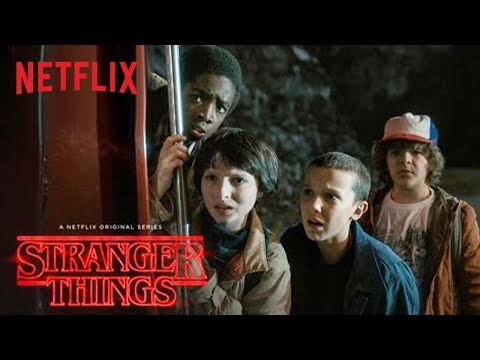
The Stranger Things campaign represented Netflix's maturation as a dramatic advertiser. The series itself was a pastiche of 1980s cinema—Spielberg, Carpenter, King—and its trailers adopted the visual vocabulary of that era.
The first teaser opened not with characters or plot but with text: white credits on black background, the ethereal score of Survive's theme, the slow drift of a Department of Energy logo. It was forty-five seconds of atmosphere before any narrative context appeared. Viewers who recognized the reference—the opening titles of Altered States, The Thing, Poltergeist—were rewarded with immediate nostalgia. Viewers who did not recognize the reference were nevertheless affected by its unfamiliar familiarity.
This was advertising as cultural archaeology. Netflix did not merely promote a show about the 1980s; it promoted the show through the 1980s, using the period's cinematic grammar to trigger emotional memory. The trailer was not a summary; it was an incantation.
Link: Stranger Things Season 1 Trailer:
Act III: The Gravity of History (2016–2023)
"The Crown and the Weight of Authenticity"
Period drama presents a unique advertising challenge. Historical events lack narrative novelty; viewers already know the outcome of the Suez Crisis, the Aberfan disaster, the Thatcher premiership. The question is not what happened but how it will be portrayed.
The Crown's trailers addressed this challenge through intensification. The commercials did not summarize historical events; they dramatized the weight of those events upon their protagonists. Close-ups of Claire Foy's restrained anguish, Olivia Colman's weary composure, Imelda Staunton's coiled formality. The monarchy's famous inscrutability was rendered legible through performance.
The campaign's cumulative effect was recontextualization. Viewers who had lived through these events, or studied them, were invited to reconsider them through the lens of psychological interiority. The trailers promised not historical education but emotional education.
Link: The Crown Netflix Trailer:

"Narcos and the Aesthetics of Complicity"
Narcos confronted a different advertising challenge. Its subject—the cocaine trade, narco-terrorism, extrajudicial violence—resisted the glamorization inherent in promotional media. A trailer that made Pablo Escobar's empire look attractive would be irresponsible; a trailer that emphasized only its horrors would be unwatchable.
Netflix's solution was moral ambiguity. The Narcos trailers adopted the visual grammar of prestige crime cinema—The Godfather, Scarface, Carlito's Way—while subtly undermining its romanticism. Wagner Moura's Escobar was charismatic but grotesque, ambitious but pathetic, powerful but paranoid. The audience was invited to observe their own fascination.
This was advertising as ethical provocation. The trailers did not resolve the tension between attraction and repulsion; they amplified it. Viewers were not told how to feel; they were asked to interrogate their feelings.
Link: Narcos Official Netflix Trailer:

Act IV: The Global Breakthrough (2021)
"Squid Game and the Universality of Desperation"
Squid Game was Netflix's first non-English-language series to achieve global cultural dominance. Its advertising campaign was correspondingly unprecedented.
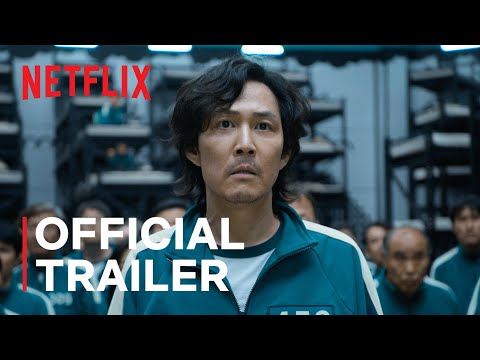
The Squid Game trailer opened with an image of deceptive innocence: children's playground games, pastel colors, nostalgic reverie. The gradual revelation of stakes—debt, desperation, lethal consequence—created a dramatic arc more compressed than the series itself but equally affecting.
The campaign's genius was its cultural translatability. Economic anxiety, competitive pressure, the humiliation of precarity—these were not specifically Korean experiences but universally recognizable. Viewers in São Paulo, Lagos, Mumbai, and Manchester recognized their own fears refracted through Lee Jung-jae's exhausted performance.
Squid Game demonstrated that Netflix's dramatic advertising strategy was not dependent on English-language content or Western cultural frameworks. The architecture of suspense, properly constructed, accommodated any language and any setting.
Link: Squid Game Official Trailer:
Act V: The Escapist Counterpoint (2020–Present)
"Bridgerton and the Drama of Pleasure"
Not all Netflix drama requires gravitas. Bridgerton presented an opportunity for affirmative dramatization—advertising that generated excitement through pleasure rather than anxiety.
The Bridgerton trailers emphasized visual abundance: saturated color, elaborate costume, choreographed courtship. The dramatic tension was not existential but social; the stakes were not survival but reputation. This was drama as indulgence, and the advertising matched the series' tone with precision.
The campaign's significance was strategic. Netflix demonstrated that its dramatic advertising architecture could accommodate tonal variation without sacrificing emotional engagement. Bridgerton viewers were as invested in the outcome of Daphne and Simon's courtship as Squid Game viewers were in Gi-hun's survival—but the nature of that investment was qualitatively different.
Link: Bridgerton Netflix Trailer: https://www.youtube.com/watch?v=gpv7ayf_ty
Comparative Table: Netflix's Dramatic Advertising Strategies
| Stranger Things | 2016– | Nostalgia, suspense | Ambivalent recall | Advertising as cultural archaeology |
| Narcos | 2015–17 | Moral ambiguity | Ethical discomfort | Viewer self-interrogation |
| The Crown | 2016– | Historical weight | Reverent intimacy | Interiority as revelation |
| Squid Game | 2021 | Existential stakes | Universal anxiety | Cultural translatability |
| Bridgerton | 2020– | Romantic tension | Affirmative pleasure | Tonal diversification |
Expert Analysis: The Netflix Dramatic Method
1. Atmosphere Over Exposition
Netflix trailers consistently prioritize tonal communication over narrative summary. Viewers learn how a series will make them feel before they learn what it is about. This inversion reflects Netflix's understanding of contemporary viewing behavior: audiences commit to series based on emotional compatibility, not plot curiosity.
2. The Cliffhanger Contract
Netflix's dramatic ads frequently employ structural suspense—editing rhythms that mimic episode endings, encouraging immediate engagement. This technique transforms the trailer from an announcement into a preview of experience. Viewers who watch a Netflix trailer are not merely informed; they are initiated.
3. Genre Fluency
Each Netflix campaign demonstrates deep understanding of its source material's genre conventions—and the genre expectations of its target audience. Horror trailers accelerate, period dramas decelerate, romantic comedies oscillate. Netflix does not impose a uniform dramatic template; it adapts dramatic tools to each series's specific requirements.
4. Cultural Translation Without Dilution
The global success of Squid Game's advertising demonstrated Netflix's capacity for cultural specificity without alienation. The trailer was unmistakably Korean in its visual language and social context, yet immediately legible to international audiences. Netflix understood that authenticity and accessibility are not opposing forces but complementary requirements.
Industry Impact: The Streaming Promotion Standard
Netflix's dramatic advertising strategy has influenced the entire entertainment industry:
Amazon Prime Video adopted cinematic trailer formats for The Marvelous Mrs. Maisel, Fleabag, and The Boys, emphasizing tone and atmosphere over plot summary.
Disney+ leveraged its intellectual property heritage while adopting Netflix's suspense-building techniques for series like The Mandalorian and Loki.
Apple TV+ invested in high-production-value trailers that position its limited series as prestige event programming.
HBO Max, despite its parent company's historical emphasis on trailer-as-art, has increasingly adopted Netflix's audience-specific dramatic calibration.
More broadly, Netflix established that streaming promotion requires a different vocabulary than theatrical or broadcast advertising. Streaming trailers are not competing for attention within a commercial break; they are competing for attention within a recommendation algorithm. They must function as both art and data, as both emotional experiences and predictive signals.
Conclusion: The Unbearable Suspense of Anticipation
Netflix's dramatic advertising strategy is often described as cinematic, prestigious, or high-production-value. These characterizations are accurate but incomplete. They describe the appearance of Netflix's campaigns without capturing their function.
The function of Netflix's dramatic advertising is not persuasion but continuation. Viewers who finish a Netflix trailer should feel not that they have completed an experience but that they have interrupted one. The trailer is not a self-contained artifact; it is the first act of a four-act narrative that concludes when the credits roll on the final episode.
This is why Netflix trailers avoid resolution. They deny the catharsis they promise, redirecting the viewer's need for closure from the advertisement to the advertised. The tension accumulated across ninety seconds cannot be released within ninety seconds; it requires six hours, or twelve, or thirty.
Netflix did not invent this technique. Horror films have used withholding to drive ticket sales for decades. Serialized drama has always depended on the unresolved. But Netflix systematized suspense, applying its architecture across genres, languages, and production scales.
The Stranger Things trailer does not answer the question "What is in the Upside Down?" It insists that the question must be answered through viewing. The Squid Game trailer does not resolve the moral dilemma of competitive survival; it insists that the dilemma must be experienced through engagement. The Bridgerton trailer does not consummate the romantic tension; it insists that consummation requires commitment.
This is the final lesson of Netflix's dramatic advertising: the most effective promotion does not satisfy desire; it intensifies it. A trailer that resolves its dramatic tensions is a trailer that has failed. The suspense must persist, unresolved and aggravating, until the viewer submits to the only available relief.
Press play. The story continues.
And the advertising, having served its purpose, becomes invisible—not because it was ignored, but because it was incorporated. The trailer was never separate from the series; it was always its opening scene.
Discover the catchy song featured in Netflix's Summer Slate commercial. Uncover the artist and lyrics that are making waves this season!
Discover the captivating song featured in the Netflix 2026 movie trailer. Uncover the artist and track details that set the perfect tone for the film.
Discover the full cast of the highly anticipated Netflix 2026 global promo commercial. Get insights into the stars bringing this exciting project to life.

Discover the iconic Adidas ads that shaped Olympic campaigns, showcasing creativity and athleticism. Explore the impact of these memorable marketing moments.

Discover how Samsung Ads revolutionized smartphone marketing, enhancing brand visibility and consumer engagement through innovative advertising strategies.

Discover how Jeep ads have shaped automotive culture, influencing trends and consumer perceptions. Explore the legacy of iconic campaigns and their impact.

Discover Subway's most memorable advertising slogans that have shaped its brand identity. Explore the creativity behind each catchy phrase and their impact.

Discover how Motorola's innovative advertising strategies are driving global expansion and reshaping the tech landscape. Explore the impact today.

Discover how Netflix masterfully uses nostalgia in its advertising to connect with audiences and evoke powerful emotions. Explore the strategy behind the success.

Discover how Adidas leverages global sports campaigns to enhance brand visibility and connect with fans worldwide. Explore innovative advertising strategies today.

Discover Olympus's transformative advertising journey in photography, exploring innovative campaigns and iconic moments that shaped the industry.