

In 2007, Apple changed the smartphone industry with a single advertisement. The commercial showed a finger sliding across a glass screen, and a narrator explained, with quiet confidence, that "every once in a while, a revolutionary product comes along that changes everything." The iPhone was not the first smartphone. But it was the first smartphone marketed as destiny.
Samsung, at that moment, was a manufacturer of reliable but unremarkable mobile phones. Its advertising emphasized megapixels, battery capacity, and processor speeds—the same technical vocabulary that had defined the mobile industry since its inception. The iPhone rendered that vocabulary obsolete. Consumers no longer cared about specifications; they cared about what the specifications enabled.
This is the story of how Samsung learned a new language. How it transformed itself from a hardware vendor into a lifestyle narrator, from a specification-sheet competitor into a cultural institution. And how, in doing so, it redefined not only its own identity but the entire category of smartphone marketing.
Act I: The Problem of Parity (2010–2016)
By the early 2010s, Samsung faced an existential advertising challenge. Its hardware was competitive with Apple's; in many respects, it was superior. Larger screens, expandable storage, water resistance, wireless charging—Samsung innovated across dimensions that Apple ignored. Yet consumers continued to perceive iPhones as premium and Galaxys as alternatives.
The problem was not product; it was narrative. Apple's advertising had always been about identity. "Think Different," "Get a Mac," "If it's not an iPhone, it's not an iPhone"—these campaigns positioned Apple not as a technology company but as a philosophical position. Samsung's advertising, by contrast, was about features. Consumers did not form emotional relationships with specifications.
Samsung's initial response was comparative aggression. The company's ads directly challenged Apple, mocking iPhone limitations and demonstrating Galaxy superiority. These campaigns were effective at converting rational consumers but failed to address the emotional deficit. Winning on features did not translate to winning on desire.
A new approach was required.
Act II: The Declaration of Empowerment (2017)
"Do What You Can't"
The "Do What You Can't" campaign represented Samsung's philosophical pivot. The slogan was not a claim about product superiority; it was a claim about human potential. The commercials showed artists creating, athletes achieving, dreamers realizing—all enabled by Galaxy technology.
This was Samsung's first sustained engagement with aspirational branding. The campaign did not argue that Galaxy phones were better than iPhones; it argued that Galaxy phones were better for the people who used them. The distinction was subtle but profound. Samsung was no longer competing with Apple; it was competing with inertia, limitation, and self-doubt.
The campaign's visual language reflected this shift. The commercials were cinematic, emotionally resonant, and deliberately non-technical. Product shots were brief and contextual; the focus was always on human outcomes rather than hardware specifications.
Link: Samsung "Do What You Can't" Campaign:

Act III: The Product as Portal (2017)
"Unbox Your Phone"
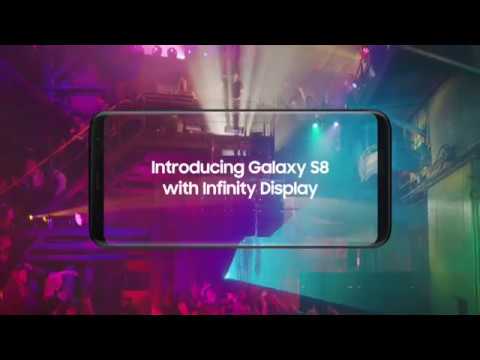
The Galaxy S8 launch campaign, "Unbox Your Phone," demonstrated Samsung's mature understanding of product-as-experience. The commercials emphasized the device's edge-to-edge display not as a technical achievement but as a boundary dissolution. The phone did not contain content; it was a portal to content.
The campaign's creative centerpiece was a space-themed visual narrative—astronauts, nebulae, the infinite black of the cosmos. The smartphone screen, rendered bezel-less, became a window without frame. The message was unmistakable: Galaxy S8 does not show you the universe; it places you within it.
This was advertising as ontological redefinition. Samsung was not selling a communication device; it was selling access to experience. The phone was no longer the subject of the advertisement; it was the infrastructure through which the true subject—human exploration, creativity, connection—was enabled.
Link: Samsung Galaxy S8 "Unbox Your Phone" Ad:
Act IV: The Form Factor as Identity (2019–Present)
"Galaxy Z Fold/Flip and the Architecture of Reinvention"
Foldable phones presented Samsung with a unprecedented advertising challenge. The category was new, unproven, and expensive. Early adopters would need to be convinced not merely of the technology's functionality but of its desirability.
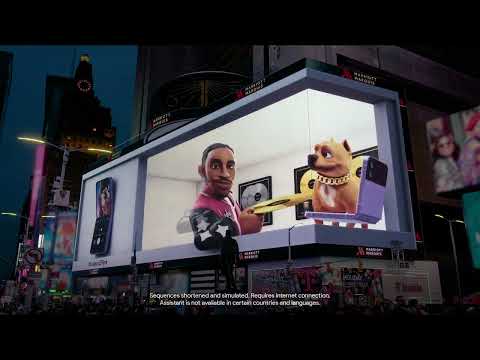
Samsung's solution was to reclassify the product. The Galaxy Z Flip was not marketed as a phone that folded; it was marketed as a fashion accessory. The commercials emphasized the device's compact profile, its symmetrical closure, its placement in clutches and pockets alongside luxury cosmetics and designer jewelry. The Flip was not competing with the iPhone; it was competing with the handbag.
The Galaxy Z Fold, conversely, was positioned as a productivity instrument. Its advertising emphasized multitasking, document editing, creative workflows. The Fold was not competing with tablets; it was competing with limitation—the constraint of having to choose between pocketable devices and productive screens.
This bifurcated strategy demonstrated Samsung's sophisticated understanding of its own product portfolio. The company recognized that foldable technology was not a single use case but a spectrum of possibilities. Its advertising addressed that spectrum with corresponding specificity.
Link: Samsung Galaxy Z Flip Billboard Campaign:
Act V: The Purpose Pivot (2021)
"Wildlife Watch and the Technology of Conservation"
"Wildlife Watch" represented Samsung's most significant strategic departure. The campaign, launched in South Africa, repurposed Galaxy phones as conservation infrastructure. Discarded devices were equipped with solar panels and deployed in nature reserves, streaming live footage of endangered species to Samsung's connected televisions.
The commercial documenting this initiative was not, strictly speaking, a product advertisement. It contained no price information, no carrier partnerships, no call to purchase. It was a corporate documentary—evidence of Samsung's capacity for social responsibility and technological creativity.
Yet the campaign functioned as extraordinarily effective advertising. It demonstrated that Galaxy phones were durable enough to survive wilderness conditions, that their cameras were sophisticated enough for professional conservation applications, and that Samsung's ecosystem extended across product categories. More importantly, it positioned Samsung as a brand with purpose beyond profit.
Link: Samsung Wildlife Watch Campaign:

Act VI: The Cultural Integration (2020s)
"Nightography and the Democratization of Creativity"
Samsung's "Nightography" and "Epic Night" campaigns addressed a specific technical capability—low-light photography—through universal emotional appeal. The commercials did not explain sensor size or aperture specifications; they showed memories preserved that would otherwise have been lost: concerts, celebrations, children's performances, street food vendors, city nights.
This was Samsung's most sophisticated translation of specification into benefit. Low-light photography had historically been a weakness of smartphone cameras; Samsung's technical achievement was genuine. But the advertising did not claim technical superiority; it claimed temporal preservation. The ability to capture clear images in darkness was not a feature; it was a defense against forgetting.
"BTS and the Architecture of Fandom"
Samsung's multiyear partnership with BTS represented the culmination of its celebrity integration strategy. The campaign was not merely endorsement; it was cultural participation. Samsung did not simply feature BTS in commercials; it created BTS-specific content, AR filters, and behind-the-scenes documentaries distributed through the Galaxy ecosystem.
This strategy recognized that contemporary celebrity endorsement is not about transferring fame to products but about facilitating fan relationships. BTS fans did not want to see their idols holding phones; they wanted to feel closer to their idols through the phones they held. Samsung provided infrastructure for that intimacy.
Comparative Table: Samsung's Narrative Evolution
| Do What You Can't | 2017 | "Your limitations are not permanent" | Aspirational defiance | Shifted from product to philosophy |
| Unbox Your Phone | 2017 | "The device is a portal" | Exploratory wonder | Redefined smartphone as interface |
| Galaxy Z Flip | 2019– | "Foldables are fashion" | Curated self-presentation | Reclassified product category |
| Wildlife Watch | 2021 | "Technology can serve nature" | Purpose-driven stewardship | Advertising as documentary |
| Nightography | 2022 | "Darkness should not erase memory" | Protective nostalgia | Specs translated to preservation |
Expert Analysis: The Samsung Method
1. Specification Translation
Samsung's most significant advertising achievement is its translation layer. The company consistently converts technical capabilities—processor speed, camera aperture, display resolution—into human outcomes—creativity, memory, connection, productivity. This translation is not decorative; it is essential. Consumers cannot evaluate pixel density, but they can evaluate whether their child's piano recital was adequately preserved.
2. Cultural Fluency
Samsung's celebrity partnerships differ from competitors' in their depth and duration. The BTS collaboration was not a campaign; it was a relationship. Samsung invested in understanding the group's fan culture, creative output, and global significance. The resulting advertising did not feel like endorsement; it felt like participation.
3. Category Reclassification
The Galaxy Z Flip campaign demonstrated Samsung's willingness to redefine product categories. By positioning the Flip as a fashion accessory rather than a communication device, Samsung escaped the comparative framework that had constrained its earlier advertising. The device was not competing with iPhones; it was competing with handbags. This reframing created entirely new evaluative criteria favorable to Samsung's offering.
4. Purpose as Product
"Wildlife Watch" established a template for purpose-driven technology advertising. Samsung demonstrated that social responsibility initiatives could function as product demonstrations without feeling transactional. The campaign was genuine conservation effort, genuine engineering achievement, and genuine brand building—simultaneously and without contradiction.
Industry Impact: The Lifestyle Standard
Samsung's advertising evolution established new expectations for smartphone marketing:
Apple has increasingly adopted Samsung's lifestyle framing, emphasizing camera capabilities through user-generated content and filmmaker partnerships.
Huawei adapted Samsung's celebrity integration strategy for Asian markets, signing global ambassadors and producing cinematic product films.
Xiaomi and Oppo have adopted Samsung's specification-translation approach, emphasizing photography outcomes rather than sensor specifications.
Google's Pixel campaigns, focused on computational photography and helpful software, reflect Samsung's emphasis on human outcomes over hardware specifications.
More broadly, Samsung demonstrated that smartphone advertising could sustain multiple emotional registers across product categories and market segments. The company has been aspirational, practical, playful, purposeful, and protective—sometimes within the same campaign cycle. This emotional range is rare in category marketing and reflects Samsung's deep understanding of its diverse global audience.
Conclusion: The Device That Became a Mirror
The smartphone is the most intimate technology in human history. It sleeps beside us, accompanies us through our days, contains our memories, facilitates our relationships, and knows more about our habits than any human confidant. Yet for the first decade of its existence, it was marketed as appliance—a tool for communication, productivity, and information retrieval.
Samsung, more than any other manufacturer, recognized this as category failure. The smartphone was not an appliance; it was a mirror. It reflected its user's identity, aspirations, creativity, and values. Advertising that treated it as a specification sheet was not merely ineffective; it was inaccurate.
"Do What You Can't" was not a slogan; it was a diagnosis. The campaign recognized that consumers do not desire smartphones; they desire what smartphones enable. They desire to capture memories that would otherwise fade. They desire to express identities that would otherwise remain private. They desire to connect with people who would otherwise remain distant.
Samsung's advertising evolution is the story of a brand learning to see what was always present. The hardware was always capable; the advertising had to become worthy of the hardware.
Today, Samsung's commercials feature astronauts and dancers, conservationists and musicians, families and dreamers. The Galaxy devices are present in every frame but rarely the subject. The subject is always, invariably, human possibility.
This is Samsung's enduring legacy in smartphone marketing. Not the foldable displays or the computational cameras or the 100x zoom. Those achievements will be surpassed, as all technical achievements are. But the recognition that technology advertising must be about people, not products—that recognition is permanent.
Samsung did not invent this insight. Apple articulated it first. But Samsung democratized it, applying human-centered storytelling across price points, geographic markets, and product categories. The Galaxy A series receives the same emotional care as the Galaxy Z Fold. The consumer in Jakarta is addressed with the same aspirational register as the consumer in Berlin.
This is the final lesson of Samsung's advertising journey: emotional resonance is not a premium feature. It is not reserved for flagship devices or developed markets. It is the minimum viable product of contemporary brand communication.
Consumers do not buy smartphones. They buy what smartphones make possible.
Samsung learned to sell the possibility. The industry followed. And the device that once lived in pockets, defined by specifications, became what it was always meant to be: a reflection of the life it enables.
Discover the captivating background music featured in the Samsung SmartThings 2026 ad. Uncover the artist and track that enhances this innovative commercial.
Discover how Samsung Ads showcases the groundbreaking innovation of foldable technology, transforming the way we interact with devices and advertising.
Discover the ultimate showdown between Samsung and Apple in 2026. Explore our detailed flagship ad comparison to find out which brand reigns supreme.

Discover how Jeep ads have shaped automotive culture, influencing trends and consumer perceptions. Explore the legacy of iconic campaigns and their impact.

Discover Subway's most memorable advertising slogans that have shaped its brand identity. Explore the creativity behind each catchy phrase and their impact.

Discover how Motorola's innovative advertising strategies are driving global expansion and reshaping the tech landscape. Explore the impact today.

Discover how Netflix masterfully uses nostalgia in its advertising to connect with audiences and evoke powerful emotions. Explore the strategy behind the success.

Discover how Adidas leverages global sports campaigns to enhance brand visibility and connect with fans worldwide. Explore innovative advertising strategies today.

Discover Olympus's transformative advertising journey in photography, exploring innovative campaigns and iconic moments that shaped the industry.

Discover how to leverage viral trends for effective TikTok ads. Boost your brand's visibility and engagement with our expert strategies and insights.

Discover the groundbreaking Adidas commercials that shaped online advertising. Explore iconic campaigns and their impact on digital marketing strategies.