

Intel faces a unique marketing challenge. It doesn't sell products consumers can see, touch, or directly choose. It sells microprocessors—tiny silicon squares hidden inside computers, invisible to the end user. For most of its early history, Intel was a business-to-business company, selling its chips to PC manufacturers like IBM, Compaq, and Dell. Consumers bought those PCs without ever knowing or caring what was inside.
Then Intel did something unprecedented. It decided to make the invisible visible. Through a series of bold advertising campaigns, the company transformed itself from an anonymous component supplier into one of the most recognizable brands in the world. This essay traces Intel's advertising evolution, analyzing how each era's campaigns reshaped consumer perception and set new standards in technology marketing.
📜 1980s – Early Experiments
The Challenge: In the 1980s, consumers bought PCs based on the manufacturer's brand—IBM, Apple, Compaq—not the processor inside. Intel was invisible, its fate tied entirely to the success of its OEM partners.
The Solution: The "Red X" campaign (1988–1989) was a bold experiment in direct consumer marketing. The ads spray-painted a giant red "X" over the obsolete 286 chip, promoting the superior 386 processor as the only intelligent choice. The message was clear: not all PCs are created equal; what's inside matters.
The Impact: Consumer interest in 386-powered PCs surged from 15% to nearly two-thirds almost overnight. PC makers got the message: consumers were asking for Intel. The campaign proved that technical superiority needed direct consumer marketing, not just OEM partnerships.
🎥 Watch the Red X campaign here:
🌟 1990s – The Intel Inside Revolution
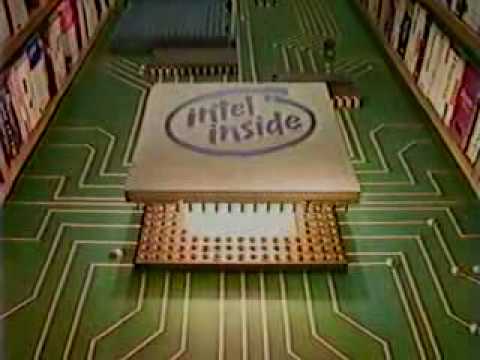
The Problem: Intel couldn't trademark numeric chip names like "386" or "486" because numbers can't be trademarked. Competitors could—and did—use the same designations, confusing consumers.
The Solution: Marketing director Dennis Carter conceived a radical idea: ingredient branding. Intel would become a visible, valued component inside every PC, just as NutraSweet or Teflon were known ingredients in other products.
The "Intel Inside" campaign launched with two brilliant innovations:
The Logo: The iconic swirl logo became a badge of quality, appearing on computers and in ads worldwide.
The Jingle: Composer Walter Werzowa created the famous five-note "bong" in 1994—one of the most recognizable sounds in technology history.
The Co-op Model: Intel subsidized PC makers' advertising costs if they featured the Intel Inside logo. By 1992, over 500 OEMs participated. Intel's visibility exploded.
The Impact: Consumer awareness of Intel processors jumped from 24% to 80% in just one year. The campaign created demand pull—consumers started asking for Intel, forcing PC makers to feature the brand.
🎥 Watch the Intel Inside campaign here:

🎭 2000s – Creativity and Celebrity
The Evolution: With brand awareness established, Intel shifted from education to entertainment. The goal was to humanize technology and make Intel feel relevant to everyday life.
Blue Man Group Ads: These surreal, humorous spots used the percussive, blue-painted performers to demonstrate Intel's processing power in a visually engaging way. The message: Intel powers creativity.
Celebrity Partnerships: Intel ads featured an eclectic mix of stars—Homer Simpson, Justin Long, Jamie Foxx, and Serena Williams—each bringing their own audience and associations. These campaigns positioned Intel as a cultural force, not just a technical one.
The Impact: Intel broadened its appeal beyond tech enthusiasts to mainstream consumers. The brand became associated with creativity, performance, and fun—not just technical specifications.
🎥 Watch the Blue Man Group Intel ads here:
🚀 2010s–2020s – Competitive Positioning
The New Challenge: Apple's introduction of its own M1 chips threatened Intel's dominance. For the first time, a major PC maker was abandoning Intel processors entirely, and Apple's marketing made the switch look appealing.
The Response: Intel launched the "Go PC" campaign (2021), directly mocking Apple's claims and positioning PCs as more versatile, powerful, and suitable for real work. The ads targeted creative professionals and gamers—audiences who needed performance Apple couldn't match.
The Evolution: Intel's messaging shifted to emphasize gaming, AI, and productivity. The brand positioned itself not just as a chip maker, but as an enabler of experiences—from immersive gaming to content creation to artificial intelligence.
The Impact: Intel demonstrated that even a dominant market leader must fight to stay relevant. The campaigns reinforced the PC ecosystem's vitality and reminded consumers why choice matters.
🎥 Watch the Go PC campaign here:

📊 Comparison Table
| 1980s | Red X | Direct consumer marketing | Boosted 386 sales dramatically |  Watch YouTube video |
| 1990s | Intel Inside | Ingredient branding, logo, audio jingle | Awareness jumped from 24% → 80% |  Watch YouTube video |
| 1990s | Intel Bong Jingle | Audio branding | Became one of most recognizable sounds |  Watch YouTube video |
| 2000s | Blue Man Group Ads | Humor, pop culture | Humanized Intel, broadened appeal |  Watch YouTube video |
| 2010s–20s | Go PC vs Apple | Competitive positioning | Reinforced PC ecosystem relevance |  Watch YouTube video |
🌍 Cultural Legacy
Ingredient Branding: Intel proved that components could be marketed like consumer goods. The "Intel Inside" model has been copied by countless industries, from automotive (Bosch) to textiles (Gore-Tex).
Audio Branding: The five-note jingle remains one of the most recognized sounds in technology. It demonstrated that audio could be as powerful as visuals in creating brand recognition.
Co-op Advertising: Intel's model of subsidizing partner advertising reshaped B2B marketing. It aligned incentives, created massive reach, and built a unified brand presence across hundreds of different products.
Cultural Integration: From Blue Man Group to TikTok-era humor, Intel has consistently adapted its advertising to remain culturally relevant. The brand has shown remarkable ability to evolve while maintaining its core identity.
🔎 Expert Analysis
Intel's campaigns succeed because they merge technical credibility with emotional resonance. They don't just sell processors; they sell the experiences processors enable.
They consistently challenge norms—whether about invisible components or competitive positioning. The Red X campaign attacked Intel's own products to promote better ones. The Go PC campaign directly challenged Apple's narrative.
By blending humor, celebrity, and lifestyle branding, Intel created ads that transcend products. They become part of cultural conversations, not just commercial interruptions.
The brand's minimalist yet bold aesthetic ensures timelessness. The Intel Inside logo and jingle have remained recognizable for decades with minimal changes.
⚠️ Risks & Challenges
Dependency: Heavy reliance on co-op advertising tied Intel's visibility to OEM partners. When Apple switched to its own chips, Intel lost that visibility entirely.
Competition: Apple's branding forced Intel to adapt aggressively. The rise of ARM processors and mobile computing continues to challenge Intel's dominance.
Consistency: Balancing technical credibility with playful campaigns requires careful calibration. Too much humor undermines authority; too much seriousness loses younger audiences.
Market Shifts: The computing landscape has fundamentally changed. Mobile devices, cloud computing, and AI have shifted attention away from PC processors.
📜 Decade-by-Decade Context
1980s: Direct Consumer Marketing
The Red X campaign shocked audiences by attacking obsolete chips, proving that consumers could be educated about technical components.
1990s: Ingredient Branding
Intel Inside became a cultural phenomenon, redefining how technology could be marketed. The logo and jingle achieved near-universal recognition.
2000s: Creativity & Celebrity
Blue Man Group and celebrity endorsements humanized Intel, broadening its appeal beyond tech enthusiasts.
2010s–2020s: Competitive Positioning
Intel fought back against Apple's M1 dominance with aggressive comparative advertising, while emphasizing gaming, AI, and productivity.
Conclusion
Intel's advertising history is a masterclass in innovation. From the Red X campaign that taught consumers to care about processors, to the Intel Inside revolution that made an invisible component visible, to modern competitive battles with Apple, Intel has consistently pushed the boundaries of technology marketing.
The company's legacy lies in proving that even the most technical products can inspire emotion, loyalty, and cultural relevance. By transforming itself from a hidden chip supplier into one of the world's most recognizable brands, Intel demonstrated that great advertising can make anything—even a tiny piece of silicon—feel essential and alive.
By tracing this evolution from the 1980s to the 2020s, we see how Intel's campaigns have influenced broader tech marketing trends. The future will likely combine AI-driven personalization, immersive experiences, and influencer authenticity. But the foundation is already there: a brand that taught the world that what's inside really does matter.
Discover the artist behind the captivating Intel Core Ultra campaign ad. Uncover the voice that brings innovation to life in this exciting promotion.
Discover how Intel transforms microchips into pop culture icons through innovative advertising. Explore the intersection of technology and creativity today.
Discover how Intel's innovative advertising strategies revolutionized computer marketing, shaping industry trends and consumer perceptions.

Discover the most emotional technology campaigns that resonate deeply with audiences. Explore how innovation meets heartfelt storytelling in marketing.

Discover the legacy of Coca-Cola's "Share a Coke" campaign, exploring its impact on branding, personalization, and consumer connection. Join the celebration!

Discover the social media ads that revolutionized digital marketing. Explore their impact and learn how they shaped advertising strategies today.

Discover the captivating evolution of Calvin Klein perfume ads, showcasing bold creativity and iconic imagery that transformed the fragrance industry.

Discover the most iconic summer campaigns in the U.S. that shaped advertising history. Explore creative strategies and memorable moments that defined the season.

Discover how Luxury Ambassadors elevate global advertising, connecting brands with elite audiences through innovative strategies and unparalleled expertise.

Discover the actors who revolutionized energy drink advertising, bringing charisma and excitement to campaigns that captivated audiences worldwide.

Discover the allure of Penélope Cruz in captivating perfume advertising campaigns. Explore her iconic roles and the fragrances that define her elegance.