

In 1944, as Allied forces pushed through German-occupied France, American soldiers drove vehicles stamped with a name that would outlast the war itself. The Willys MB—known simply as "Jeep"—was not designed for peacetime. It was a weapon: rugged, replaceable, and utterly indifferent to comfort. No soldier imagined that this utilitarian machine would, eighty years later, be marketed as a vessel of the American soul.
Yet that is precisely what Jeep became. The transition from military asset to cultural icon is the most remarkable brand transformation in automotive history. And it was accomplished not through engineering innovation—though Jeep's engineering is formidable—but through advertising that understood America's relationship with its own mythology.
This is the story of how a vehicle built for war became the symbol of peace, freedom, and the open road. And how Jeep's advertising, across eight decades, taught Americans what they wanted from their cars—and from themselves.
Act I: The Inheritance (1940s–1960s)
"Go Anywhere, Do Anything"
The first Jeep advertisements were not advertisements at all. They were newsreels and photographs of soldiers crossing rivers, climbing mudbanks, and traversing terrain that defeated conventional vehicles. The message was implicit: this machine is capable of extraordinary things.
When Jeep transitioned to civilian production in 1945, its advertising faced a profound challenge. How do you market a weapon to families? How do you translate military capability into domestic desirability?
Jeep's solution was spatial recontextualization. The CJ-2A and CJ-5 were presented not as demilitarized war machines but as instruments of peaceful exploration. The same four-wheel drive that conquered European battlefields could now conquer American wilderness. The same durability that survived enemy fire could now survive family camping trips.
The "Go Anywhere, Do Anything" slogan encoded this translation. It preserved the vehicle's proven capability while redirecting its purpose from destruction to discovery. Jeep was not asking consumers to forget the vehicle's origins; it was asking them to reimagine those origins as evidence of trustworthiness.
This campaign established Jeep's foundational advertising principle: capability is character. A Jeep was not merely a vehicle that performed well; it was a vehicle that proved itself under extreme conditions. Owners did not simply drive Jeeps; they inherited a legacy of tested reliability.
Act II: The Democratization (1970s–1980s)
"Jeep: The Ultimate Escape"
The 1970s and 1980s represented Jeep's suburbanization. The vehicle that had conquered wilderness and survived war was now being marketed to families in split-level homes with attached garages. This was a strategic pivot of extraordinary ambition—and significant risk.
Jeep's advertising addressed this risk through dual-coding. Commercials showed Jeeps navigating muddy trails and rocky inclines, but they also showed Jeeps parked outside comfortable homes, carrying groceries, transporting children to soccer practice. The message was consistent: this vehicle can do anything, which means it can do everything.
The "Ultimate Escape" tagline captured the era's cultural mood. Suburban life offered comfort but also confinement; Jeep promised liberation without abandonment. You could have the ranch house and the frontier. You could be a responsible parent and an adventurous spirit. Jeep was not asking consumers to choose between identities; it was offering identity integration.
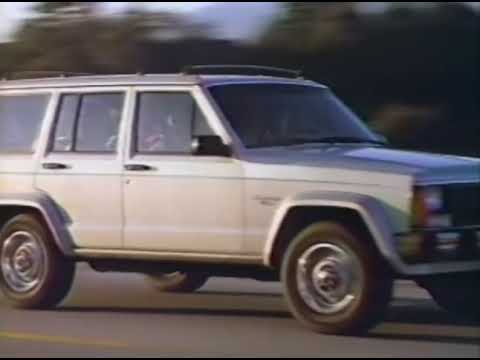
Link: 1980s Jeep Cherokee Commercials:
Act III: The Declaration of Uniqueness (1990s–2000s)
"There's Only One Jeep"
By the 1990s, Jeep faced a competitive landscape it had largely created. Other manufacturers had recognized the demand for off-road capable SUVs and rushed to meet it. Ford, Toyota, Chevrolet—all offered vehicles that challenged Jeep's historical dominance.
The "There's Only One Jeep" campaign was a declaration of essential difference. It did not claim that Jeep was superior in specific measurable dimensions; it claimed that Jeep was categorically distinct. The seven-slot grille, the round headlamps, the trapezoidal wheel arches—these were not design elements; they were constitutional features. A vehicle without them might be capable, but it would not be a Jeep.
This campaign represented Jeep's most sophisticated engagement with brand ontology. The company understood that authenticity is not established through comparative advantage but through origin narrative. Jeep's origin was unique—no other vehicle could claim military heritage, battlefield testing, and liberation symbolism. "There's Only One Jeep" was not arrogance; it was documentation.
The campaign also marked Jeep's transition from functional advertising to emotional branding. The commercials emphasized feeling over feature: the wind in the driver's hair, the sunset over the canyon, the freedom of unmarked roads. Jeep was no longer selling transportation; it was selling transcendence.
Act IV: The Patriotic Turn (2010s–2020s)
"Super Bowl and the Architecture of Unity"
Jeep's Super Bowl advertising in the 2010s and 2020s represented the culmination of its American identity. The brand that had been born in wartime and matured in suburbia was now positioned as a symbol of national unity in an era of unprecedented division.
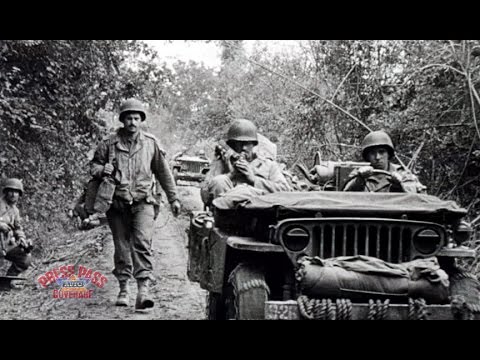
The 2016 Super Bowl commercial celebrating Jeep's 75th anniversary was a masterwork of nostalgic compression. Seventy-five years of American history—war, peace, prosperity, challenge, resilience—rendered in sixty seconds, with the Jeep as continuous witness and participant. The commercial did not argue that Jeep was essential to American life; it simply showed Jeep present at every significant American moment.
Link: Jeep Celebrates 75 Years – Super Bowl 50:
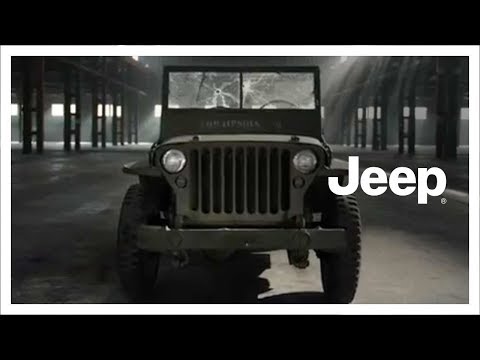
Link: Jeep "Old Faithful" Tribute Ad:
"Bruce Springsteen and the Middle Ground"
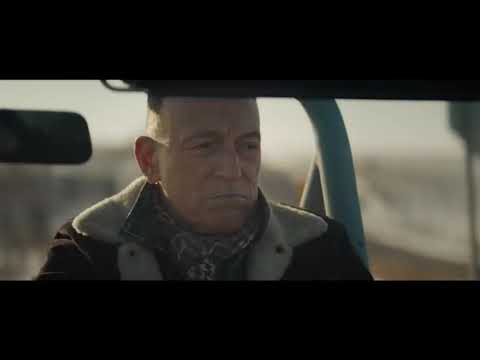
The 2021 Super Bowl commercial featuring Bruce Springsteen was Jeep's most politically significant advertising. Released in the aftermath of a contentious election and a period of intense social polarization, the commercial showed Springsteen driving through middle America, visiting a chapel, and offering a quiet meditation on unity and common ground.
The advertisement was immediately controversial. Some viewers criticized it for co-opting Springsteen's working-class authenticity; others praised it for rejecting the cynicism that characterized contemporary political discourse. But the controversy itself was evidence of the campaign's significance. Jeep had positioned itself not merely as a vehicle manufacturer but as a participant in national conversation.
Link: Jeep Super Bowl LV Ad ft. Bruce Springsteen (2021):
Act V: The Sustainability Challenge (2020s–Present)
Jeep's current advertising challenge is its most complex. The brand built its identity on exploration, freedom, and the open road—values that increasingly conflict with environmental consciousness. A vehicle celebrated for its ability to traverse pristine wilderness is also a vehicle that contributes to the degradation of that wilderness.
Jeep's initial response has been electrification without apology. The brand's 4xe plug-in hybrid models are marketed not as compromises but as enhancements. Instant torque improves off-road capability; silent electric motors allow deeper immersion in natural environments. Jeep is attempting to reframe sustainability as performance innovation rather than moral obligation.
Whether this reframing succeeds will determine Jeep's cultural relevance for the next generation. The brand that survived the transition from war to peace, from utility to lifestyle, now faces the transition from combustion to electrification. Its advertising has navigated such transformations before
Comparative Table: Jeep's Narrative Evolution
| 1940s–60s | Go Anywhere, Do Anything | "Capability is character" | Postwar optimism, suburban expansion | Translate military heritage to civilian appeal |
| 1970s–80s | The Ultimate Escape | "Freedom without abandonment" | Suburban confinement, outdoor recreation | Democratize adventure |
| 1990s–2000s | There's Only One Jeep | "We are categorically distinct" | SUV market saturation | Establish ontological uniqueness |
| 2010s–20s | Super Bowl unity campaigns | "We are American witness" | Political polarization, nostalgia | Position Jeep as national symbol |
| 2020s– | 4xe electrification | "Sustainability is capability" | Climate crisis, EV transition | Reframe environmental responsibility |
Expert Analysis: The Jeep Method
1. Heritage as Competitive Moat
Jeep's most durable competitive advantage is its origin story. No other vehicle can claim direct descent from the machines that liberated Europe. Jeep advertising has consistently preserved and activated this heritage, understanding that authenticity is not established through marketing claims but through verifiable history.
2. The Freedom Paradox
Jeep advertising has mastered the freedom paradox: the vehicle that enables escape also enables return. Jeep owners are not wanderers; they are explorers with secure homes. The advertising acknowledges domesticity without endorsing confinement, celebrates adventure without requiring abandonment. This duality is essential to Jeep's broad appeal.
3. Patriotism Without Jingoism
Jeep's patriotic advertising has generally avoided the exclusionary nationalism that characterizes many "American" brands. The Springsteen commercial emphasized unity, not superiority; shared ground, not exceptionalism. This restraint allows Jeep to activate patriotic emotion without alienating diverse audiences.
4. The Sustainability Translation
Jeep's 4xe marketing represents a sophisticated translation challenge. The brand must convince existing enthusiasts that electrification enhances off-road capability while convincing new consumers that Jeep takes environmental responsibility seriously. Its early campaigns have successfully framed sustainability as performance evolution rather than ideological concession.
Industry Impact: The SUV Narrative Standard
Jeep's advertising established expectations that now govern the entire SUV category:
Land Rover adopted Jeep's heritage-centric storytelling, emphasizing British expedition history and aristocratic exploration.
Toyota's 4Runner and Land Cruiser campaigns emphasize durability and off-road capability, directly echoing Jeep's "Go Anywhere" positioning.
Ford's Bronco revival was marketed almost entirely through Jeep comparison, acknowledging that Jeep had defined the category the Bronco sought to re-enter.
General Motors has increasingly emphasized adventure and outdoor lifestyle in its SUV advertising, following the trail Jeep blazed.
More broadly, Jeep demonstrated that automotive brands can sustain unified identity across decades of product evolution. The 2024 Wrangler shares its fundamental architecture—body-on-frame, solid axles, removable doors and roof—with the 1945 CJ-2A. This mechanical continuity is matched by narrative continuity. Jeep has not needed to reinvent itself because it has consistently honored its original proposition.
Conclusion: The Vehicle That Became a Verb
Jeep occupies a unique position in American language. "Jeep" is not only a brand name; it is a noun, verb, and adjective. One can drive a Jeep, go jeeping, or describe terrain as "jeepable." This linguistic integration is the highest form of brand equity—the transformation of proprietary trademark into common vocabulary.
This transformation was not inevitable. It was earned through eighty years of advertising that understood Jeep's cultural significance better than Jeep understood it itself. The brand's marketers recognized that the vehicle was not merely a product but a character in American mythology—present at the liberation, present at the creation of suburbia, present at the reimagination of outdoor recreation.
Jeep advertising has occasionally stumbled. The brand has struggled to maintain its authenticity premium while expanding into front-wheel-drive crossovers. Its patriotic messaging has sometimes veered toward sentimentality. The transition to electrification presents challenges that no amount of heritage can automatically resolve.
Yet Jeep's advertising legacy is secure. The brand proved that automotive marketing could transcend transportation—could sell not merely mobility but identity, not merely capability but character, not merely vehicles but values.
"Go Anywhere, Do Anything" was never about four-wheel drive. It was about the conviction that human beings are not confined to paved roads and predetermined destinations. "There's Only One Jeep" was never about market share. It was about the recognition that some things—some vehicles, some experiences, some freedoms—are genuinely irreplaceable.
And the Bruce Springsteen commercial, with its quiet invocation of middle-American chapels and kitchen tables, was never about selling SUVs. It was about the belief that Americans, despite their divisions, still share common ground.
That ground, in Jeep's telling, is accessible by Jeep. The claim is audacious—and, through eighty years of consistent, patient, emotionally intelligent advertising, has become credible.
This is the final lesson of Jeep's advertising journey: the most powerful brands do not merely reflect culture; they shape it. Jeep did not discover America's love of freedom and adventure; it articulated that love, gave it visual and verbal form, and offered a vehicle as its vessel.
The Wrangler that crosses your screen in a Super Bowl commercial is the direct descendant of the Willys MB that crossed Omaha Beach. The technology has evolved; the purpose has been reimagined; the cultural context has transformed entirely.
But the promise remains identical: this vehicle will take you where you need to go, and it will bring you back.
That promise, rendered with consistency and conviction across eighty years of advertising, is Jeep's enduring achievement. It is also, perhaps, America's enduring aspiration.
Discover the inspiring story of the veteran featured in the latest Jeep Freedom commercial. Learn about their service and the message behind the ad.
Discover the catchy tune featured in the Jeep Super Bowl commercial. Uncover the song's details and learn more about its impact on the ad's message.

Discover Subway's most memorable advertising slogans that have shaped its brand identity. Explore the creativity behind each catchy phrase and their impact.

Discover how Motorola's innovative advertising strategies are driving global expansion and reshaping the tech landscape. Explore the impact today.

Discover how Netflix masterfully uses nostalgia in its advertising to connect with audiences and evoke powerful emotions. Explore the strategy behind the success.

Discover how Adidas leverages global sports campaigns to enhance brand visibility and connect with fans worldwide. Explore innovative advertising strategies today.

Discover Olympus's transformative advertising journey in photography, exploring innovative campaigns and iconic moments that shaped the industry.

Discover how to leverage viral trends for effective TikTok ads. Boost your brand's visibility and engagement with our expert strategies and insights.

Discover the groundbreaking Adidas commercials that shaped online advertising. Explore iconic campaigns and their impact on digital marketing strategies.

Discover how Nikon's innovative advertising strategies transformed camera marketing, setting new standards and influencing industry trends for years to come.