
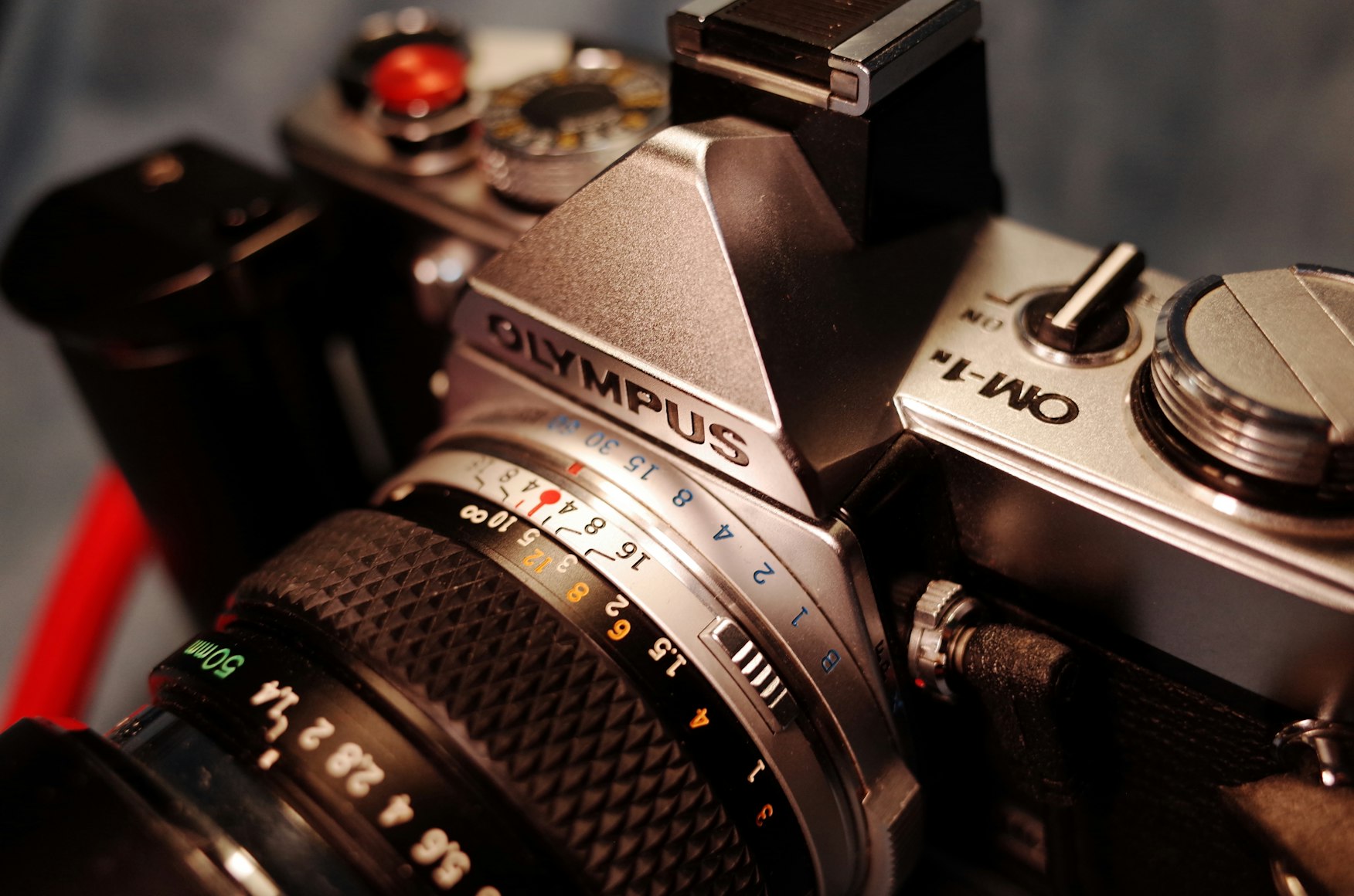
Olympus is one of the most storied names in photography. Founded in 1919 in Japan, the company built its reputation on precision optics and compact camera design. Yet Olympus’s influence extends beyond engineering—it reshaped how cameras were marketed. From witty celebrity-driven campaigns in the 1970s to lifestyle storytelling in the 2000s and heritage-driven mirrorless ads in the 2010s, Olympus consistently blended accessibility, innovation, and personality. This article explores Olympus’s advertising journey, its cultural impact, and why its campaigns remain benchmarks in photography marketing.
📸 Early Foundations (1950s–1970s): Accessibility and Portability
During the 1950s and 1960s, photography was largely perceived as a domain reserved for professionals or serious hobbyists. Olympus identified an underserved niche: the everyday user. With its Olympus 35 series, the company promoted compact cameras as both affordable and optically superior. The advertising of this era avoided technical jargon; instead, it featured families, travelers, and young people using the camera with effortless ease. The message was clear: quality photography should not require a steep learning curve.
The Trip 35 Revolution
The turning point arrived in 1967 with the launch of the Olympus Trip 35. Designed to simplify photography to its purest form, the camera eliminated the need for batteries and offered automatic exposure. Advertising positioned the Trip 35 as stylish, simple, and perfect for travel. By the mid-1970s, Olympus had laid the groundwork for a far more ambitious strategy.
🎞️ The Bailey Era (1977–1991): Democratizing Style
If there is one defining moment in Olympus advertising, it is the hiring of legendary British photographer David Bailey. Renowned for his fashion work and portraits of Swinging London icons, Bailey was synonymous with creative genius. Olympus leveraged this with a campaign steeped in dry British wit.
The tagline "Who do you think you are, David Bailey?" entered everyday language in the United Kingdom. The commercials, starring Bailey himself, humorously suggested that anyone could shoot like him with an Olympus Trip 35. The brilliance lay in dismantling the mystique of the professional photographer to empower the amateur. It was not about selling a camera; it was about selling creative confidence.
🎥 DAVID BAILEY :: 9 x Olympus TV Commercials (1977–1991):
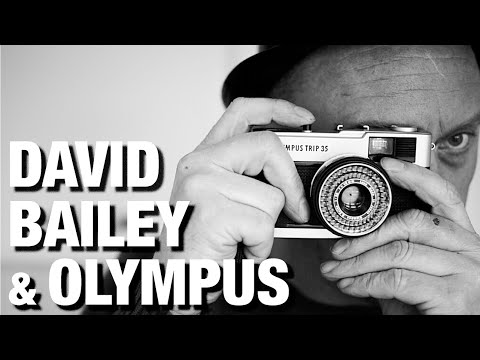
🎥 Olympus Trip 35 Advert featuring David Bailey:
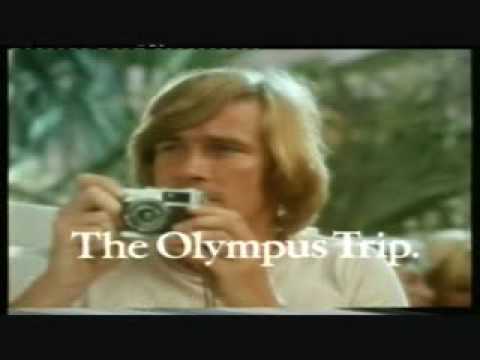
The impact was staggering. Between 1967 and 1984, over 10 million Trip 35 units were sold, significantly boosted by Bailey’s ads. Olympus transcended its identity as an optics manufacturer to become an emblem of accessible, stylish photography.
🔭 Expansion in the 1980s–1990s: The OM Series and Professional Credibility
With popularity secured in the compact segment, Olympus turned its focus to SLR marketing with the OM series. The advertising of this period shifted toward a more technical tone, yet without sacrificing the brand’s signature elegance. Ads emphasized system reliability, compact design (a competitive edge against bulkier Canon or Nikon bodies), and innovations such as spot metering and electronic shutters.
Olympus masterfully balanced science and style. Figures like supermodel Cheryl Tiegs appeared in ads for the Olympus OM-10, reinforcing the notion that technical precision and aesthetics could coexist.
🎥 Olympus OM-10 Camera Ad (1980):

Commercials from the 1980s adopted a cinematic aesthetic. Production values became more polished, featuring sophisticated soundtracks and art direction that captured the aspirational spirit of the decade.
💻 Digital Transition (2000s–2010s): Lifestyle Storytelling
The arrival of digital photography shook the industry to its core. Traditional camera brands faced a dilemma: how to remain relevant when mobile phones began including built-in cameras. Olympus responded with a radical shift in tone. It partially stepped away from its sophisticated aura to embrace humor and everyday narrative.
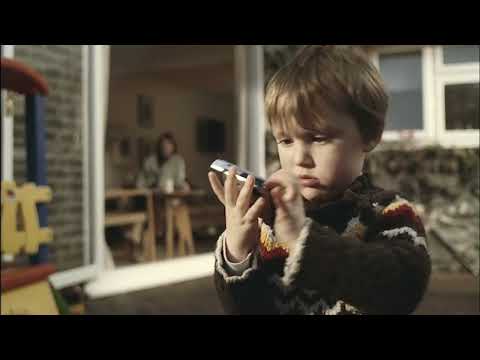
A prime example is the 2007 UK "Toddler" commercial. In it, a small child uses an Olympus camera to photograph his dog. The scene is endearing, yes, but also functional: it demonstrates the camera’s durability, ease of use, and its role in preserving family memories. Olympus understood that, in the digital age, consumers weren’t just buying technical specifications; they were buying memories.
🎥 Olympus Toddler Commercial (2007, UK):
The OM-D Series Launch
With the rise of mirrorless cameras, Olympus revitalized its heritage with the OM-D series. Advertising emphasized creative freedom, portability, and retro aesthetics. Campaigns appealed both to professionals needing a lightweight secondary body and to emerging vloggers who prioritized quality without the bulk of a DSLR.
🔄 Olympus in the 2020s: Rebirth as OM System
2021 marked the end of an era. Olympus’s imaging division was transferred to OM Digital Solutions, rebranding as OM System. Far from being a farewell, the advertising of this phase has functioned as a bridge between past and future.
Current campaigns pay homage to Olympus’s 100-year history in optics while projecting a contemporary vision: nomadic creators, travelers, and visual storytellers. The marketing strategy no longer competes head-on with full-frame giants; instead, it carves a niche in lightweight durability, weather resistance, and emotional connection with nature.
📊 Comparison Table: Olympus Advertising Eras
| 1950s–70s | Olympus 35 series | Accessibility, portability | Positioned Olympus as affordable quality |
| 1977–1991 | David Bailey Trip 35 | Celebrity wit, democratization | 10M+ Trip 35 sold; cultural catchphrase |
| 1980s–90s | OM series, OM-10 ads | Reliability, style, celebrity endorsements | Reinforced Olympus’s professional credibility |
| 2000s–2010s | Toddler ad, OM-D series | Humor, lifestyle, digital innovation | Adapted to family and creator markets |
| 2020s–present | OM System branding | Heritage + mirrorless innovation | Reinvented Olympus for modern creators |
🔎 Expert Analysis: Why It Worked
Authenticity. Unlike competitors who intimidated consumers with technical specifications, Olympus made users feel capable. Its ads didn’t say, "Look what the camera can do"; they said, "Look what you can do with this camera."
Cultural Integration. The Bailey campaign transcended television. The phrase "Who do you think you are, David Bailey?" seeped into popular vernacular—a rare feat for camera advertising.
Innovation Messaging. Even in the more technical OM series ads, Olympus maintained stylistic elegance. Innovation was presented as desirable, not as a barrier to entry.
Risks. It was not a flawless journey. Olympus sometimes struggled to balance heritage with digital disruption, particularly against rivals like Canon and Sony. Yet it successfully pivoted toward niches where its compact DNA remained relevant.
🌍 Cultural Significance and Consumer Psychology
Olympus’s campaigns are studied in advertising and marketing schools as case studies in brand longevity. But their true legacy is cultural.
Advertising History: They represent the evolution of consumer electronics marketing.
Pop Culture: From Bailey to the toddler commercial, Olympus connected with the spirit of each era.
Consumer Psychology: It appealed to emotion, not just reason. Trust, nostalgia, and aspiration were its pillars.
Global Reach: Although the most memorable campaigns originated in the UK, their universal values—storytelling, creativity, simplicity—resonated worldwide.
🧠 Conclusion: The Legacy of Olympus Advertising
The advertising history of Olympus is far more than a chronology of commercials. It is a reflection of how a precision optics company managed to humanize itself without losing prestige. From the British wit of David Bailey to the tenderness of the Toddler commercial and the resilience of OM System, Olympus demonstrated that cameras do not just capture light: they capture identity.
In a market dominated by technical specifications and megapixel wars, Olympus chose a different path: empathy. Its campaigns have not aged because they never tried to be modern; they tried to be human. That is why, when revisiting these commercials decades later, we do not see obsolete technology. We see the promise that anyone, at any moment, can be a creator.
Olympus no longer manufactures cameras under its own name, but the lesson endures: the best technology is not the most advanced, but the one that invites you to use it. And in that art, Olympus remains a master.

Discover how to leverage viral trends for effective TikTok ads. Boost your brand's visibility and engagement with our expert strategies and insights.

Discover the groundbreaking Adidas commercials that shaped online advertising. Explore iconic campaigns and their impact on digital marketing strategies.

Discover how Nikon's innovative advertising strategies transformed camera marketing, setting new standards and influencing industry trends for years to come.

Discover the actors who have championed video game companies, blending entertainment with gaming. Explore their roles and impact on the industry today.

Explore the influence of Renault ads on the automotive industry. Discover how innovative marketing strategies shape consumer perceptions and drive sales.

Explore the vibrant world of Pepsi ads and their iconic pop music legacy. Discover how these campaigns shaped culture and influenced generations of artists.

Discover the legacy of Coca-Cola's "Taste the Feeling" campaign, exploring its impact on branding and consumer emotions through memorable storytelling.
Discover Wendy's most memorable advertising slogans that have shaped its brand identity. Explore the creativity behind each iconic phrase and its impact.