

In 1928, two brothers named Paul and Joseph Galvin invested $750 to purchase a bankrupt battery eliminator company in Chicago. They renamed it Galvin Manufacturing Corporation and began producing radios for automobiles—a product category so novel it required a new word. They called it "Motorola," combining "motor" with "Victrola."
The company that began by inventing the vocabulary of mobile technology would, over the following century, define its grammar, syntax, and rhetoric. Motorola's engineers gave the world the first handheld cellular phone, the first commercial portable radio, and the thinnest flip phone ever manufactured. But Motorola's advertisers gave the world something equally significant: a language for talking about mobile technology as culture.
This is the story of how a Chicago radio manufacturer became a global cultural phenomenon—and how its advertising, from the first "HelloMoto" to the revived Razr, charted the evolution of how we communicate with devices and each other.
Act I: The Invention of Mobility (1930s–1980s)
Before Motorola could sell mobile phones, it had to sell the idea of mobility itself. The company's early advertising for car radios faced a skeptical audience: Why would anyone need entertainment while driving? Wasn't driving itself sufficiently engaging?
Motorola's response was demonstration. Print advertisements showed families enjoying radio programs during cross-country trips, businessmen receiving market updates during commutes, and police officers coordinating responses through two-way communication. The message was not about the product; it was about the possibilities the product enabled.
By 1983, when Motorola launched the DynaTAC 8000X—the first commercially approved handheld cellular phone—the company had spent fifty years preparing consumers to accept mobile communication as natural. The DynaTAC's advertising did not need to explain why someone would want a portable telephone; it needed only to demonstrate that such a device now existed.
The commercials showed confident professionals in suits, lifting the brick-sized handset from its carrying case and conducting business from street corners and construction sites. The message was aspirational: this device announces its owner's importance.
Link: [Motorola DynaTAC Commercial (1980s): Search YouTube: "Motorola DynaTAC 8000X ad"]
Act II: The Greeting (2002–2007)
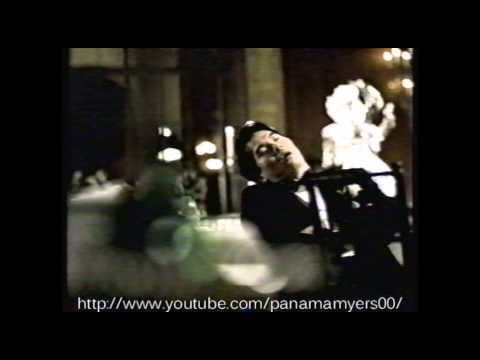
"HelloMoto"
The "HelloMoto" campaign was Motorola's declaration of cultural relevance. The company had spent decades as a respected engineering firm, trusted by businesses and early adopters. It had not, however, achieved the emotional connection that defined youth-oriented brands like Nokia and the emerging Sony Ericsson.
"HelloMoto" addressed this deficit through sonic branding. The spoken greeting—delivered with rhythmic emphasis, often accompanied by electronic stabs—was not merely a slogan but an audio logo. It appeared at the beginning and end of commercials, in retail displays, and as startup sounds on Motorola devices. Consumers who never read a print ad or watched a full commercial could nevertheless identify "HelloMoto" within two syllables.
The campaign's visual language was deliberately eclectic. Commercials featured animated robots, surreal landscapes, and choreographed dance sequences—imagery that signaled Motorola's departure from corporate seriousness. The message was unambiguous: Motorola is no longer your father's technology company.
This campaign was Motorola's most successful global branding initiative. "HelloMoto" aired across North America, Europe, Asia, and Latin America, translated into dozens of languages while retaining its English hook. The slogan became sufficiently embedded in popular culture that it survived Motorola's subsequent decline, referenced in films, television shows, and music lyrics years after the campaign concluded.
Link: HelloMoto Global Campaign (2002):
Act III: The Object of Desire (2004–2007)
"Razr V3 and the Fashion of Thinness"
The Razr V3 was not merely a successful product; it was a category redefinition. Before Razr, mobile phones were evaluated by their features: battery life, screen resolution, camera quality. After Razr, phones were evaluated by their design.
Motorola's advertising recognized this transformation with unusual sophistication. The Razr commercials did not emphasize the phone's functionality; they emphasized its materiality. Close-up shots of the anodized aluminum housing, the laser-etched keypad, the satisfying resistance of the hinge mechanism. The phone was photographed and filmed with the reverence reserved for luxury watches and designer handbags.
The campaign's global execution was remarkably consistent. In Tokyo, Paris, São Paulo, and New York, Razr advertising shared identical visual vocabulary: minimalist composition, dramatic lighting, extended product contemplation. This was Motorola's first campaign designed simultaneously for all markets, reflecting the product's universal appeal and the brand's mature global infrastructure.
The results were extraordinary. Over 130 million Razr V3 units were sold, making it the best-selling flip phone in history. More significantly, the Razr established that mobile phones could function as fashion accessories—a positioning that Apple would later perfect with the iPhone but that Motorola originated.
Link: Motorola Razr V3 Commercial (2004):

Act IV: The Long Retreat (2010s)
The decade following Razr's peak was difficult for Motorola. Apple's iPhone redefined consumer expectations; Samsung's Galaxy series executed with greater speed and scale. Motorola, acquired by Google in 2012 and subsequently sold to Lenovo in 2014, struggled to maintain relevance in premium markets.
Yet this period also demonstrated Motorola's strategic resilience. The company redirected its advertising focus toward emerging economies—India, Brazil, Mexico—where its brand heritage retained value and its affordability proposition resonated.
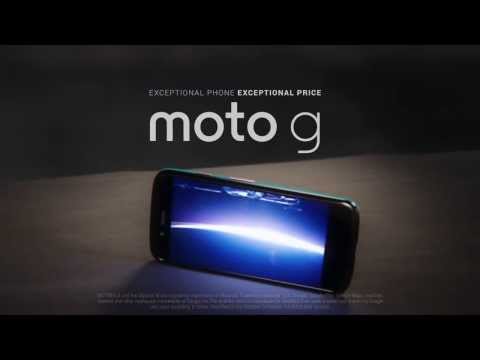
The Moto G campaign, launched in 2013, emphasized capability without compromise. The commercials showed young professionals, students, and entrepreneurs using their Moto G devices for work, education, and creative projects. The message was not that Moto G was as good as premium phones; it was that Moto G was good enough for the things that mattered.
This positioning was psychologically astute. It acknowledged consumers' budget constraints without condescension and validated their purchasing decisions without defensiveness. The Moto G became one of the best-selling Android devices in emerging markets, and its advertising template influenced competitors' value-segment campaigns for years.
Link: Motorola Moto G Global Ad (2013):
Act V: The Return (2020–Present)
"Razr 2022 and the Architecture of Nostalgia"
Motorola's 2022 revival of the Razr brand was an exercise in strategic nostalgia. The foldable Razr referenced the original's iconic form factor while incorporating contemporary technology and addressing the original's limitations.
The advertising campaign faced a delicate challenge. It needed to activate positive associations with the Razr heritage without appearing dependent on past achievements. It needed to claim innovation while honoring history.
Motorola's solution was visual continuity. The 2022 commercials employed similar cinematography to the 2004 ads: dramatic lighting, contemplative pacing, fetishistic attention to the hinge mechanism. Viewers who remembered the original campaign experienced immediate recognition; viewers encountering Razr for the first time received implicit evidence of the product's pedigree.
Link: Motorola Razr 2022 Foldable Ad:
"Sustainability and Stewardship"
Motorola's most recent advertising has emphasized corporate responsibility. Campaigns highlight the company's use of recycled materials, its commitment to extended software support, and its parent company Lenovo's broader sustainability initiatives.
This messaging serves multiple strategic functions. It addresses the environmental concerns of younger consumers, differentiates Motorola from competitors with less developed sustainability practices, and signals that the company is oriented toward the future rather than reliant on past achievements
Comparative Table: Motorola's Advertising Eras
| 1930s–70s | Radio/TV reliability | "Motorola is trusted technology" | Brand establishment | U.S. market dominance |
| 1980s | DynaTAC professional | "This device signals importance" | Category creation | Early adopter adoption |
| 2002–07 | HelloMoto | "Motorola is youthful culture" | Emotional redefinition | Global brand awareness |
| 2004–07 | Razr V3 fashion | "Phones are design objects" | Category reclassification | 130M units, cultural icon |
| 2010s | Moto G value | "Good enough is sufficient" | Strategic retreat | Emerging market growth |
| 2020s | Razr foldable | "Heritage enables innovation" | Premium repositioning | Niche revitalization |
Expert Analysis: The Motorola Method
1. Sonic Primacy
Motorola's most enduring advertising achievement is the "HelloMoto" audio logo. The company understood, earlier than most technology brands, that audio branding penetrates cognitive defenses that resist visual messaging. Consumers who fast-forward through commercials or glance away from billboards cannot avoid hearing. This insight has been validated by Intel's five-note jingle, Netflix's "ta-dum," and McDonald's "I'm lovin' it"—all successors to Motorola's sonic innovation.
2. Design-Led Narrative
The Razr V3 campaign demonstrated that product design can function as advertising. The phone itself, with its distinctive form factor and premium materials, communicated Motorola's values more effectively than any commercial. This insight—that the product is the primary medium—has become foundational to technology marketing.
3. Nostalgia as Strategy
Motorola's 2022 Razr campaign represents sophisticated understanding of nostalgia's strategic applications. The revival did not merely reference the original product; it referenced the original advertising. Viewers who remembered the 2004 commercials experienced layered meaning unavailable to younger audiences. This depth perception is unavailable to brands without Motorola's heritage.
4. Geographic Fluency
Motorola's ability to transition from developed-market premium positioning to emerging-market value positioning—and then attempt re-entry into premium segments—demonstrates unusual geographic and strategic fluency. The company has successfully maintained distinct brand identities in different regions without creating global incoherence.
 Watch YouTube video
Industry Impact: The Mobile Advertising Canon
Motorola's advertising innovations influenced the entire mobile industry:
Nokia adopted Motorola's lifestyle positioning, transforming itself from functional brand to fashion leader through campaigns like "Connecting People."
Apple inherited Motorola's design-centric advertising vocabulary, elevating product cinematography to its current cinematic standard.
Samsung replicated Motorola's global-local hybrid strategy, maintaining consistent brand identity while adapting to regional preferences.
Lenovo's acquisition of Motorola demonstrated that heritage brands retain advertising equity even after market share declines.
More broadly, Motorola established that mobile phone advertising could function at multiple cultural registers simultaneously. The same brand that sold fashion-conscious Razr to European trendsetters also sold affordable Moto G to Brazilian students. This range did not confuse consumers; it reflected the reality that Motorola was different things to different people.
Conclusion: The Greeting That Echoes
Motorola's advertising journey is a case study in strategic duration. The company has maintained continuous brand presence for nearly a century, through technological revolutions, market transformations, competitive challenges, and corporate restructuring. Its advertising has not merely documented this history; it has enabled it.
"HelloMoto" was never merely a slogan. It was an invitation—to engage with technology as culture, to recognize that mobile devices could express identity as well as transmit information, to greet the future with confidence rather than anxiety.
The Razr V3 was never merely a product. It was a statement—that engineering excellence and aesthetic sophistication need not be separated, that consumer electronics could aspire to art, that a phone could be desirable independent of its functionality.
And the 2022 Razr revival was never merely a product launch. It was a reminder—that heritage is not constraint but resource, that consumers retain affection for brands that respected their intelligence and taste, that Motorola's best advertising has always been about possibility rather than achievement.
The greeting echoes across decades. "HelloMoto" appears in YouTube comment sections, nostalgic retrospectives, and the occasional ironic citation. It has achieved what few advertising slogans accomplish: transcendence of its commercial origins.
The phones Motorola sold in 2002 are obsolete. The Razr V3, once the world's most desired mobile device, is now a collector's curiosity. Even the revived Razr will eventually be superseded by newer technologies and more innovative designs.
But the greeting persists. It survives in the memories of consumers who encountered it during formative years and in the advertising strategies of competitors who recognized its effectiveness. It survives as evidence that a simple phrase, properly executed and consistently maintained, can outlast the products it promoted.
This is Motorola's enduring advertising legacy. Not the radios that brought music to American automobiles. Not the phones that liberated communication from landlines. Not the foldable devices that revived a dormant brand.
Explore Motorola's innovative journey in mobile advertising, highlighting key strategies and milestones that shaped the industry landscape.

Discover how Netflix masterfully uses nostalgia in its advertising to connect with audiences and evoke powerful emotions. Explore the strategy behind the success.

Discover how Adidas leverages global sports campaigns to enhance brand visibility and connect with fans worldwide. Explore innovative advertising strategies today.
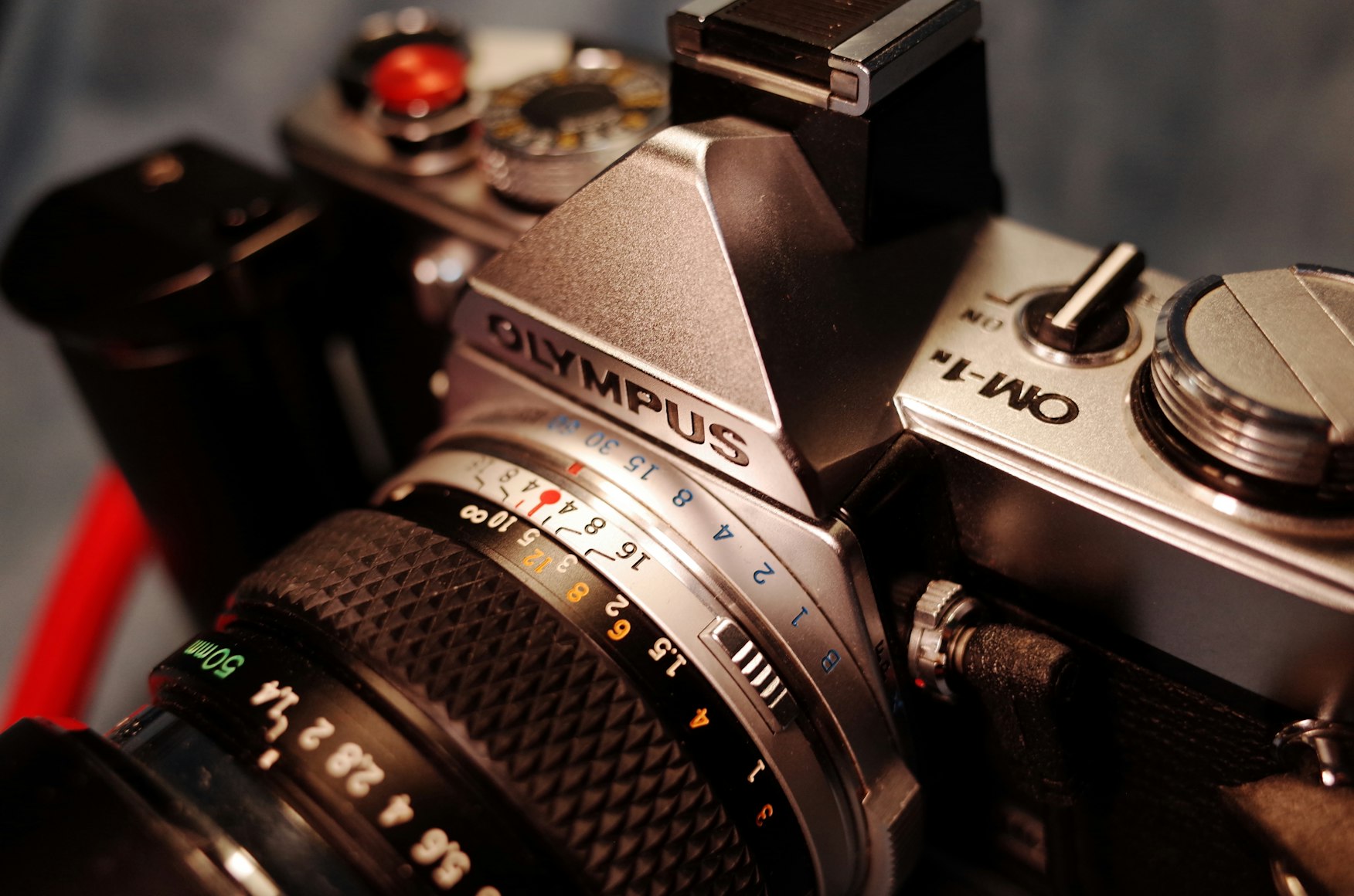
Discover Olympus's transformative advertising journey in photography, exploring innovative campaigns and iconic moments that shaped the industry.

Discover how to leverage viral trends for effective TikTok ads. Boost your brand's visibility and engagement with our expert strategies and insights.

Discover the groundbreaking Adidas commercials that shaped online advertising. Explore iconic campaigns and their impact on digital marketing strategies.

Discover how Nikon's innovative advertising strategies transformed camera marketing, setting new standards and influencing industry trends for years to come.

Discover the actors who have championed video game companies, blending entertainment with gaming. Explore their roles and impact on the industry today.

Explore the influence of Renault ads on the automotive industry. Discover how innovative marketing strategies shape consumer perceptions and drive sales.