

In 2007, Netflix aired a commercial showing a red envelope traveling through the postal system. The journey was mundane—sorting facilities, mail trucks, suburban mailboxes—but the voiceover was reverent. "It starts in a place you can't see," the narrator intoned, "and ends in your living room."
Sixteen years later, Netflix re-released this commercial. The red envelope had been obsolete for years; the company's future was streaming, not shipping. Yet audiences responded with unexpected emotion. Comments on the video expressed longing for a simpler era—not for the inconvenience of physical media, but for the anticipation it represented.
This was Netflix's discovery: its audience was not only nostalgic for the 1980s, the 1990s, or the early 2000s. They were nostalgic for Netflix itself.
This article explores how the world's largest streaming platform mastered the advertising grammar of memory. From resurrecting failed sodas to celebrating forgotten sitcoms, Netflix's nostalgia campaigns demonstrate that the most powerful emotional trigger in contemporary marketing is not desire, fear, or aspiration—it is recognition.
Act I: The Architecture of Recognition
Nostalgia advertising operates through a specific psychological mechanism: fluency. Consumers process familiar cultural references more easily than novel ones, and this ease of processing generates positive affect. We do not love the past because it was better; we love it because we have already processed it.
Netflix's nostalgia strategy exploits this mechanism with unusual sophistication. The company's campaigns do not merely reference the past; they reactivate it, retrieving dormant cultural memories and attaching them to current content.
This strategy requires archival intelligence. Netflix must identify cultural artifacts that retain emotional resonance, distinguish between artifacts that are merely dated and those that are evocative, and integrate these references without appearing desperate or derivative.
The company's success rate is extraordinary. Its nostalgia campaigns have generated billions of impressions, sparked countless social conversations, and reinforced Netflix's positioning as not merely a content distributor but a cultural steward.
Act II: The Product as Portal (2019)
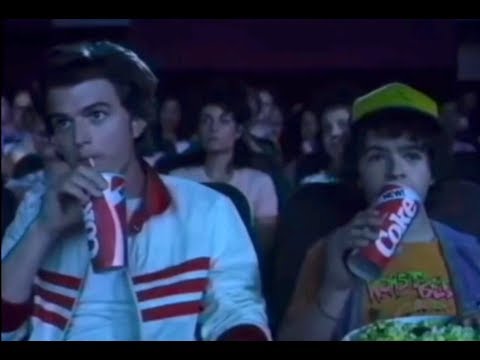
"Stranger Things x New Coke"
When Coca-Cola discontinued its original formula in 1985 and introduced "New Coke," the public response was immediate and devastating. Consumers hoarded old Coke, protested at company headquarters, and forced a return to the original recipe within 79 days. New Coke became the most famous product failure in American history—and, eventually, a nostalgic artifact in its own right.
Netflix's 2019 partnership with Coca-Cola resurrected New Coke for the third season of Stranger Things. The show's 1985 setting made the reference organic; characters consumed New Coke, discussed its controversial taste, and embodied the era's anxiety about corporate overreach.
The campaign extended beyond the screen. Netflix and Coca-Cola produced limited-edition New Coke cans, available for purchase online and at select retailers. Fans who had not been born in 1985 nevertheless participated in the nostalgia, sharing photos of the cans and debating whether the revived formula matched their memory of a product they had never tasted.
This campaign demonstrated Netflix's mature understanding of second-order nostalgia. The company recognized that Stranger Things viewers did not need to remember 1985 to experience nostalgia for it. The aesthetic itself—the visual vocabulary of synth soundtracks, mall culture, and analog technology—was sufficient to trigger the emotional register of memory.
Link: Stranger Things 3 | New Coke Commercial:
Act III: The Archive as Asset (2000s–2023)
"The Red Envelope Elegy"
Netflix's 2023 revival of its DVD-era advertising was a strategic departure. The company was not promoting new content or technological innovation; it was celebrating its own obsolescence.
The original 2007 commercial had functioned as brand establishment, explaining Netflix's unconventional business model to skeptical consumers. The 2023 re-release functioned as brand commemoration. The red envelope, once a practical necessity, had become a memorial artifact. Viewers who had subscribed to Netflix's DVD service experienced genuine grief for its passing; viewers who had never received a red envelope experienced nostalgic tourism.
This campaign represented Netflix's most sophisticated engagement with autonostalgia—nostalgia for one's own history. The company recognized that its two decades of operation constituted a meaningful cultural archive, accessible through advertising as readily as through original content.
Link: Netflix DVD Vintage Commercial:
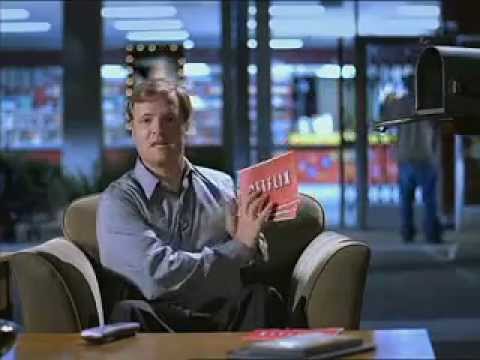
Link: Nostalgic 2007 Netflix Commercial:
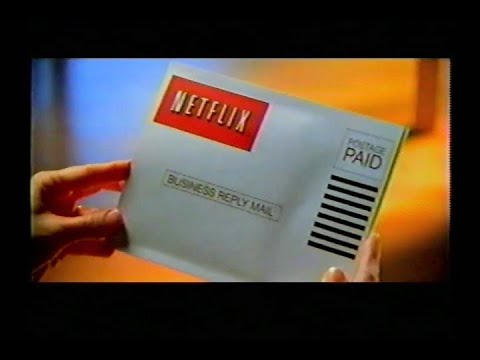
Link: Long Live the Red Envelope Era:

Act IV: The Sitcom as Shared Memory (2020)
"Sister, Sister and the Grammar of Millennial Childhood"
In 2020, Netflix released a compilation of clips from Sister, Sister, the 1990s sitcom starring identical twins Tia and Tamera Mowry. The compilation's centerpiece was a scene of the twins' friend Roger delivering the immortal line, "Go home, Roger!"—a moment that had circulated as a GIF and meme for years before Netflix officially acknowledged it.
The campaign was deceptively simple. Netflix did not produce new creative; it curated existing content and distributed it through social channels. Yet the engagement was extraordinary. Millennial viewers who had not thought about Sister, Sister in decades experienced immediate recognition, followed by extended sessions of related content consumption.
This campaign demonstrated that Netflix's nostalgia strategy could function without production investment. The company's library of licensed and original content was itself a nostalgia engine, capable of generating emotional engagement through simple curation.
Act V: The Experience as Memory (2017)
"Stranger Things x Lyft"
Netflix's 2017 partnership with Lyft transformed ride-sharing vehicles into immersive nostalgia environments. Passengers in selected cities were picked up by "Upside Down" cars, complete with fairy lights, Christmas decorations, and period-appropriate music.
This campaign represented Netflix's extension of nostalgia from screen-based to experience-based marketing. The company recognized that the most powerful nostalgic triggers are not visual but multisensory: the texture of a car seat, the smell of an old radio, the specific quality of light through a dusty windshield.
The campaign's scale was limited, but its influence was disproportionate. Stranger Things x Lyft demonstrated that nostalgia advertising need not be confined to traditional media formats. It could inhabit physical spaces, transform everyday experiences, and create new memories that would themselves become nostalgic.
Act VI: The Democratization of Nostalgia (2024)
"It's So Good"
Netflix's 2024 "It's So Good" campaign represented the culmination of its nostalgia strategy. The campaign encouraged viewers to bookmark and share their favorite Netflix scenes, creating a distributed archive of personally significant moments.
This was nostalgia advertising as platform feature. Netflix was not producing nostalgic content; it was providing infrastructure for users to produce and share their own nostalgia. The campaign recognized that the most powerful emotional connections are not manufactured by brands but curated by individuals.
The campaign's viral success demonstrated that Netflix's audience was not merely receptive to nostalgia marketing but actively participatory in it. Users wanted to share the scenes that had moved them, the characters they had loved, the moments they had first experienced on Netflix and now associated with specific periods of their own lives
Comparative Table: Netflix's Nostalgia Method
| Stranger Things x Lyft | 2017 | 1980s material culture | Experiential immersion | Physical environment transformation |
| Stranger Things x New Coke | 2019 | Failed product history | Cultural reactivation | Limited-edition retail |
| Sister, Sister Clips | 2020 | 1990s sitcom viewing | Social curation | User-generated distribution |
| Red Envelope Revival | 2023 | Netflix's own history | Brand commemoration | Archival re-release |
| It's So Good | 2024 | Personal viewing history | Participatory archiving | Platform feature integration |
Expert Analysis: The Netflix Nostalgia Method
1. Specificity Over Generality
Netflix's nostalgia campaigns consistently reference specific artifacts rather than general eras. New Coke, "Go home, Roger!", the red envelope—these are not abstract evocations of the 1980s, 1990s, or 2000s but concrete, nameable objects and moments. Specificity signals authenticity; generality signals marketing.
2. Second-Order Nostalgia
Netflix has mastered what might be called second-order nostalgia: nostalgia for experiences one never had. Viewers born after 1985 cannot authentically miss New Coke, yet they participate in the emotional register of missing it. This phenomenon is essential to Netflix's strategy, given that its target audience spans generations with radically different lived experiences.
3. Autonostalgia
Netflix's revival of its DVD-era advertising represents a rare instance of brand self-nostalgia. The company recognized that its own history had become a cultural asset, accessible through the same emotional mechanisms that activate nostalgia for external artifacts. This insight positions Netflix to maintain brand loyalty across generational transitions.
4. Participatory Infrastructure
The "It's So Good" campaign demonstrates Netflix's evolution from nostalgia producer to nostalgia facilitator. The company now provides tools for users to curate and share their own nostalgic experiences, transforming passive consumption into active creation. This is the mature phase of nostalgia marketing.
Industry Impact: The Nostalgia Standard
Netflix's nostalgia advertising has influenced the entire streaming and entertainment industry:
Disney+ has aggressively leveraged its unmatched archive of nostalgic intellectual property, from Marvel superheroes to Star Wars droids to Disney Channel original movies.
HBO Max has revived Friends and The Sopranos nostalgia through anniversary campaigns and curated clip packages.
Peacock has built entire marketing campaigns around The Office and Parks and Recreation, recognizing that workplace comedies from the 2000s now function as comfort viewing for stressed audiences.
Amazon Prime Video has experimented with nostalgic product integrations, though without Netflix's strategic coherence.
More broadly, Netflix established that nostalgia is not a creative crutch but a strategic capability. Brands that succeed at nostalgia marketing do not merely reference the past; they manage cultural memory as an asset class.
Conclusion: The Comfort of Recognition
Netflix's advertising journey reveals something unexpected about contemporary media consumption. We often describe streaming as a technology of abundance—infinite libraries, endless recommendations, total choice. Yet Netflix's most effective advertising does not emphasize abundance. It emphasizes selection.
The red envelope commercial, in both its original and revived forms, is not about how many DVDs Netflix can send. It is about the specific DVD that arrives, the anticipation it represents, the ritual of opening the envelope and inserting the disc. It is advertising about choosing.
The New Coke campaign is not about the infinite content available on Netflix. It is about a single product, a specific summer, a particular episode of Stranger Things. It is advertising about remembering.
The Sister, Sister clips are not about the comprehensive library of 1990s sitcoms Netflix has acquired. They are about one scene, one line, one joke that millions of people recall with identical pleasure. It is advertising about sharing.
This is the paradox at the heart of Netflix's nostalgia strategy. A platform defined by limitless choice advertises through limitless recognition. It does not ask viewers to imagine new possibilities; it asks viewers to remember old pleasures. It does not promise the future; it promises the past, preserved, accessible, and waiting.
The red envelope is obsolete. New Coke is a historical curiosity. Sister, Sister ended its original run twenty years ago. Yet these artifacts, properly curated and contextualized, generate more emotional engagement than any number of announcements about new features, original series, or technological innovations.
Because recognition is not consumption. Recognition is reunion. And reunion, however fleeting, is more valuable than novelty.
Netflix did not invent nostalgia advertising. But it perfected its application to the streaming context, demonstrating that a platform defined by constant novelty must also provide constant continuity. Viewers do not only want what they have never seen; they want what they have already loved, returned to them with evidence that their love was justified.
The red envelope is gone. The DVDs it carried are collectibles. The company that shipped them is now a different entity, operating in a different industry, serving a different audience.
But the memory persists. And Netflix, alone among its competitors, has learned to treat that memory not as sentimental distraction but as strategic infrastructure.
Yesterday, once more. Today, always accessible. Tomorrow, preserved.
This is Netflix's nostalgia legacy. Not the resurrection of failed products or forgotten sitcoms, but the recognition that in an era of infinite choice, the most valuable asset is the choice already made.
Discover the catchy song featured in Netflix's Summer Slate commercial. Uncover the artist and lyrics that are making waves this season!
Discover the captivating song featured in the Netflix 2026 movie trailer. Uncover the artist and track details that set the perfect tone for the film.
Discover the full cast of the highly anticipated Netflix 2026 global promo commercial. Get insights into the stars bringing this exciting project to life.

Discover how Adidas leverages global sports campaigns to enhance brand visibility and connect with fans worldwide. Explore innovative advertising strategies today.
Discover Olympus's transformative advertising journey in photography, exploring innovative campaigns and iconic moments that shaped the industry.

Discover how to leverage viral trends for effective TikTok ads. Boost your brand's visibility and engagement with our expert strategies and insights.

Discover the groundbreaking Adidas commercials that shaped online advertising. Explore iconic campaigns and their impact on digital marketing strategies.

Discover how Nikon's innovative advertising strategies transformed camera marketing, setting new standards and influencing industry trends for years to come.

Discover the actors who have championed video game companies, blending entertainment with gaming. Explore their roles and impact on the industry today.

Explore the influence of Renault ads on the automotive industry. Discover how innovative marketing strategies shape consumer perceptions and drive sales.

Explore the vibrant world of Pepsi ads and their iconic pop music legacy. Discover how these campaigns shaped culture and influenced generations of artists.