

The gap between "interested" and "purchased" is where most businesses lose their potential customers. You've done the hard work—captured attention, generated interest, collected contact information. But without an effective follow-up strategy, those leads remain just names on a list, never converting into revenue.
In 2026, follow-up isn't about persistence alone—it's about precision, personalization, and timing. This comprehensive guide will walk you through proven follow-up strategies that systematically convert leads into customers, complete withYouTube tutorialsto help you implement each approach.
Why Follow-Up Matters: The Data Behind Conversion
The numbers tell a stark story about the gap between lead generation and lead conversion:
| 80% of leadsnever convert into sales | Most businesses lose the majority of their potential customers |
| 50% of salesgo to the vendor who responds first | Speed is a competitive advantage |
| 48% of salespeoplenever follow up with a lead | Most competition gives up too early |
| The average B2B salerequires 8-12 touchpoints | One email is never enough |
| 70% of leadsare not sales-ready at the moment of capture | Nurturing is essential |
| Consistent follow-upincreases conversion rates by 50-100% | Persistence pays off |
Watch the Tutorial: Why Follow-Up Separates Winners from Losers
Learn why most leads don't convert and how follow-up changes the equation.
-
Watch here:
 Watch YouTube video

Part 1: The Psychology of Lead Follow-Up
Before diving into tactics, it's essential to understand why follow-up works at a psychological level.
The Mere-Exposure Effect
The mere-exposure effect demonstrates that repeated exposure to a stimulus increases liking, even without conscious awareness. Each follow-up touchpoint builds familiarity, and familiarity builds trust.
Application:Consistent, non-aggressive follow-up makes your brand feel like a known quantity, reducing the perceived risk of purchase.
The Consistency Principle
People want to be consistent with their past commitments. When a lead has taken a small action (downloading a guide, attending a webinar), they are psychologically predisposed to take larger actions that align with that initial commitment.
Application:Follow-up sequences should gradually increase the commitment level—from educational content to case studies to consultations to purchase offers.
The Reciprocity Principle
When you provide value upfront—through helpful content, insights, or time—leads feel an unconscious obligation to reciprocate.
Application:Follow-up shouldn't be purely transactional. Provide value in every interaction before asking for the sale.
Loss Aversion
The fear of losing an opportunity is psychologically more powerful than the desire for gain. Time-limited offers, expiring discounts, and "last chance" messaging tap into this bias.
Application:Strategic use of urgency and scarcity in follow-up can trigger action from leads who might otherwise delay indefinitely.
Watch the Tutorial: The Psychology of Lead Nurturing
Learn how psychological principles apply to converting leads.
-
Watch here:
Watch YouTube video
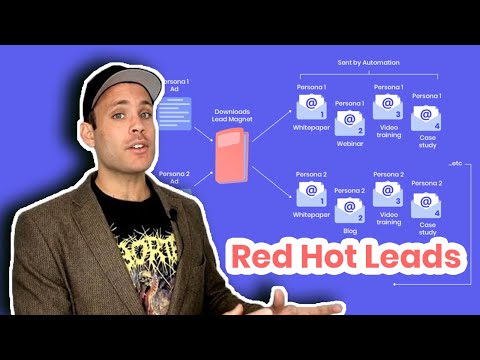
Part 2: The Speed-to-Lead Advantage
Speed is the single most powerful factor in lead conversion. The faster you respond, the more likely you are to close.
The Conversion Curve
| Within 5 minutes | 9x higher conversion rate |
| Within 30 minutes | 6x higher conversion rate |
| Within 1 hour | 3x higher conversion rate |
| Within 24 hours | Baseline (1x) |
| After 24 hours | Significantly lower conversion |
Why Speed Matters
Recency of intent:The lead is actively thinking about your product or service
Competitive advantage:Most competitors won't respond quickly
First-impression bias:The first responder shapes the conversation
Momentum preservation:Delays allow enthusiasm to fade
Implementing Speed-to-Lead
| Website forms | < 5 minutes | Auto-notifications, CRM alerts |
| Live chat | < 1 minute | Chatbots for off-hours, dedicated team |
| Phone inquiries | < 2 minutes | Call routing, missed-call follow-up |
| Email inquiries | < 1 hour | Auto-responder with expectation-setting |
| Social media DMs | < 15 minutes | Social listening tools, response templates |
Watch the Tutorial: Speed-to-Lead Best Practices
Learn how to implement rapid response systems.
-
Watch here:
Watch YouTube video
Part 3: Lead Segmentation for Targeted Follow-Up
Not all leads are created equal. Sending the same follow-up sequence to every lead is inefficient and ineffective. Strategic segmentation dramatically improves conversion rates.
Lead Qualification Frameworks
BANT (Budget, Authority, Need, Timeline)
| Budget | Does the lead have the financial capacity to purchase? |
| Authority | Is this person the decision-maker? |
| Need | Does the lead have a genuine problem you solve? |
| Timeline | Is there a realistic timeframe for purchase? |
CHAMP (Challenges, Authority, Money, Prioritization)
A modern alternative that focuses on challenges first, then qualification.
Lead Scoring Model
Assign points to leads based on demographic fit, behavioral engagement, and intent signals:
| Website visit | 5 | Visited product page |
| Email open | 10 | Opened nurture email |
| Content download | 20 | Downloaded case study |
| Webinar attendance | 25 | Attended live or watched replay |
| Pricing page view | 30 | Viewed pricing multiple times |
| Demo request | 50 | Requested sales call |
Segmentation Tiers:
| Hot leads | 70+ | Immediate sales follow-up, direct outreach |
| Warm leads | 30-69 | Automated nurture sequence, educational content |
| Cold leads | <30 | Drip campaigns, brand-building content |
| Unqualified | 0 | Suppress from sales outreach, email-only nurture |
Watch the Tutorial: Lead Scoring and Segmentation
Learn how to prioritize leads for maximum efficiency.
-
Watch here:
Watch YouTube video
Part 4: Multi-Channel Follow-Up Sequences
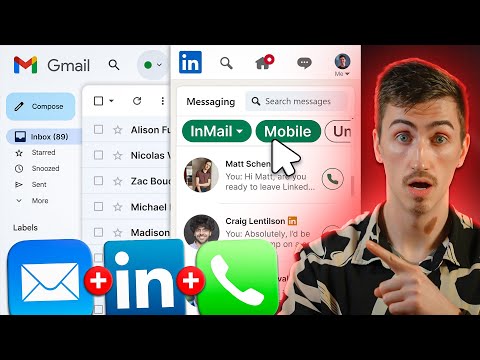
Modern follow-up requires reaching leads where they are. A multi-channel approach dramatically increases contact rates and conversion.
Channel Effectiveness
| Phone | Hot leads, urgent timing | 8-20% connection rate |
| Nurture, information delivery | 15-30% open rate | |
| SMS/Text | Time-sensitive, brief messages | 45-98% open rate |
| B2B, professional context | 10-30% response rate | |
| Retargeting ads | Warm leads, brand reminder | 0.5-2% CTR |
| Direct mail | High-value accounts | 3-5% response rate |
The Multi-Channel Sequence Template
Week 1: Immediate Response
-
<5 minutes:Automated email acknowledging inquiry
-
<30 minutes:If hot lead, direct phone call
-
<2 hours:SMS confirmation with expectations
Week 1-2: Value Delivery
-
Day 2:Educational content related to their expressed interest
-
Day 4:Case study featuring similar customer
-
Day 6:LinkedIn connection request (B2B)
-
Day 8:Brief video walkthrough (personalized if possible)
Week 2-3: Engagement
-
Day 10:Invitation to webinar or demo
-
Day 12:Retargeting ad with social proof
-
Day 14:Second phone attempt (if qualified)
Week 3-4: Conversion Focus
-
Day 16:Limited-time offer or consultation invitation
-
Day 18:Testimonial-focused email
-
Day 20:Final "last chance" communication
-
Day 25:Recycle to nurture if no response
Watch the Tutorial: Multi-Channel Follow-Up Strategies
Learn how to orchestrate coordinated touchpoints across channels.
-
Watch here:
Watch YouTube video
Part 5: Email Follow-Up Sequences
Email remains the backbone of lead follow-up. Well-structured email sequences consistently outperform one-off sends.
The 7-Email Nurture Sequence
| 1 | Immediately | Acknowledge, set expectations | Thank you, what to expect, quick win |
| 2 | Day 2 | Educate | Problem-focused content, insights |
| 3 | Day 4 | Build trust | Case study, social proof |
| 4 | Day 7 | Demonstrate value | Product/service explanation |
| 5 | Day 10 | Address objections | FAQ, comparison, risk reducers |
| 6 | Day 14 | Create urgency | Limited-time offer, scarcity |
| 7 | Day 18 | Last chance | Final follow-up, alternative options |
Email Subject Line Psychology
| Curiosity | Information gap drives opens | "A quick question about your [problem]" |
| Personalization | Relevance increases attention | "John, saw you visited our pricing page" |
| Value promise | Clear benefit | "3 ways to solve [problem] in 10 minutes" |
| Social proof | FOMO, validation | "How [similar company] achieved [result]" |
| Urgency | Loss aversion | "Your free consultation expires tomorrow" |
Personalization Beyond the Name
Effective personalization goes far beyond inserting a first name:
| Referenced behavior | Website activity, content downloads | Shows attention |
| Specific pain point | Lead form responses, sales notes | Demonstrates understanding |
| Industry context | Company data, LinkedIn | Relevant framing |
| Previous interactions | Email engagement history | Contextual continuity |
Watch the Tutorial: Email Follow-Up That Converts
Learn how to write sequences that nurture leads to purchase.
Part 6: The Art of the Follow-Up Call
Phone calls remain the highest-conversion follow-up channel for qualified leads. But cold calling is dead; strategic calling is essential.
When to Call
| High-intent (demo request) | Within 5 minutes | Know what they requested, prepare relevant talking points |
| Warm lead (content download) | Within 24 hours | Reference specific content they engaged with |
| Engaged lead (multiple opens/clicks) | Within 48 hours | Understand their engagement pattern |
| Old lead (no recent activity) | Strategic re-engagement | New offer, fresh context |
The Call Framework
| Opening | Permission, context | "Is this a good time? I'm following up about [specific action]" |
| Discovery | Understand need | "What prompted you to [action]?" |
| Alignment | Connect solution to need | "Based on what you're describing, [feature] addresses [problem]" |
| Objection handling | Address barriers | "I understand [concern]. Here's how others have approached..." |
| Next step | Clear commitment | "Let's schedule [next action] for [specific time]" |
Voicemail Strategy
| Establish credibility | Reference something specific they engaged with |
| Create curiosity | Tease value without giving everything away |
| Set expectations | Clearly state next action you'll take |
| Provide opt-out | Give easy way to say "not interested" |
Watch the Tutorial: Effective Sales Follow-Up Calls
Learn how to structure calls that convert.
Part 7: Automated vs. Personalized Follow-Up
The most effective follow-up strategies blend automation for efficiency with personalization for connection.
When to Automate
| Lead capture acknowledgment | Auto-response email, CRM creation |
| Educational content delivery | Drip campaigns, scheduled sends |
| Appointment reminders | Calendar integration, SMS notifications |
| Post-purchase follow-up | Review requests, cross-sell suggestions |
| Re-engagement campaigns | Behavioral triggers, inactivity flows |
When to Personalize
| Sales calls | Live conversation, tailored to lead context |
| Demo requests | Customized presentation based on use case |
| Objection handling | Specific responses to expressed concerns |
| High-value accounts | Custom proposals, executive outreach |
| Post-meeting follow-up | Summaries referencing specific discussion points |
The Hybrid Model
Automation identifiesengaged leads through behavior scoring
Sales prioritizeshighest-scoring leads for personal outreach
Automation nurturesremaining leads with value content
Personal follow-upre-engages when automation signals readiness
Watch the Tutorial: Balancing Automation and Personalization
Learn how to scale follow-up without losing human connection.
Part 8: Handling Objections in Follow-Up
Objections are not rejections—they're requests for more information. Effective follow-up anticipates and addresses common barriers.
The Objection Framework
| Price | "I don't see the value yet" | Quantify ROI, compare to alternatives |
| Timing | "This isn't a priority right now" | Understand competing priorities, offer low-commitment next step |
| Competition | "I'm considering other options" | Differentiate key advantages, provide social proof |
| Authority | "I need to check with [someone]" | Provide materials to share, offer to meet with decision-maker |
| Need | "I'm not sure we need this" | Explore underlying challenges, share transformation stories |
The Feel-Felt-Found Technique
| Feel | "I understand how you feel about the investment..." |
| Felt | "Other customers have felt similarly..." |
| Found | "What they found was that the ROI justified the cost within 3 months..." |
Preempting Objections
The best objection handling is preventing objections before they arise. Include in your follow-up:
-
Pricing transparency early in the process
-
ROI calculations and case studies
-
Competitor comparison guides
-
Clear answers to common questions
Watch the Tutorial: Handling Sales Objections
Learn how to turn objections into commitments.
-
Watch here:
Watch YouTube video
Part 9: The Power of Persistence
Most salespeople give up too early. The data on follow-up persistence is clear:
| 1-2 touches | 10% of eventual conversions |
| 3-4 touches | 25% of eventual conversions |
| 5-6 touches | 50% of eventual conversions |
| 7-8 touches | 70% of eventual conversions |
| 9+ touches | 90% of eventual conversions |
The 10-Touch Framework
| 1 | Acknowledgment, value intro | |
| 2 | Phone | Introduction, discovery |
| 3 | Voicemail | Context, curiosity |
| 4 | Educational content | |
| 5 | Connection request | |
| 6 | Case study | |
| 7 | Phone | Follow-up call |
| 8 | SMS | Brief reminder |
| 9 | Offer, urgency | |
| 10 | Final follow-up |
Knowing When to Let Go
Persistence doesn't mean harassment. Disqualify leads when:
-
Multiple unsubscribes or "not interested" responses
-
No engagement across 8-10 touches over 60-90 days
-
Explicit request to stop contact
-
Data shows they're outside your ideal customer profile
Watch the Tutorial: The Art of Persistent Follow-Up
Learn how to stay top-of-mind without being annoying.
-
Watch here:
Watch YouTube video
Part 10: Technology Stack for Effective Follow-Up
The right tools make sophisticated follow-up sequences scalable and manageable.
Essential Follow-Up Tools
| CRM | Lead tracking, history, segmentation | HubSpot, Salesforce, Pipedrive |
| Marketing automation | Email sequences, behavioral triggers | Klaviyo, Mailchimp, ActiveCampaign |
| Sales engagement | Multi-channel sequences, cadences | Outreach, SalesLoft, Apollo |
| Calendar scheduling | Eliminate back-and-forth | Calendly, Chili Piper |
| Conversation intelligence | Call recording, objection analysis | Gong, Chorus |
| Lead enrichment | Data enhancement, contact info | ZoomInfo, Clearbit |
Integration Checklist
-
CRM connected to marketing automation
-
Sales engagement synced to CRM
-
Calendar tool integrated with email
-
Website activity tracked in CRM
-
Lead scoring synchronized across tools
Watch the Tutorial: Building Your Follow-Up Tech Stack
Learn how to choose and integrate the right tools.
-
Watch here:
Watch YouTube video
Part 11: Measuring Follow-Up Effectiveness
You can't improve what you don't measure. Track these metrics to optimize your follow-up strategy.
Key Follow-Up Metrics
| Contact rate | % of leads successfully reached | > 50% |
| Response rate | % of contacted leads who respond | > 20% |
| Meeting rate | % of leads who book appointments | > 10% |
| Conversion rate | % of leads who become customers | Varies by industry |
| Time to first response | Speed of initial follow-up | < 5 minutes |
| Number of touches to conversion | Persistence required | 5-8 touches |
| Lead-to-customer time | Length of nurture cycle | Varies by complexity |
Optimization Diagnostics
| Low contact rate | Wrong channel, bad timing | Test alternative channels, vary timing |
| Low response rate | Irrelevant messaging | Improve personalization, value proposition |
| Low meeting rate | Weak call-to-action | Clarify next step, reduce commitment |
| Low conversion rate | Mismatch between lead and offer | Improve lead qualification |
| High unsubscribes | Over-communication | Reduce frequency, improve content quality |
Watch the Tutorial: Measuring Follow-Up ROI
Learn how to track and optimize follow-up performance.
Part 12: Industry-Specific Follow-Up Strategies
Different industries require different follow-up approaches. Here are proven frameworks for key sectors.
B2B SaaS
| Long sales cycles | Educational nurture, multiple stakeholders |
| High price point | ROI calculators, case studies |
| Technical product | Product demos, technical resources |
| Key touchpoints | Free trial, product-led growth |
E-Commerce
| Shorter cycles | Speed is critical, immediate follow-up |
| Abandoned carts | 3-part sequence: 1 hour, 24 hours, 48 hours |
| Post-purchase | Review requests, cross-sell recommendations |
| Personalization | Product recommendations based on browsing |
Real Estate
| High involvement | Personal relationship critical |
| Long cycles | Consistent, non-aggressive nurturing |
| Local expertise | Market insights, neighborhood content |
| Key touchpoints | Property alerts, open house invitations |
Professional Services
| Trust-dependent | Thought leadership, credentials |
| Custom solutions | Discovery calls, proposals |
| Referral-heavy | Testimonials, case studies |
| Key touchpoints | Educational content, networking |
Watch the Tutorial: Industry-Specific Follow-Up Strategies
Learn how to adapt follow-up to your sector.
Part 13: Follow-Up Templates and Scripts
Email Follow-Up Template: First Touch
Subject:Following up on your [inquiry/content download]
Hi [Name],
Thanks for [specific action] on [date]. I saw you were interested in [specific topic/product].
Most of our customers come to us because they're dealing with [common problem]. Based on what you were looking at, I thought you might find this helpful:
[Link to relevant resource]
Would you have 15 minutes this week to discuss how we've helped similar [businesses/people] solve [problem]?
[Your name]
Voicemail Script: Second Attempt
"Hi [Name], this is [Name] from [Company]. Following up on your [inquiry] from [date]. I know you're busy, so I'll keep this brief: I had a couple thoughts on [specific topic] that I think would be valuable for your [situation/role].
If you're interested, give me a call back at [number]. Otherwise, I'll send over an email with some resources. Talk soon."
SMS Follow-Up Template
"Hi [Name], it's [Name] from [Company]. Following up on your [inquiry]. Quick question—are you still evaluating solutions for [problem]? Reply YES and I'll send over a few relevant case studies. - [Name]"
LinkedIn Connection Request
"Hi [Name], noticed you downloaded our [resource] on [topic]. I specialize in helping [professionals in your industry] solve [problem]. Would love to connect and share some insights. - [Name]"
Watch the Tutorial: Follow-Up Scripts That Convert
Learn how to craft messages that get responses.
Common Follow-Up Mistakes to Avoid
| No follow-up at all | 80% of leads never convert | Implement systematic follow-up |
| Only one follow-up | Most conversions take 5+ touches | Build multi-touch sequences |
| Slow response | Lost momentum, competitor advantage | Automate immediate response |
| Generic messaging | Feels spammy, low relevance | Personalize based on lead data |
| Too salesy too soon | Pushes leads away | Provide value before asking |
| No clear next step | Leads don't know what to do | Always include specific CTA |
| Ignoring lead signals | Missed opportunities | Act on behavioral triggers |
| Stopping after no response | Leaves conversions on table | Persist strategically |
Summary Checklist: Lead-to-Customer Follow-Up
Foundation
-
Implement lead scoring to prioritize follow-up
-
Set up automated lead capture and routing
-
Establish speed-to-lead response times (<5 min)
-
Document follow-up processes and sequences
Segmentation
-
Create lead tiers (hot, warm, cold, unqualified)
-
Define qualification criteria (BANT, CHAMP, or custom)
-
Map follow-up strategy to each tier
-
Implement behavioral scoring triggers
Multi-Channel Sequences
-
Design email nurture sequence (5-7 emails)
-
Establish phone call cadence (timing, frequency)
-
Set up SMS follow-up for appropriate leads
-
Plan LinkedIn/social outreach for B2B
-
Implement retargeting ads for warm leads
Personalization
-
Capture lead source and context
-
Reference specific lead behavior in follow-up
-
Personalize based on industry, role, need
-
Use lead data to tailor content and offers
Objection Handling
-
Identify common objections in your industry
-
Create response framework (feel-felt-found)
-
Preempt objections in follow-up content
-
Equip sales team with objection scripts
Measurement
-
Track contact, response, meeting, conversion rates
-
Monitor time-to-first-response
-
Measure touches-to-conversion
-
Optimize based on performance data
Persistence Strategy
-
Define maximum touches before disqualification
-
Set timeframes for each follow-up stage
-
Implement recycling for cold leads
-
Maintain nurture sequences for long-cycle leads
Conclusion: Follow-Up Is the Business of Converting Interest into Action
The gap between lead and customer is where most businesses fail. Not because their products are bad, not because their marketing doesn't work—but because they don't follow up effectively.
The brands that consistently convert leads into customers understand that follow-up isn't an afterthought; it's the core of the sales process. They respond with speed, personalize with precision, persist with patience, and provide value in every interaction.
In 2026, the difference between average and exceptional conversion rates isn't usually the quality of the product or the creativity of the marketing. It's the discipline of follow-up. The systems you build to stay in front of interested prospects, to address their concerns, to demonstrate value, and to guide them toward a decision.
Start where you are. Audit your current follow-up process against the frameworks in this guide. Implement one improvement this week—perhaps faster response times, better segmentation, or a structured email sequence. Each improvement compounds, transforming your lead list from a collection of names into a pipeline of customers.
Discover the catchy song featured in the HP Work from Anywhere commercial. Uncover the artist and lyrics that make this ad memorable and engaging.
Discover effective strategies for conducting market research to enhance your campaigns. Learn how to gather insights that drive successful marketing decisions.
Discover how visuals enhance advertising effectiveness, capturing attention and driving engagement. Explore the science behind impactful visual strategies.

Discover the psychology behind effective advertising and learn how emotional triggers and consumer behavior can enhance your marketing strategies.

Discover effective strategies for leveraging influencer marketing to broaden your audience reach and enhance brand visibility in today's competitive landscape.

Discover effective strategies to identify and engage your ideal audience with precision. Elevate your marketing efforts and drive better results today.

Discover effective strategies to enhance your mobile advertising impact. Learn how to reach your audience and maximize engagement with expert tips.

Discover how integrating email marketing with advertising campaigns can enhance engagement, boost conversions, and maximize your marketing ROI effectively.

Discover effective SEO strategies to enhance your ad performance. Learn how to optimize your campaigns for better visibility and higher conversion rates.

Master the art of continuous advertising success with our comprehensive guide to creating an effective content calendar. Boost your marketing strategy today!
Discover the top tools for digital marketing automation that streamline your campaigns, enhance efficiency, and drive better results for your business.