
Every dollar spent on an ad that doesn't resonate is a dollar wasted. Yet, according to industry data, businesses waste billions annually on advertising that misses the mark. The culprit? Guessing instead of knowing.
Market research is the antidote to guessing. It's the systematic process of gathering, analyzing, and interpreting information about your customers, competitors, and industry to inform smarter advertising decisions. When conducted properly, market research transforms advertising from a creative gamble into a predictable growth engine.
The businesses that invest in market research before launching campaigns see dramatically higher returns. As one research firm notes, spending a little upfront on research can increase advertising ROI by 3x, 4x, or even 10x. This guide will walk you through exactly how to conduct market research that delivers better campaigns.
📺Watch:"Why Market Research is the Foundation of Great Advertising"– Harvard Business Review
🔗

Phase 1: Understanding What Market Research Is (and Isn't)
Market Research vs. Advertising Research
Before diving in, it's important to distinguish between two related but distinct concepts:
Type Focus Purpose
| Market Research | Broad understanding of customers, competitors, and industry | Informs overall business and marketing strategy |
| Advertising Research | Specific testing of ad concepts, copy, and creative | Optimizes individual campaigns before and after launch |
Market research answers questions like "Who are our customers?" and "What do they value?" Advertising research answers questions like "Which headline performs better?" and "Does this visual resonate?"
For better campaigns, you need both. Market research provides the strategic foundation; advertising research optimizes the tactical execution.
Why Market Research Matters for Campaigns
Without market research, you're making decisions based on assumptions, limited data, or what your competitors are doing. With research, you gain:
-
Clarity on your target audience:Who they are, what they want, and how they make decisions
-
Validation of messaging:Whether your value proposition actually resonates
-
Channel intelligence:Where your customers spend their time online
-
Competitive awareness:What's working for others and where gaps exist
-
Risk reduction:Confidence that your budget is being spent effectively
📺Watch:"How Market Research Saves You From Wasting Ad Spend"– Neil Patel
🔗
Phase 2: The Market Research Process - A Step-by-Step Framework
Step 1: Define Your Goals and Objectives
Every successful research project starts with a clear understanding of why you're doing it. Without specific goals, you'll collect data that's interesting but not actionable.
Questions to answer before starting:
-
What specific decision will this research inform?
-
What do we need to know that we don't already know?
-
How will we use the findings to change our advertising?
Example goals:
-
"Identify the top three messaging priorities for our target audience"
-
"Determine which social media platform our customers prefer for product discovery"
-
"Understand the barriers preventing customers from purchasing"
Your goals should tie directly to business objectives. If you're launching a new product, your research might focus on messaging and positioning. If you're struggling with conversion, your research might focus on objections and decision factors.
Step 2: Identify Your Target Audience
You can't research "everyone." Effective market research requires a clear picture of who you need to learn from.
Start with existing customer data:
-
Who are your current best customers?
-
What demographics do they share?
-
What problems were they trying to solve?
Then expand to prospects:
-
Who are you trying to reach that isn't buying yet?
-
What distinguishes them from your current customers?
Create detailed buyer personas that include demographics (age, income, location), psychographics (values, interests, lifestyle), and behavioral characteristics (shopping habits, media consumption).
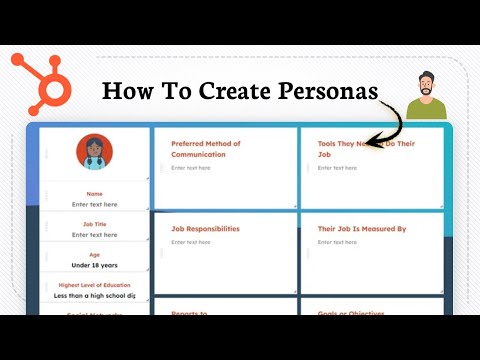
📺Watch:"How to Create Customer Personas for Better Targeting"– HubSpot
🔗
Step 3: Choose Your Research Methods
Market research methods fall into two main categories: primary research (collecting new data) and secondary research (analyzing existing data).
Primary Research Methods
Method Best For Pros Cons
| Surveys | Quantitative data from large samples | Scalable, cost-effective, statistically valid | Limited depth; question design matters greatly |
| Focus Groups | Qualitative insights and group dynamics | Rich feedback; unexpected insights emerge | Expensive; potential for groupthink bias |
| Interviews | Deep, one-on-one exploration | Uncover "why" behind behaviors; flexible | Time-consuming; smaller sample sizes |
| Social Listening | Real-time public sentiment analysis | Unfiltered, genuine opinions; large scale | Requires specialized tools; public data only |
| A/B Testing | Direct comparison of variables | Behavioral (not stated) data; highly valid | Requires traffic; tests one element at a time |
Secondary Research Sources
-
Industry reports and trade publications
-
Government data (census, economic statistics)
-
Competitor websites and social media
-
Academic research and case studies
-
Media coverage and analyst reports
Pro tip:Start with secondary research to inform your primary research questions. Why pay to discover what's already publicly available?
Step 4: Collect Your Data
With methods chosen, it's time to execute your research plan. Quality matters more than quantity at this stage.
For surveys:
-
Keep them short (5-10 minutes maximum)
-
Use clear, unbiased language
-
Test your survey on a small group first
-
Offer incentives for completion
For interviews and focus groups:
-
Recruit participants who represent your target audience
-
Use a skilled moderator who can probe without leading
-
Record sessions for later analysis (with permission)
-
Look for themes, not just individual opinions
For social listening:
-
Use tools like Brandwatch or Talkwalker to monitor conversations
-
Track brand mentions, competitor names, and industry keywords
-
Analyze sentiment, themes, and emerging trends
📺Watch:"How to Design Effective Market Research Surveys"– SurveyMonkey
🔗
Step 5: Analyze and Interpret the Data
Data becomes valuable only when transformed into insights. Analysis is where patterns emerge and answers take shape.
What to look for:
-
Trends and patterns:What themes appear repeatedly?
-
Surprises:What contradicts your assumptions?
-
Segments:How do different groups answer differently?
-
Gaps:What don't you know that you still need?
For quantitative data (surveys, analytics):
-
Calculate averages, percentages, and statistical significance
-
Look for correlations between variables
-
Create visualizations (charts, graphs) to spot patterns
For qualitative data (interviews, focus groups, open-ended questions):
-
Code responses into thematic categories
-
Identify verbatim quotes that capture key insights
-
Look for consensus and notable outliers
Critical reminder:Sample size matters. A survey of 10 people isn't statistically valid. Use sample size calculators to ensure your conclusions are reliable.
Step 6: Apply Insights to Your Campaigns
Research without action is wasted effort. The final—and most important—step is translating insights into campaign improvements.
For messaging:
-
Use customer language verbatim in ad copy
-
Prioritize the benefits and features your research identified as most important
-
Address objections your research uncovered
For targeting:
-
Refine audience segments based on demographic and psychographic findings
-
Allocate budget to channels where your audience spends time
-
Create segment-specific creative and offers
For creative:
-
Test visual concepts based on research findings before full production
-
Use customer quotes and stories as testimonial content
-
Align tone and style with audience preferences
📺Watch:"How to Turn Market Research Into Better Ads"– Marketing Sherpa
🔗

Phase 3: Market Research at Every Campaign Stage
Effective market research isn't a one-time event. It should happen before, during, and after your campaigns.
Pre-Campaign Research (Strategic)
Before you write a single headline or design a single visual, conduct research to inform your strategy.
What to test pre-campaign:
-
Value propositions:Which benefits resonate most?
-
Messaging themes:What tone and language connects?
-
Audience segments:Which groups should you prioritize?
-
Channel preferences:Where does your audience discover products?
Methods to use:
-
Surveys to quantify preferences across segments
-
Focus groups to explore reactions to concepts
-
Social listening to understand current conversations
The benefit:Pre-campaign research prevents you from launching ineffective creative. It's far cheaper to change a concept than to pull a failed campaign.
In-Campaign Research (Tactical)
Once your campaign is live, research helps you optimize in real-time.
What to monitor during campaigns:
-
Brand recall and awareness lift
-
Message association (are people remembering the right things?)
-
Sentiment shifts (are perceptions improving?)
-
Channel performance attribution
Methods to use:
-
Tracking studies that measure exposure and impact
-
A/B testing of creative variations
-
Social listening for real-time feedback
The benefit:In-campaign research lets you course-correct before wasting significant budget. If a creative isn't landing, you can pause it and redeploy budget to winners.
Post-Campaign Research (Learning)
After your campaign ends, research captures learnings for future efforts.
What to measure post-campaign:
-
Overall brand lift (awareness, consideration, preference)
-
Campaign recall and message retention
-
Sales lift attributable to advertising
-
ROI and efficiency metrics
Methods to use:
-
Brand tracking surveys comparing pre/post metrics
-
Attribution analysis across channels
-
Customer surveys about ad recall and influence
The benefit:Post-campaign research builds institutional knowledge. Every campaign becomes a learning opportunity for the next one.
📺Watch:"How to Measure Campaign Effectiveness With Research"– Google Marketing Platform
Phase 4: Essential Market Research Methods for Campaigns
1. Customer Surveys
Surveys are the workhorse of market research. They provide quantitative data at scale and can be deployed quickly and cost-effectively.
Best practices for advertising surveys:
-
Ask about media consumption (where they discover products)
-
Test message clarity and appeal using rating scales
-
Measure brand perception before and after exposure
-
Keep surveys under 10 minutes to maintain completion rates
Sample survey questions for campaigns:
-
"Where do you typically learn about new products in this category?"
-
"Which of these messages most appeals to you? (select top 2)"
-
"How likely are you to recommend this brand to a friend?" (0-10 scale)
-
"What, if anything, would prevent you from purchasing?" (open-ended)
📺Watch:"How to Write Survey Questions That Get Real Answers"– Qualtrics
🔗

2. Focus Groups
Focus groups provide rich, qualitative insights through moderated group discussions. They're particularly valuable for exploring reactions to concepts and uncovering unexpected perspectives.
When to use focus groups:
-
Early in the creative process to explore directions
-
When you need to understand "why" behind survey findings
-
For testing visual concepts and rough creative
How to run effective focus groups:
-
Recruit 6-10 participants who represent your target audience
-
Use a skilled moderator who can manage group dynamics
-
Show concepts in comparable formats (not one polished, one rough)
-
Record sessions for detailed analysis afterward
Watch out for:Groupthink (participants agreeing with dominant voices), moderator bias (leading questions), and small sample sizes (not statistically valid).
3. Social Listening
Social listening uses AI-powered tools to analyze millions of public conversations across social media, forums, and review sites. It provides unfiltered, real-time insights at massive scale.
What social listening reveals:
-
What customers actually say about your brand (not what they tell you in surveys)
-
Emerging trends and topics in your industry
-
Competitor strengths and weaknesses from customer perspectives
-
Sentiment shifts over time
Tools for social listening:
-
Brandwatch
-
Talkwalker
-
Sprout Social
-
Meltwater
Example insight:A cosmetics brand used social listening to discover that consumer preferences had shifted from "anti-aging" messaging to "natural ingredients" and "self-care." They adjusted their advertising accordingly and saw significant engagement increases.
📺Watch:"Social Listening for Market Research"– Brandwatch
🔗
4. Competitive Analysis
Understanding your competitors is essential for differentiation. Competitive analysis reveals what's working in your category and where opportunities exist.
What to analyze:
-
Messaging:What value propositions are competitors using?
-
Channels:Where are they advertising most heavily?
-
Creative:What visual styles and formats are they using?
-
Offers:What promotions and pricing strategies are they deploying?
-
Reviews:What do customers praise and complain about?
How to gather competitive intelligence:
-
Subscribe to competitor emails and follow their social accounts
-
Use tools like SEMrush or SimilarWeb for channel analysis
-
Read customer reviews on G2, Trustpilot, and Amazon
-
Monitor their ad creative using the Meta Ad Library
The opportunity:Competitor weaknesses (revealed through reviews) become your advertising differentiation. If competitors are criticized for poor customer service, make service a central message in your ads.
5. A/B Testing as Research
While often viewed as an optimization tactic, A/B testing is also a powerful research method. It reveals what your audience actually responds to—not just what they say they'll respond to.
What to A/B test for research:
-
Value proposition statements
-
Call-to-action language
-
Visual approaches (product vs. lifestyle vs. people)
-
Offer structures (discount vs. free shipping vs. bundle)
Research-focused A/B testing:
-
Test hypotheses derived from other research methods
-
Run tests with sufficient statistical significance
-
Document learnings to inform future campaigns
📺Watch:"A/B Testing for Market Research"– Optimizely
🔗
Phase 5: Common Market Research Mistakes to Avoid
1. Confirmation Bias
The tendency to seek out data that confirms existing beliefs while ignoring contradictory evidence.
Fix:Actively look for disconfirming evidence. Ask "What would prove me wrong?" before starting research.
2. Small Sample Sizes
Drawing conclusions from too few responses leads to unreliable insights.
Fix:Use sample size calculators. For population-level conclusions, aim for 385+ completed surveys (95% confidence, 5% margin of error).
3. Leading Questions
Questions that suggest a desired answer ("Don't you agree that our product is the best?") produce biased results.
Fix:Use neutral language. Compare "How would you rate our customer service?" vs. "How would you rate our award-winning customer service?"
4. Ignoring the "Why"
Quantitative data tells you what's happening. Qualitative data tells you why. Both are necessary.
Fix:Always include open-ended questions in surveys. Follow up surveys with interviews or focus groups to explore surprising findings.
5. Research Without Action
Collecting data without a plan for using it is wasted effort and budget.
Fix:Before starting any research project, define: "What decision will this research inform?" If you can't answer, don't do the research.
📺Watch:"5 Market Research Mistakes That Kill Campaigns"– VWO
Phase 6: Building an Ongoing Research Practice
Research as a Cycle, Not a Project
The most successful advertisers treat market research as an ongoing discipline, not a one-time project. Markets change. Customers evolve. Competitors adapt. Your research should keep pace.
The continuous research cycle:
Plan:Define what you need to learn before next quarter's campaigns
Collect:Execute surveys, interviews, and listening
Analyze:Identify insights and implications
Apply:Update personas, messaging, and channel strategy
Measure:Track campaign performance against benchmarks
Repeat:Feed learnings into the next cycle
Building a Research Budget
Many small businesses assume market research is expensive. It doesn't have to be.
Low-cost research options:
-
Free survey tools (Google Forms, Typeform free tier)
-
Social listening through manual monitoring (set up saved searches)
-
Customer interviews (talk to existing customers)
-
Competitive analysis (publicly available information)
Paid research investments:
-
Professional survey panels (Lucid, Cint, Prolific)
-
Focus group recruitment and moderation
-
Social listening software
-
Full-service research partners
The ROI calculation:If research costs $5,000 and prevents one $20,000 failed campaign, it's paid for itself four times over.
📺Watch:"Market Research on a Small Business Budget"– Entrepreneur
Summary Checklist: Conducting Market Research for Better Campaigns
Pre-Campaign
-
Define research goals tied to business objectives
-
Identify target audience for research (customers, prospects, or both)
-
Choose appropriate methods (surveys, interviews, focus groups, social listening)
-
Test messaging concepts before production
-
Validate channel preferences and media consumption
-
Identify key differentiators and objections
During Campaign
-
Deploy tracking study to measure brand lift
-
Monitor social sentiment in real-time
-
Run A/B tests to optimize creative
-
Track recall and message association
-
Adjust budget based on performance data
Post-Campaign
-
Measure overall brand lift (awareness, consideration, preference)
-
Calculate ROI and efficiency metrics
-
Capture learnings for future campaigns
-
Update personas and messaging frameworks
-
Document what worked and what didn't
Conclusion: Research Is an Investment, Not an Expense
Market research is often viewed as a cost to be minimized. This is backwards thinking. Research is an investment that reduces risk, eliminates waste, and dramatically improves the odds of campaign success.
The businesses that consistently win in advertising aren't necessarily the ones with the biggest budgets or the most creative agencies. They're the ones that know their customers best—and they know them because they ask, they listen, and they act on what they learn.
Your customers have already told you what they want, what they need, and what would make them buy. Market research is simply the discipline of hearing them.
Discover how visuals enhance advertising effectiveness, capturing attention and driving engagement. Explore the science behind impactful visual strategies.
Discover the art of crafting a compelling brand story that connects with your audience. Learn essential tips to elevate your brand's narrative and impact.
Discover how visuals enhance advertising effectiveness, capturing attention and driving engagement. Explore the science behind impactful visual strategies.
Discover the art of crafting a compelling brand story that connects with your audience. Learn essential tips to elevate your brand's narrative and impact.
Discover why the Grand Theft Auto VI trailer is trending in the US. Explore fan reactions, gameplay insights, and what this means for the gaming community.
Discover the cast featured in The Last of Us Season 2 trailer commercial. Get insights into the characters and their roles in this highly anticipated sequel.
Discover the haunting background song featured in the Stranger Things final season trailer. Uncover its significance and enhance your viewing experience.
Discover the artist behind the captivating soundtrack in the Fast and Furious 11 trailer commercial. Uncover the music that sets the tone for the action!
Discover the hidden meanings and themes in the Avatar 3 official trailer. Dive deep into the visuals and narrative that shape this cinematic experience.
Discover the actor featured in the Amazon Prime Video original series trailer. Get insights into their role and performance in this exciting new show.