
In today's fast-paced digital landscape, marketing automation has evolved from a nice-to-have efficiency tool into the operational backbone of successful marketing departments. With AI fundamentally reshaping the category in 2026, marketing automation platforms now do far more than schedule emails—they orchestrate entire customer journeys, generate content, predict buyer behavior, and even execute campaigns autonomously.
This comprehensive guide breaks down the top marketing automation tools for 2026, organized by what they do best and who they serve. Whether you're a solopreneur, a growing mid-market team, or a global enterprise, you'll find the right platform for your needs—complete with key features, pricing, and real-world context.
What Marketing Automation Software Does in 2026
Before diving into specific tools, it's important to understand what modern marketing automation actually delivers. These platforms have evolved far beyond simple email sequences.
Core capabilities include:
-
Personalized customer journeys:Capture key information like contact details and purchase history to send targeted campaigns that would be impossible to manage manually.
-
Effortless lead capture:Automatically store lead data from signup forms, landing pages, and chat widgets, then sync it to your CRM.
-
Customer relationship management:Send perfectly timed messages across key touchpoints—welcome emails, abandoned cart recovery, birthday offers, re-engagement campaigns, and post-purchase feedback requests.
-
Automated email sequences:Scale your outreach without scaling your workload by triggering relevant content based on user behavior.
-
Visual workflow builders:Map entire customer journeys with drag-and-drop interfaces that include conditional logic (if/then rules).
-
Multichannel automation:Trigger not just emails, but SMS, WhatsApp messages, and web push notifications from a single workflow.
-
Behavioral triggers:Respond in real time to user actions like visiting a specific product page or clicking a link.
-
Advanced segmentation:Dynamically organize contacts based on engagement level, purchase history, or demographic data.
-
Native CRM & lead scoring:Manage contact data and automatically score leads based on conversion likelihood.
-
Reporting & analytics:Track revenue attribution, open rates, and conversion metrics to prove ROI.
The most significant development in 2026?Marketing automation platforms are becoming genuinely autonomous.Tools now deploy agent-driven systems that chain multiple actions together without human intervention at each step.
The Top Marketing Automation Tools for 2026
Here are the leading platforms, organized by their primary strength and target audience, withvideo tutorials and demosto help you see each tool in action.
All-in-One Platforms for Growing Businesses
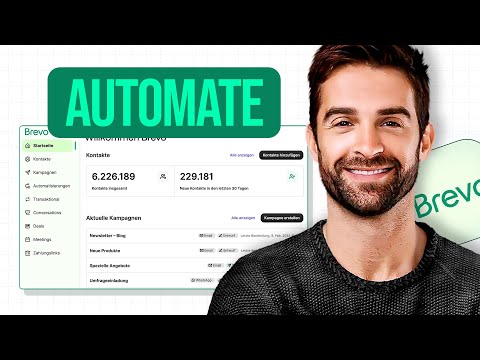
1. Brevo
Brevo is an AI-powered all-in-one platform that brings together email marketing, SMS, WhatsApp, and a full Sales CRM. It is specifically designed for growing businesses and supports every stage of the customer journey, from lead qualification to nurturing and post-purchase support.
Key Features:
-
User-friendly visual automation builder with branches (if/then rules)
-
Complex multichannel automation workflows (SMS, WhatsApp, live chat)
-
Ready-to-use email templates
-
Lead capture & lead scoring
-
Email personalization & dynamic content
-
Audience segmentation with pre-built segments to save time
Pros:
-
Intuitive interface
-
Affordable pricing
-
Strong multichannel capabilities
Cons:
-
Free plan has a daily sending limit of 300 emails
-
Some advanced features (like landing page builder) are only available on higher tiers
Pricing:
-
Free plan:300 emails/day to up to 2,000 contacts
-
Paid plans:Starter plan starts at $9/month (for 5,000 emails); Unlimited marketing automation starts at $18/month
Best for:Growing businesses looking for an affordable, all-in-one multichannel solution
Watch the Tutorial:
-
Brevo Tutorial for Beginners:
 Watch YouTube video
 -
How to Use Brevo Marketing Automation:
Watch YouTube video

2. HubSpot Marketing Hub
HubSpot Marketing Hub combines email marketing, landing pages, social media, and analytics in one interface. The platform connects natively to HubSpot CRM and includes drag-and-drop builders for emails and landing pages. You can set up marketing automation workflows, score leads, and segment audiences without technical help.
Key Features:
-
Visual workflow builder for automated email and lead routing
-
Built-in CRM, forms, and landing pages
-
Lead scoring, attribution, and customizable dashboards
-
Integrations with sales and service hubs for end-to-end visibility
-
Predictive lead scoring and SEO tools
Pros:
-
Unrivaled CRM integration for sales-marketing alignment
-
High-end features like predictive lead scoring
-
Extensive library of integrations
Cons:
-
Can become extremely expensive as your contact list grows
-
Some advanced features have a steep learning curve
Pricing:
-
Free plan:Basic tools available (up to 1,000 contacts)
-
Paid plans:Marketing Hub starts at $15/month for 1,000 marketing contacts; Professional plan (omnichannel automation, dynamic personalization, contact scoring) starts at $890/month for 2,000 marketing contacts
Best for:Mid-market to enterprise companies that need a centralized CRM and marketing powerhouse
Watch the Tutorial:
-
HubSpot Marketing Hub Tutorial:
Watch YouTube video -
HubSpot Automation Workflows Explained:
Watch YouTube video

Enterprise-Grade Platforms
3. Salesforce Marketing Cloud Account Engagement
Salesforce Marketing Cloud Account Engagement is B2B marketing automation built on the Salesforce platform. The product shares data models, user interfaces, and reporting structures with Sales Cloud. Einstein AI provides lead scoring, engagement frequency optimization, and behavior prediction based on historical patterns.
Key Features:
-
Native Salesforce CRM integration with shared data model
-
Einstein AI lead scoring and predictions
-
Engagement Studio automation builder with visual interface
-
B2B Marketing Analytics for campaign tracking
-
Account-based marketing features for buying committees
-
Landing pages and forms with progressive profiling
Best for:Enterprises already standardized on Salesforce CRM
Pricing:Starts at $2,000/month for 15,000 contacts
Watch the Tutorial:
-
Salesforce Marketing Cloud Overview
-
Salesforce Marketing Cloud Engagement Studio
4. Adobe Marketo Engage
Marketo Engage handles complex B2B campaigns, lead management, and account-based marketing for enterprise organizations. The platform manages multi-step nurture programs, advanced segmentation, and revenue cycle modeling. Marketo connects to Salesforce and Microsoft Dynamics through native integrations.
Key Features:
-
Advanced lead scoring and nurturing programs
-
Multi-touch attribution modeling across campaigns
-
Account-based marketing tools for buying committees
-
AI-powered personalization through Adobe Sensei
-
Event and webinar management features
Best for:Large marketing teams managing enterprise campaign complexity
Pricing:Custom (trial only)
Watch the Tutorial:
-
Adobe Marketo Engage Demo
-
Marketo Engage Smart Campaigns
5. Oracle Eloqua
Oracle Eloqua handles complex, multi-channel campaign orchestration for enterprise B2B organizations. The platform manages advanced segmentation, lead scoring models, and integration with Oracle's broader marketing and data cloud.
Key Features:
-
Advanced segmentation and targeting capabilities
-
Multi-step campaign orchestration across channels
-
Account intelligence for ABM programs
-
Sales and marketing alignment tools
-
Extensive app marketplace with integrations
Best for:Large enterprise B2B organizations
Pricing:Starts at $2,000/month for 10,000 contacts
Watch the Tutorial:
-
Oracle Eloqua Overview
-
Eloqua Campaign Canvas Tutorial
6. ZoomInfo Marketing
ZoomInfo Marketing runs on proprietary intent data and access to over 100 million company profiles with 500 million business contacts. You can build targeted audiences from verified data, run display advertising campaigns, and identify which companies visit your website.
Key Features:
-
Intent-driven audience building from verified B2B contacts
-
Display advertising and programmatic targeting
-
Website visitor identification that reveals company names
-
Native CRM and marketing automation platform integrations
-
Real-time data enrichment
-
Account-based marketing orchestration
Best for:Enterprise B2B with ABM focus
Watch the Tutorial:
-
ZoomInfo Marketing Platform Demo
-
ZoomInfo for Marketing Automation
E-Commerce Specialists
7. Klaviyo
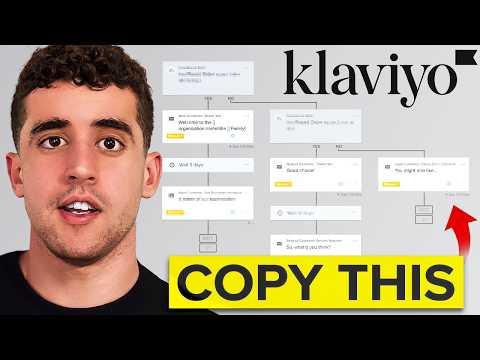
Klaviyo is a marketing automation platform built for e-commerce with native integrations into Shopify, BigCommerce, and other commerce platforms. The platform uses purchase history, browsing behavior, and predictive analytics to drive personalized campaigns.
Key Features:
-
Data-rich segmentation based on order and browsing behavior
-
Automated flows for cart recovery, win-back, and post-purchase
-
Dynamic product recommendations based on browsing history
-
Revenue attribution connecting marketing activity to actual sales
-
Pre-built automation flows for abandoned cart recovery
Best for:DTC brands and e-commerce businesses
Pricing:Free plan for 250 contacts; paid plans start at $20/month for 500 contacts
Watch the Tutorial:
-
Klaviyo Tutorial for Beginners:
Watch YouTube video -
Klaviyo Flow Automation Guide:
Watch YouTube video

SMB and Mid-Market Solutions
8. ActiveCampaign
ActiveCampaign combines email marketing, automation, and a built-in CRM for small and mid-sized businesses. The platform includes a visual automation workflow builder with conditional logic, split testing, and goal tracking.
Key Features:
-
Visual automation workflow builder with conditional logic
-
Built-in CRM and sales automation features
-
Predictive sending based on contact behavior
-
Site and event tracking for on-page activity
-
Lead scoring combining fit and engagement
-
SMS marketing alongside email campaigns
Best for:SMBs with sales alignment needs
Pricing:Starts at $15/month for 1,000 contacts
Watch the Tutorial:
-
ActiveCampaign Full Tutorial:
Watch YouTube video -
ActiveCampaign Automation Map:
Watch YouTube video


9. Mailchimp
Mailchimp is an email marketing platform that has expanded into broader marketing automation, landing pages, and audience management. The platform provides an email campaign builder with hundreds of templates and a Customer Journey Builder for automation.
Key Features:
-
Email campaign builder with template library
-
Customer Journey Builder for automation workflows
-
Audience segmentation based on behavior
-
Landing pages and forms for lead capture
-
Basic CRM features for contact tracking
-
E-commerce integrations with major platforms
Best for:Small teams and solopreneurs (1-50 employees)
Pricing:Free plan available; paid plans range from free to $350/month
Watch the Tutorial:
-
Mailchimp Tutorial for Beginners:
Watch YouTube video -
Mailchimp Customer Journey Builder:
Watch YouTube video

Multi-Location Enterprise Platform
10. Birdeye
Birdeye stands out in 2026 as a marketing automation tool explicitly built for multi-location enterprises, combining reputation, messaging, listings, surveys, and AI into one agentic marketing platform. Rather than acting as just another point solution, Birdeye behaves like a centralized growth layer that understands locations, providers, reviews, and conversations, and then coordinates campaigns across channels at scale.
Key Features:
-
Review Generation Agent and Review Response Agent:Automatically request reviews at the right moment and draft on-brand, compliant responses.
-
Unified customer profiles:Combine reviews, messaging, appointments, listings, and location data into a single profile.
-
Listings Optimization Agent:Keeps business information accurate across hundreds or thousands of locations.
-
Messaging AI with Lead Generation:Manage SMS, email, web chat, and social DMs in one inbox while automatically qualifying leads.
-
Surveys AI with Template Design Agent:Launch branded surveys and NPS flows that trigger outreach.
-
Social Publishing and Engagement Agents:Plan content calendars, localize posts, and route comments.
-
Search AI:Track how AI answer engines describe your brand and identify actions that improve visibility.
-
Enterprise controls and reporting:Role-based access, approval workflows, and roll-up analytics across regions.
Best for:Multi-location brands and franchises
Watch the Tutorial:
-
Birdeye Platform Demo:
Watch YouTube video -
Birdeye for Multi-Location Brands:
Watch YouTube video


Marketing Operations Platform
11. monday work management
monday work management connects campaign execution to all the work behind it: intake, planning, production, approvals, and reporting. Instead of optimizing one channel, teams run marketing projects alongside creative, legal, finance, and ops, all in one workspace.
Key Features:
-
Connected workflows: keep campaigns and projects connected from brief to launch
-
Dynamic planning views: calendar, timeline, Kanban, and Gantt views
-
Executive dashboards: track progress, workload, and key metrics
-
Standardized intake: capture requests with Forms and route automatically
-
Collaborative briefs: use Workdocs to keep everything close to the work
-
AI Blocks: inject AI into columns and automations to categorize, summarize, translate, and more
-
200+ app integrations: sync with Slack, Teams, Gmail, Google Drive
Pricing:
-
Basic:$9/user/month (billed annually)
-
Standard:$12/user/month
-
Pro:$19/user/month
-
Enterprise:Custom pricing
Best for:Mid-market to enterprise teams needing unified marketing operations
Watch the Tutorial:
-
monday.comfor Marketing Teams
-
monday.comWorkflow Automations
AI-Powered Content and Workflow Tools
12. Jasper for Teams
Jasper for Teams remains the gold standard for brand-consistent AI content creation. Unlike generic AI writing tools, Jasper learns your brand voice, product positioning, and style guidelines, ensuring everything it creates sounds authentically you. The platform excels at generating everything from ad copy to long-form thought leadership, with built-in SEO optimization and fact-checking capabilities.
Watch the Tutorial:
-
Jasper AI Tutorial
-
Jasper for Marketing Teams
13. AirOps for Content Operations
AirOps helps marketing teams scale content production through repeatable, automated workflows rather than one-off generation. Teams can build custom templates incorporating their brand voice, product knowledge, and SEO requirements to produce everything from product descriptions to blog posts at scale.
Watch the Tutorial:
-
AirOps Platform Demo
14. Clay for Data Enrichment
Clay has emerged as the leading platform for data enrichment and signal intelligence. Think of it as a spreadsheet that can automatically find and verify contact information, track intent signals, and enrich every prospect with relevant data from dozens of sources.
Watch the Tutorial:
-
Clay Tutorial for GTM Teams:
Watch YouTube video

15. n8n for AI Workflows
n8n is an open-source workflow automation platform that's becoming the technical team's alternative to Zapier, offering more power and flexibility. It's ideal for GTM teams with technical resources who need sophisticated automations like multi-source lead enrichment, complex conditional campaigns, or full-stack data syncing.
Watch the Tutorial:
-
n8n Tutorial for Beginners
-
n8n Advanced Workflows
Quick Comparison Chart
| Brevo | Growing businesses | $9/month | Affordable all-in-one multichannel |
| HubSpot | Mid-market to enterprise | $15/month | Unrivaled CRM integration |
| Salesforce | Salesforce-standard enterprises | $2,000/month | Native Salesforce ecosystem |
| Marketo Engage | Enterprise B2B complexity | Custom | Advanced lead management |
| Oracle Eloqua | Large enterprise B2B | $2,000/month | Multi-channel orchestration |
| Klaviyo | E-commerce | Free / $20/month | Purchase-based segmentation |
| ActiveCampaign | SMBs | $15/month | Automation + CRM hybrid |
| Mailchimp | Small teams | Free / $15/month | Email-first, easy entry |
| Birdeye | Multi-location brands | Contact vendor | Agentic marketing for locations |
| monday.com | Marketing operations | $9/user/month | Unified work management |
How to Choose the Right Tool for Your Team
With so many options available, selecting the right platform can feel overwhelming. Here's a framework to guide your decision:
1. Identify Your Needs
Begin with your team's biggest challenges. Are you searching for content creation tools, help automating marketing campaigns, or better lead management?
2. Consider Integration Capabilities
Check that your chosen tools integrate easily with your existing workflows and platforms. The best stacks share data seamlessly.
3. Evaluate Scalability
Choose solutions that can grow with your needs. Consider pricing, usage limits, and whether you'll outgrow the platform in a year.
4. Assess Ease of Use
Look for intuitive, user-friendly platforms that make onboarding simple. Can your team build workflows and see results fast, or does setup take months of tech work?
5. Prioritize Ethics and Data Security
Choose tools that handle data transparently and securely, with emphasis on privacy and fairness.
6. Balance Cost Versus Value
Balance your budget with the specific value each tool provides. There are free tools that might be perfect for small teams.
7. Start with Your Biggest Bottleneck
The recommendation from practitioners remains consistent: identify your single biggest bottleneck first. Creative team drowning in visual requests? Start withLeonardo.aior Canva. Repetitive manual tasks killing productivity? Build a workflow in n8n.
The Future of Marketing Automation
The GTM tool landscape will continue evolving rapidly. Several clear trends are emerging:
-
Consolidation:Platforms are racing to become all-in-one solutions. HubSpot, Salesforce, and others are acquiring or building capabilities that used to require separate point solutions.
-
AI Agents:The next wave will move from AI-assisted to AI-autonomous. Tools won't just help humans work—they'll complete entire workflows independently.
-
Tighter Integration:The winners will be platforms that seamlessly share data and trigger actions across your entire stack, not isolated point solutions.
-
Vertical Specialization:Expect more tools purpose-built for specific industries or GTM motions rather than trying to serve everyone.
The Bottom Line
The best marketing automation stack for 2026 is not about having the most tools; it's about having the right tools working in harmony. Start with your foundation, add capabilities where you have real gaps, prioritize integration, and invest in enablement.
Most importantly, remember that tools are force multipliers for good strategy and execution. No combination of AI platforms will fix fundamental issues with your positioning, messaging, or product-market fit. Get those fundamentals right first, then use automation tools to scale what's already working.
The companies winning in 2026 are not necessarily those with the biggest tool budgets. They are the ones who have thoughtfully assembled tool stacks that amplify their team's strengths and systematically remove friction from their go-to-market motion. Build yours with that goal in mind.
Discover effective strategies for conducting market research to enhance your campaigns. Learn how to gather insights that drive successful marketing decisions.
Discover how visuals enhance advertising effectiveness, capturing attention and driving engagement. Explore the science behind impactful visual strategies.
Discover the art of crafting a compelling brand story that connects with your audience. Learn essential tips to elevate your brand's narrative and impact.

Discover effective strategies to develop a consistent brand voice across all campaigns, enhancing your brand identity and engaging your audience effectively.

Discover how customer testimonials can elevate your advertising strategy, build trust, and drive conversions. Learn the secrets to advertising success today.

Discover essential tips for crafting memorable and shareable ads that captivate your audience and boost engagement. Elevate your advertising game today!

athlete featured in the Reebok CrossFit commercial and learn about their inspiring journey and achievements in the world of fitness.

Discover the truth behind the Under Armour training commercial. Explore whether it's based on a true story and what inspired its powerful message.

Learn what makes the Nike 2026 commercial a hot topic in the US. Analyze its innovative approach and the reactions it’s generating across social media.
Discover the song featured in the New Balance Made in USA ad. Uncover the artist and track details that enhance this iconic commercial experience.

Discover the full cast of the Puma 2026 global campaign commercial. Explore the talent and creativity behind this exciting promotional project.