
When you think of virtual reality, what comes to mind? For many people, it's a powerful but slightly uncomfortable image of isolation: a person alone in a room, a bulky headset strapped to their face, completely cut off from the world around them. They're gesturing at things no one else can see, lost in a digital universe while their actual reality—the couch, the coffee table, the family member trying to get their attention—fades away into irrelevance. It's a compelling image, but it's also one that Meta is desperately and strategically trying to change with the Quest 3.
Their latest advertising campaign, built around the hopeful and expansive tagline "Expand Your World," is a deliberate and sophisticated effort to fundamentally redefine what a headset can and should be. This isn't about escaping reality; it's about enhancing it. It's about integration, not isolation. Through a series of carefully crafted, emotionally resonant commercials, Meta showcases a new concept that feels like science fiction made real: Mixed Reality (MR), where digital elements don't replace your world but instead blend seamlessly into it, creating something entirely new and magical.
This guide breaks down the profound meaning behind Meta Quest 3's key commercials, exploring how each one tells a different, essential part of the story about this transformative technology and its place in our lives.
The Vision: "Expand Your World" (Main Commercial)
Watch the main ad here:

The flagship commercial for the Meta Quest 3 is titled "Expand Your World," and it's nothing less than a beautifully filmed manifesto for the future of headset technology. This is the ad that defines the fundamental, generational shift Meta is trying to achieve: moving public perception of VR from isolating escape pod to integrated enhancement of daily life.
The commercial opens in a familiar, slightly cluttered, wonderfully lived-in living room. It's real, it's deeply relatable, and it's unmistakably someone's actual home, not a sterile tech showroom. There are books on the shelves, a cozy blanket on the couch, maybe a half-finished cup of coffee on the table. Then, something magical and unexpected begins to happen. Digital elements begin to appear, not as a replacement for the room, but as a harmonious and delightful addition to it. A virtual window opens on a previously blank wall, revealing a breathtaking, impossible landscape. A digital character playfully peeks out from behind the actual sofa. A high-energy workout instructor appears to lead a session, but the user can still clearly see their real coffee table and easily avoid tripping over it.
The deeper meaning here is profound and carefully calculated. Meta is directly acknowledging and addressing a major barrier to mainstream adoption: the widespread fear that VR cuts you off from your loved ones and your immediate environment. The Quest 3, with its advanced full-color mixed reality passthrough, is presented as the elegant solution to this fear. It's a device that says, clearly and confidently, "You don't have to make a painful choice between the digital and the real. You can finally have both, layered together in beautiful, practical harmony." This commercial is a warm invitation to stop seeing the headset as an escape pod and start seeing it as a pair of magical glasses that can augment and richly enrich the world you already happily inhabit.
The Teacher: "First Notes" (Learning Piano)
Watch the ad here:

One of the most compelling, emotionally resonant, and tangibly useful demonstrations of mixed reality's potential comes in the commercial titled "First Notes." This ad focuses squarely on the Quest 3 as a powerful educational tool, and it's a masterclass in the ancient principle of "showing, not telling."
We see someone sitting at a real, physical, slightly dusty piano. They're clearly a beginner; their fingers are hesitant on the keys, their posture is uncertain, their expression is a mix of hope and frustration. Then, they put on the Quest 3. In an instant, the world changes. Digital notes, like gentle, glowing rain, begin to fall onto the actual piano keys, guiding their hesitant fingers to the correct positions with patience and precision. A calm, encouraging virtual instructor appears beside them, offering real-time feedback and demonstrating proper technique. The learner is not transported to a fantastical virtual world; they remain firmly in their own living room, at their own familiar piano, but now with a magical layer of digital assistance that makes the previously impossible feel genuinely achievable.
The deeper meaning behind "First Notes" is beautifully simple and powerfully human: this technology has profound, practical, tangible utility. It's not just for immersive gaming or passive entertainment; it's for learning, for growing, for acquiring valuable real-world skills that can bring joy and fulfillment. The commercial directly and effectively addresses the skeptical viewer who inevitably asks, "But what would I actually use this thing for on a regular day?" The answer is presented clearly and compellingly: you could use it to finally, after years of procrastination, learn to play that beautiful instrument gathering dust in the corner of your room. It powerfully positions the Quest 3 not as an expensive toy, but as a genuinely powerful educational device that democratizes access to knowledge and personalized instruction for everyone. The digital and the physical don't compete for attention; they collaborate beautifully to help you become a better, more capable version of yourself.
The Home Theater: "Screening Room" (Entertainment)
Watch the ad here:
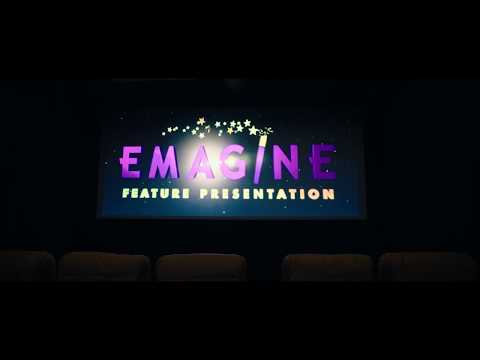
For a huge segment of consumers, the most immediate and appealing selling point of a high-end headset is the long-promised dream of a personal, portable cinema. Meta's "Screening Room" commercial takes this powerful promise and makes it feel immediately accessible, wonderfully flexible, and even luxuriously indulgent.
In this ad, we see a person in a modestly sized, perfectly ordinary living room. There's a small, unremarkable television mounted against one wall, but the focus of the commercial is elsewhere. With the Quest 3 comfortably on, they've created a massive, breathtaking virtual screen that completely dominates their entire field of view. They're watching a blockbuster movie with stunning clarity, but crucially, it's not a cramped, isolating experience. Because of the Quest 3's advanced mixed reality passthrough, they can still clearly see their actual surroundings—the comfortable couch they're sitting on, the friend who just walked in carrying a bowl of popcorn, the family pet curled up peacefully at their feet.
The deeper meaning here is all about freedom, flexibility, and challenging consumer assumptions. Meta is making a direct, practical, and financially compelling argument: why spend thousands of dollars on a giant, immobile 85-inch television that permanently dominates your living room and can't be moved? With Quest 3, you can instantly have a screen that size—or dramatically larger—anywhere, anytime you want. In your living room, in your bedroom, on a hotel balcony overlooking the ocean, in a peaceful backyard under a blanket of stars. It's a world-class cinema that fits effortlessly in your backpack. The commercial cleverly reframes the headset not as a replacement for valuable human connection (you can and should still watch with others) but as a brilliant replacement for expensive, heavy, immobile physical objects. It's entertainment, finally untethered and truly personal.
The Workshop: "Mixed Reality at Work" (Productivity)
Finally, and perhaps most importantly for long-term adoption, Meta tackles the most serious and potentially most transformative use case of all: work. The "Mixed Reality at Work" commercial is designed specifically to appeal to professionals, creators, engineers, and problem-solvers of all kinds.
The ad features a series of compelling vignettes showcasing different professionals in action. We see a skilled designer manipulating a complex, floating 3D model of a car engine, able to walk around it naturally and examine it from every conceivable angle while still maintaining full awareness of their actual desk and physical tools. We see a mechanic, with virtual schematics and step-by-step instructions layered precisely over the real, broken engine they're actively repairing. We see an architect walking thoughtfully through a life-sized, fully realized hologram of a building they've designed, placed right in the middle of an empty construction lot.
The deeper meaning behind this commercial is about proposing and visualizing a genuinely new paradigm for human productivity. For decades, our work has been almost exclusively confined to flat, two-dimensional screens. Meta is boldly proposing that the next logical evolution is to finally bring our digital work out of those screens and into our physical space, in three glorious dimensions, where it's more intuitive, more naturally collaborative, and ultimately more powerful. The headset becomes a revolutionary tool for visualizing complex data, for rapidly prototyping new ideas, for collaborating seamlessly with remote colleagues who appear as lifelike holograms in your actual office.
This ad directly and powerfully challenges the lingering notion that VR and AR are just for gaming and fun. It makes a serious, compelling, and business-focused argument that mixed reality is, in fact, the inevitable future of work itself. It's about empowering professionals across every field with tools and capabilities that were, until very recently, the exclusive stuff of science fiction.
The Bigger Picture: From Isolation to Integration
Taken together as a cohesive whole, these four distinct commercials tell a powerful, consistent, and emotionally compelling story. Meta is on a deeply strategic mission to successfully rebrand the entire headset experience for a mass audience. They are consciously and deliberately moving away from the isolating, solitary, slightly scary image of early VR and toward a warm, welcoming vision of mixed reality that is inherently social, genuinely practical, and seamlessly integrated into every aspect of our daily lives.
"Expand Your World" brilliantly establishes the core, hopeful philosophy: digital and real can not only coexist but can do so beautifully and harmoniously.
"First Notes" demonstrates practical, educational utility that can improve real-world skills and bring genuine joy.
"Screening Room" reimagines entertainment as infinitely flexible, deeply personal, and still shareable.
"Mixed Reality at Work" positions the technology as a serious, indispensable tool for professionals and creators.
Why This Campaign Matters
The Meta Quest 3 advertising campaign is not merely selling a piece of consumer electronics; it is thoughtfully and ambitiously selling a new, hopeful way of thinking about technology's role in our lives. It's gently asking us to reconsider our deeply held assumptions about what a headset can be and to collectively imagine a future where the digital doesn't replace the physical but instead enriches and expands it in meaningful ways.
The deeper meaning behind each individual commercial is a carefully constructed building block in this larger, more important narrative. They collectively and powerfully argue that mixed reality is not an escape from your life; it is a profound enhancement of your life. It can help you learn new skills, entertain you more immersively, and make you more productive at work, all while keeping you safely and happily connected to the people and places you genuinely love.
In a world where we're increasingly and rightly concerned about technology isolating us from each other, Meta's hopeful message is a welcome and powerful counterpoint. The Quest 3, if their beautifully crafted commercials are to be believed, isn't a cold wall between you and the world. It's a warm, inviting window into a world that's bigger, richer, more magical, and more connected than you ever dared to imagine—and it's waiting for you, right there in your own living room.
Discover the identity of the girl featured in the YouTube Premium "No Ads" commercial. Uncover her story and what makes her stand out in this captivating ad.
Discover the catchy tune featured in Hulu's "Bundle & Save" ad. Uncover the song's title and artist, and learn more about its significance in the campaign.
Discover the star-studded lineup featured in Disney+'s "Coming Soon 2026" commercial. Find out who will be captivating audiences next year!
Discover the captivating song featured in Netflix's 2026 "Next on Netflix" promo ad. Uncover its artist and meaning behind the music that sets the tone.
Discover the actor featured in the Microsoft Copilot AI 2026 commercial. Uncover insights about their role and contributions to this innovative campaign.
Discover the artist behind the catchy tune in Amazon Prime's "Fast & Free Delivery" commercial. Uncover the music that enhances your shopping experience.
Discover the catchy song featured in the Google Pixel 9 "Best Take" commercial. Uncover the artist and title that enhances this memorable ad experience.
Discover the actress featured in the Samsung Galaxy S26 Ultra "Nightography" ad. Uncover her identity and learn more about her captivating performance.