
Automotive advertising has always relied on visual spectacle to communicate its essence. Since the first television commercials in the 1960s, car brands have sought to convey intangible sensations like speed, freedom, power, and prestige through impactful images that would become etched in the collective memory. For decades, the reigning tool for achieving these visual feats was the helicopter: an expensive, complex machine that consumed a large portion of the production budget. However, in the mid-2010s, an emerging technology burst into the industry and completely transformed how car commercials were filmed. Drones not only offered an economical alternative; they redefined the visual grammar of an entire advertising genre.
🚗 The Drone Revolution: Why They Became Essential
Cost Efficiency: Democratizing Cinematic Quality
The economic barrier to accessing quality aerial shots was, until the arrival of drones, virtually insurmountable for mid-sized brands or campaigns with tight budgets. A single day of filming with a helicopter could cost between $10,000 and $50,000, a sum that included renting the aircraft, the pilot, the gyro-stabilizer technician (the famous "Typhoon" or "Shotover"), fuel, and extremely high liability insurance.
Professional drones reduced that expense to a fraction of the cost. A full day with a high-end drone team, certified operators, and all necessary equipment today ranges from $500 to $5,000. This cost reduction of nearly 90% democratized access to aerial cinematography, allowing regional brands, emerging manufacturers (such as electric vehicle startups), and even local campaigns to produce commercials with an aesthetic previously reserved exclusively for major luxury brands.
Agility and Flexibility: The New Narrative of Movement
The most obvious advantage of drones over helicopters is their unprecedented agility. While a helicopter needs to maintain considerable safety distance and is limited by its turning radius, mass, and minimum speed, a drone can follow a car from centimeters away, navigate tight curves, fly through tunnels or forests, and capture angles impossible for any larger equipment.
This narrative flexibility changed the visual language of commercials. Instead of simple static panoramic shots, directors could create continuous, fluid tracking sequences that make the viewer feel like an invisible passenger, almost an extension of the vehicle itself. The sensation of speed and dynamism multiplied exponentially.
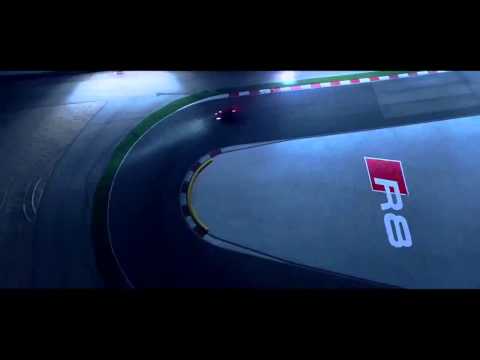
Paradigmatic Example: The 2016 Audi R8 commercial, filmed on mountain roads, used drones to create a perfect aerial choreography with the car, conveying not only speed but a mechanical precision that reinforced the brand's message of advanced engineering.
Audi R8 Drone Commercial (2016):
Immersive Storytelling: Connecting Emotion and Landscape
Drones allowed for a deeper integration between the automobile and its environment. Automotive advertising has always sold dreams: the freedom of the open road, adventure in untouched terrain, elegance in urban settings. With drones, these dreams became more tangible and enveloping. Aerial shots are no longer just a frame; they are an active part of the story. A drone can start by showing a vast desert landscape, then dive down to meet the car and follow it on a journey that feels both epic and personal.
This ability to connect the scale of the landscape with the intimacy of the driving experience is perhaps the most significant contribution of drones to automotive storytelling.
📊 Detailed Comparison: Helicopters vs. Drones in Production
| Cost per day | $10,000 – $50,000+ | $500 – $5,000 |
| Flight flexibility | Limited to wide, stable shots | Agile, capable of close tracking and complex maneuvers |
| Safety | High risk, requires experienced pilots and costly insurance | Reduced risk, with simpler safety protocols |
| Logistics | Complex: requires helipad, extensive aeronautical permits | Agile: transported in cases, deployed in minutes |
| Visual Style | Grand, panoramic, sometimes impersonal | Dynamic, immersive, subjective, and emotional |
| Accessibility | Exclusive to multi-million dollar budgets | Available to mid-sized brands and independent productions |
🎥 Iconic Examples That Define an Era
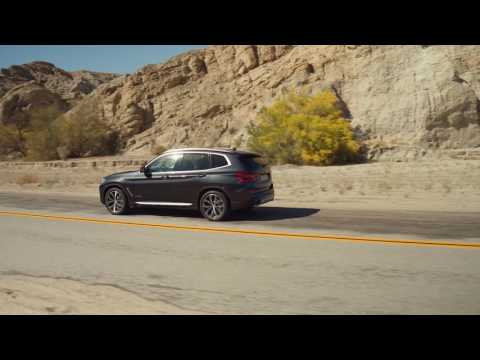
BMW X Series (2018): Adventure in Three Dimensions
BMW leveraged drone agility to highlight the off-road capabilities of its X Series. The commercial combined ground shots with spectacular aerial footage where drones followed vehicles crossing rivers, climbing hills, and traversing mud. The sequence not only showed the product but built a feeling of adventure and environmental mastery that became the campaign's hallmark.
BMW X Series Drone Ad (2018):
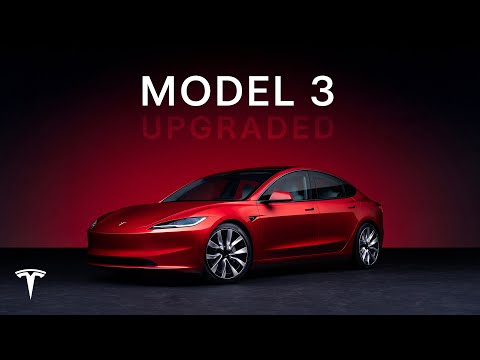
Tesla Model 3 (2020): Futuristic Minimalism
Tesla, always focused on clean, futuristic design, used drones in a minimalist yet powerful way. Instead of dramatic chases, drones captured the Model 3 integrated into urban and natural environments with smooth, floating shots. The message was not raw adrenaline, but harmony, efficiency, and technological elegance. The drone acted as a silent observer highlighting the pure beauty of the car's design.
Tesla Model 3 Urban Drone Spot (2020):
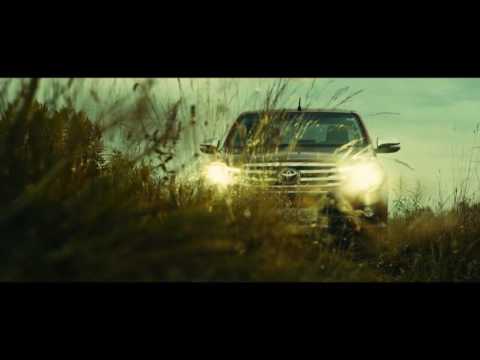
Toyota Hilux (2023): The Trial by Fire
To reinforce the Hilux's legendary durability, Toyota took drones to extreme terrains: deserts, crossings of rushing rivers, and rocky slopes. The drones not only followed the vehicle; they captured the violent and challenging interaction with the environment, demonstrating the vehicle's resilience. The aerial camera became the omnipresent witness to a stress test, providing a visual credibility impossible to achieve with ground shots.
Toyota Hilux Drone Campaign (2023):
🔑 Expert Insights: Beyond Technique
Narrative and Emotion
"A drone is not just a flying camera; it is a narrative character," explains María López, a director of photography specialized in automotive advertising. "Its movement can mimic a character's gaze, the anticipation of a curve, or the sensation of speed-induced vertigo. It has added a layer of subjectivity and emotion to a genre that sometimes erred on being too technical and cold."
Creative Democratization
The accessibility of drones has leveled the playing field. "Before, if you wanted a spectacular aerial shot, you needed to hire one of three major specialized companies," says Carlos Ruiz, an independent producer. "Today, a director with vision, a good drone pilot, and a compact team can create work that directly competes with that of large production houses. This has diversified the voices and styles in automotive advertising."
⚠️ Persistent Risks and Challenges
The Homogeneity Trap
As drones have become standardized, a new risk has emerged: generic aesthetics. Too many commercials use the same dive shots, the same circling maneuvers around the car, and the same tracking sequences on mountain roads. The current creative challenge is to use the technology to tell unique stories, not to replicate the same visual pattern.
The Regulatory Maze
Commercial drone use is subject to strict and variable regulation depending on the country. In the United States, FAA Part 107 regulations set altitude limits, require the drone to remain within the operator's visual line of sight, and prohibit flights over people not involved in the production. In Europe, EASA regulation is equally rigorous. Filming over highways or in controlled airspace requires special permits that can take weeks to obtain, adding complexity to logistics.
The Tyranny of Weather
Unlike a helicopter, a drone is extremely vulnerable to adverse weather conditions. Strong winds, rain, or even extreme temperatures can cancel a shoot or risk the equipment. This adds an element of uncertainty to productions, especially at outdoor locations.
📜 Historical Evolution: From Helicopter to Intelligent Drone
1980s-1990s: The Helicopter Era
Commercials for brands like Mercedes-Benz, BMW, and Porsche were defined by majestic aerial shots captured from helicopters. The aesthetic was one of grandeur and distance, showing the car as a perfect object of desire moving through idealized landscapes.
The 2000s: Cranes and Steadicams
The search for new perspectives led to the massive use of giant cranes (like the "Russian Arm") and stabilization systems like the Steadicam. Closer and smoother tracking was achieved, but with high operating and logistical costs.
The 2010s: The Drone Revolution
With the decreasing cost of GPS technology, gyroscopes, and batteries, commercial drones like those from DJI burst onto the market. They quickly evolved from hobbyist toys to indispensable professional tools. Brands like Audi and BMW were among the first to adopt them en masse.
2020-2026: Integration and Evolution
Today, drones don't work alone. They integrate with moving ground cameras, tracking control systems, and CGI post-production. Most innovative is the appearance of drones with large-format cameras (like the DJI Ronin 4D) offering cinematic quality in a flying package, and the development of "drone swarms" to capture the same action from multiple angles simultaneously in a single take.
✅ Conclusion: The Sky is No Longer the Limit
Drones have spearheaded one of the most profound transformations in the history of automotive advertising. They did not merely replace an expensive tool with a cheaper one; they redefined the narrative possibilities of the genre. They democratized quality production, allowed for a deeper emotional connection with the viewer, and forced directors and brands to rethink how the story of a moving car is told.
In 2026, the question is no longer whether drones will be used, but how they will be used innovatively to avoid visual saturation. The future points towards integration with real-time augmented reality, artificial intelligence that plans shots automatically, and the combination of drones with other emerging technologies. Drones have evolved from a technical resource to a symbol of creative innovation in automotive marketing, reminding us that sometimes the greatest advances come not from looking straight ahead on the road, but from looking up at the sky that is now our studio.
Discover effective strategies for conducting market research to enhance your campaigns. Learn how to gather insights that drive successful marketing decisions.
Discover how visuals enhance advertising effectiveness, capturing attention and driving engagement. Explore the science behind impactful visual strategies.
Discover the art of crafting a compelling brand story that connects with your audience. Learn essential tips to elevate your brand's narrative and impact.
Discover the most iconic denim ads of the mid-2000s that defined a generation. Explore fashion trends and nostalgia in our comprehensive flashback collection.
Discover the origins of social media marketing with insights into how Facebook and Twitter revolutionized online engagement and brand promotion.
Discover the quirkiest candy ads from 2005 and take a nostalgic journey through forgotten snacks that once delighted taste buds.
Explore the vibrant world of classic iPod and Y2K tech ads. Discover how neon marketing shaped a generation and influenced today's digital landscape.
Discover why inclusive casting is crucial for brands in 2026. Embrace diversity to enhance your brand's image and connect with a broader audience.
Explore the latest trends in mental health advertising. Analyze modern visual tones and discover how they impact audience perception and engagement.
Explore how shocking visuals in advertising can raise awareness about climate change and drive social impact. Discover the power of impactful imagery today.
Discover the best social awareness campaigns of 2026, featuring impactful PSAs that inspire change and promote important causes.