
For decades, public service announcements (PSAs) have been the ethical heart of mass communication. Unlike commercial advertising, whose ultimate goal is consumption, PSAs seek to activate a deeper response in the collective psyche: generate critical awareness, catalyze behavioral changes, and mobilize society toward urgent causes. In January 2026, this genre has reached a new peak of sophistication and impact. Far from being one-way messages, the most successful campaigns have become participatory cultural phenomena, born on screens but reverberating in conversations, decisions, and policies. This article analyzes the campaigns that marked the beginning of the year, breaking down the mechanisms that made them resonate and the lessons that chart the future of social activism through media.
🌍 Key Campaigns of January 2026: A Mosaic of Urgent Causes
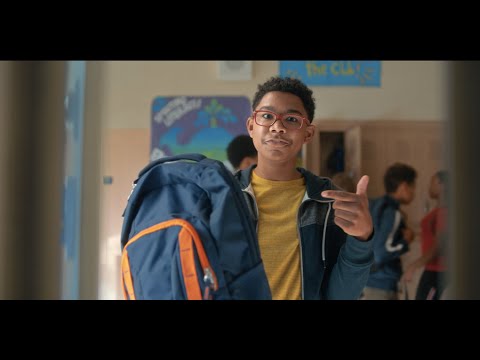
1. Sandy Hook Promise – “Back-to-School Essentials”: The Brutality of the Everyday
Theme: Awareness of gun violence in schools.
Strategy: This master campaign operates through a brutal narrative diversion. It begins with the comforting, familiar aesthetic of a "back-to-school" ad, showing typical school supplies. Without warning, the message warps: the "essential gear" no longer includes notebooks and pencils, but survival objects for a shooting—a tourniquet, a phone to say goodbye, a barricade to block a door.
Impact and Strength: The emotional shock does not come from graphic images of violence, but from the disturbing normalization of trauma. By framing preparation for a massacre as just another "supply list," the campaign strikes directly at parental and student empathy, generating visceral outrage. Its virality on TikTok and Instagram, especially among young people, reignited the national debate in the U.S. on gun law reform, demonstrating that the most lasting impact often stems from disrupting the familiar.
Sandy Hook Promise “Back-to-School Essentials”:
2. CoorDown – “Assume That I Can”: The Power of Positive Presumption
Theme: Inclusion and rights of people with Down syndrome.
Strategy: Instead of falling into a condescending or paternalistic tone, CoorDown opts for a narrative of empowerment and aspiration. The "Assume That I Can" campaign shows people with Down syndrome in active and diverse roles—as students, workers, artists—challenging with humor and tenderness the low expectations society often imposes on them.
Impact and Strength: Its success lies in positive and authentic representation. They are not passive subjects of charity, but protagonists of their own stories of capability and desire. This inclusive and respectful perspective generated global, praiseworthy virality, being shared massively not only by the disability community but by a general public celebrating its message of universal dignity. The high-quality production equated its aesthetic value to that of any top-tier commercial campaign.
CoorDown “Assume That I Can” Disability Inclusion PSA:

3. National Rail UK – “Stories on the Train”: Community on Rails
Theme: Social connection and community heritage.
Strategy: To celebrate 200 years of British railways, National Rail did not focus on engineering, but on human capital. The "Stories on the Train" campaign collected and shared real, emotive stories from passengers: reunions, decisive journeys, small acts of kindness that happened in their carriages.
Impact and Strength: This campaign stood out for its human, warm "storytelling." It transformed a transportation service into a connective fabric of shared experiences, reinforcing a sense of national community. It achieved over 50,000 interactions on Instagram, far surpassing the engagement of previous campaigns and demonstrating that even a state-owned company can generate deep emotional connection when it puts people at the center of its narrative.
4. Environmental Campaigns – The Universal Language of Visual Impact
Themes: Plastic pollution and deforestation.
Strategy: PSAs like "Plastic Bags Kill" employ devastating visual simplicity. An image of a marine animal trapped in plastic or a forest transforming into paper communicates the problem immediately and without words.
Impact and Strength: Their power lies in their universality and clarity. These images transcend languages and cultures, becoming global visual icons of environmental activism. Their adoption by NGOs and schools in educational programs amplifies their lifespan and impact, turning an ad into a lasting pedagogical tool.
Environmental PSA “Plastic Bags Kill”:

5. Road Safety – “The Back Seat’s No Safer, Belt Up”: Clarity that Saves Lives
Theme: Seat belt use in all seats.
Strategy: Faced with complacency, this campaign uses a direct, unquestionable, data-based message: the risk in the back of the vehicle is as real as in the front.
Impact and Strength: Its effectiveness resides in its executive simplicity and universal relevance. By being adopted and disseminated by multiple transport authorities, it achieved massive penetration, resonating strongly with young drivers and families, reminding them that safety admits no exceptions.
📊 Comparative Table: Themes, Strengths, and Impact
| Sandy Hook Promise | Gun violence awareness | Emotional impact via narrative shock, high relatability | Viral in US schools, reignited national debate. |
| CoorDown | Disability inclusion | Positive, empowering representation, inclusive narrative | Global social media virality, praised for authenticity. |
| National Rail UK | Community connection | Human, emotive storytelling, building shared identity | Over 50K interactions on Instagram in the UK. |
| Plastic Bags Kill | Environment | Impactful, universal imagery, visual simplicity | Adopted worldwide by NGOs and educational programs. |
| Belt Up (Road Safety) | Transport safety | Clear, direct, evidence-based message, unambiguous call-to-action | Mass dissemination by transport authorities, high recall. |
⚠️ Risks and Dilemmas of the Modern PSA
The power of these campaigns is not without critical challenges that define the evolution of the genre:
Shock Fatigue and Desensitization: The recurrent use of shocking images or narratives (as in Sandy Hook Promise or certain environmental PSAs) risks desensitizing the audience. When shock becomes common currency, it can lose its potency and lead to paralysis or cynicism rather than action.
The Challenge of Cultural Localization: A message that works deeply in one culture may be misunderstood or irrelevant in another. Cultural sensitivity is essential; global campaigns must be adaptable or risk appearing imperialistic or disconnected.
The Gap Between Virality and Sustainable Change: A million "likes" does not automatically translate into lasting behavioral change. The greatest challenge for 2026 PSAs is channeling momentary attention into sustained commitment. Virality is the means, not the end.
🔑 Expert Analysis: The Triad of Effective Impact
Analysts agree that the most successful PSAs today synthesize three fundamental elements in their creative core:
Catalyzing Emotion: Whether through shock, empathy, nostalgia, or hope, they must touch a deep emotional chord that breaks indifference.
Memorable Simplicity: The core message must be clear, concise, and easy to retain. In an environment of information overload, complexity is the enemy of action.
Concrete and Achievable Call to Action (CTA): They must close the circle by connecting emotion with a specific, actionable step: donate, vote, recycle, speak up, buckle up. Without a clear CTA, the PSA risks being merely sentimental spectacle.
Furthermore, the social media ecosystem has redefined the very nature of the PSA. They are no longer broadcast messages; they are initiated conversations. They are designed to be shared, commented on, remixed, and appropriated by communities, transforming the audience from passive receivers into active amplifiers and co-creators of the message.
📜 Historical Evolution: From Exhortation to Participation
1960s–1980s: Unidirectional and authoritarian PSAs, often with a paternalistic exhortation tone. Focused on public health ("Say no to drugs") and road safety, broadcast mainly on state radio and TV.
1990s: Introduction of complex global causes (HIV/AIDS, ozone layer). Strategic use of celebrities for credibility and reach.
2000s: Personalization of the message. Campaigns begin to use individual stories to represent collective problems. Increased cinematic production.
2010s–2020s: Explosion of digital virality. PSAs are optimized for social media, prioritizing immediate visual impact and short emotional storytelling. The audience becomes the distributor.
2026: Era of participation and strategic sophistication. PSAs are integrated cultural phenomena, combining high production quality, psychological research, multi-layered narratives, and explicit design for community participation and measurable behavior change.
✅ Conclusion: The PSA as an Agent of Cultural Change
The campaigns of January 2026 demonstrate that the public service announcement has evolved from a simple reminder to a powerful agent of cultural change. They no longer merely inform; they seek to transform perspectives, activate uncomfortable conversations, and mobilize citizens toward collective action.
From the raw confrontation of Sandy Hook Promise to the hopeful affirmation of CoorDown, through the emotional connection of National Rail and the urgent clarity of environmental and road safety campaigns, all share the same modern DNA: the understanding that to move people, you must first move them emotionally, involve them, and give them a clear path to follow.
The future of social marketing does not lie in shouting louder, but in connecting smarter and deeper. The PSA of tomorrow will be one that, after moving us, hands us not just a message, but a tool, a community, and a tangible reason to believe change is possible. In 2026, advertising in service of the public has found, more than ever, its most powerful voice.
Discover effective strategies for conducting market research to enhance your campaigns. Learn how to gather insights that drive successful marketing decisions.
Discover how visuals enhance advertising effectiveness, capturing attention and driving engagement. Explore the science behind impactful visual strategies.
Discover the art of crafting a compelling brand story that connects with your audience. Learn essential tips to elevate your brand's narrative and impact.
Discover how ESPN and Sky Sports are revolutionizing marketing strategies for the 2026 sports season. Stay ahead with the latest insights and trends.
Discover the evolution of movie trailers with the 5-Second Teaser Trend. Explore how brevity is reshaping cinematic marketing and audience engagement.
Explore the 2026 Disney+ marketing analysis, where nostalgia intertwines with new IP, shaping the future of streaming and audience engagement.
Discover Netflix's 2026 teaser strategy and learn how to create buzz in just 30 seconds. Uncover the secrets to effective hype-building techniques.
Discover how "hidden gems" are transforming tourism marketing strategies in country ads, attracting travelers to unique and lesser-known destinations.
Discover why hotel branding focuses on guest experience over room features. Learn how modern advertising strategies can elevate your hotel's appeal.
Discover Royal Caribbean's innovative visual strategy in cruise line campaigns. Explore how captivating imagery enhances guest experiences and drives bookings.
Discover the future of luxury travel with our in-depth comparison of Emirates and Qatar Airways for 2026. Explore ads, services, and innovations.