
The first decade of the 21st century witnessed a tectonic shift in the dynamics of communication between brands and consumers. Throughout the 20th century, advertising had operated as a massive monologue: companies broadcasted messages through billboards, radio, television, and the first internet banners, and audiences received them passively. This paradigm began to crack with the arrival of two platforms that would redefine the very nature of commercial exchange: Facebook in 2004 and Twitter in 2006. For the first time, companies could not only talk to their customers, but with them, in real-time, building two-way relationships, digital communities, and leveraging demographic and interest data for previously unthinkable targeting. This article analyzes the emergence of this new ecosystem, the pioneering tools, the campaigns that set the course, and the inherent risks of exploring an unprecedented digital territory.
📜 The Timeline: From Email to Global Conversation
The Pre-Facebook Era: The Antecedents (1997-2003)
Before the dominance of today's giants, the concept of a "social network" was already germinating. Six Degrees (1997) is widely recognized as the first platform that allowed creating a profile and a friends list, though its reach was limited. The true social awakening came with Friendster (2002) and, above all, MySpace (2003).
MySpace was the first major testing ground for social marketing. It allowed extensive profile customization, making it the digital home for musicians, artists, and creators who promoted their work directly to their followers, without intermediaries. MySpace demonstrated that individuals could become personal brands, a lesson corporate companies would soon absorb. The platform laid the foundations for the online community but lacked the sophisticated advertising structure and mass reach that were about to arrive.
Facebook Enters the Scene (2004-2007): From University to the World
Founded by Mark Zuckerberg at Harvard University in 2004, Facebook began as a closed network for students. Its expansion to other universities, then to high schools, and finally to the general public in 2006, catapulted it to the center of the digital stage. By the end of that year, it already surpassed 50 million users, a massive base clamoring for commercial tools.
The crucial moment came in November 2007. Facebook simultaneously launched Facebook Pages and Facebook Ads. "Pages" allowed businesses, artists, and organizations to create official profiles distinct from personal profiles. "Ads" introduced a targeted advertising system that leveraged the wealth of data users voluntarily shared: location, age, interests, education, and relationships.
At the launch, Zuckerberg described this model as part of a new "attention economy," where advertising had to be "integrated" and "social" by nature. The ad was no longer an interruption, but potentially part of the conversation.
Facebook Ads Launch Event (2007):
The Rise of Twitter (2006-2010): The Power of the Instant
While Facebook was building structured networks of connections, Twitter emerged in 2006 with a radically different proposition: microblogging. Originally limited to 140 characters, Twitter became the digital public square where news, jokes, and opinions flew at viral speed.
For marketing, the implications were profound. For the first time, a brand could listen to and respond to consumer conversations in real time. The tool that crystallized this power was the hashtag (#), adopted organically by users in 2007 and later formalized by the platform. Hashtags allowed brands to organize campaigns, follow trends, and measure engagement simply.
Twitter Hashtag Origins Explained (2007):

Brands like Dell became case studies by using Twitter to announce exclusive clearance offers (@DellOutlet), generating millions in direct sales. Starbucks used it to foster conversation around its brand, more than for direct sales. Twitter proved that value lay not only in broadcast but in dialogue and instant engagement.
Dell’s Early Twitter Marketing Campaign:
📊 Comparison: Two Philosophies, One Goal
| Launch Year | 2004 | 2006 |
| Key Marketing Tools | Pages (2007), Targeted Ads, Groups | Hashtags (2007), Real-time Tweets, Public Replies |
| Audience Reach | Closed networks, precise demographic targeting | Open, viral conversations based on interests |
| Main Strengths | Long-term community building, highly segmented advertising | Instant engagement, customer service management, viral launches |
| Main Risks | Ad fatigue, data privacy complexity | Exposure to public criticism, real-time visible errors, limited message length |
🔑 Expert Insights: The Paradigm Shift
From Interruption to Integration: "Before Facebook and Twitter, digital marketing was essentially an online version of TV or billboard advertising: you interrupted the user," explains digital analyst Anya Petrova. "These platforms introduced the idea that the brand could be a valuable participant in the consumer's digital social life. Facebook allowed you to be a neighbor in their community; Twitter, an interlocutor in their conversation."
The Birth of 'Social Listening': Twitter, in particular, gave brands the gift (and burden) of radical transparency. "For the first time, marketing departments could see, unfiltered, what people were saying about them in public," notes reputation consultant David Chen. "This forced companies to develop listening and response capabilities that didn't exist before, giving rise to 'social media management' teams."
⚠️ Risks and Learnings from a Digital Frontier
The Privacy and Data Crisis
Facebook, from its commercial beginnings, navigated turbulent waters regarding privacy. The ability to target ads based on personal data immediately raised suspicions and criticism. The debate about where useful personalization ended and invasion of privacy began was established and remains relevant today, with its roots in these early Ads implementations.
Loss of Control and Error Amplification
On television, a mistake in a commercial could be pulled. On Twitter, a poorly worded, insensitive, or simply erroneous tweet could go viral in minutes, sparking a reputation crisis. Brands had to learn at exponential speed that communication on social media required a new level of agility, humility, and authenticity to manage mistakes.
User Fatigue and the Authenticity Challenge
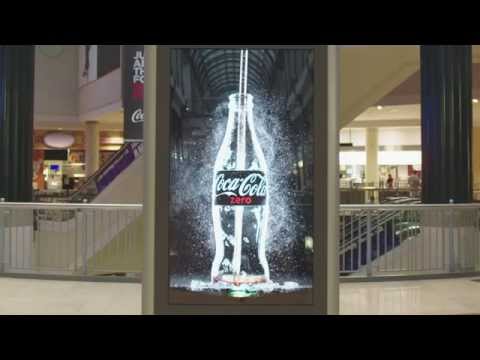
The initial excitement of "following" or "liking" a brand soon met the reality of the overloaded feed. Users quickly developed ad fatigue. Brands that only used their pages to broadcast one-way ads (the old model) saw their engagement drop. Success came to those who understood that the medium demanded valuable content, genuine conversation, and a human voice. Coca-Cola, for example, achieved one of the first massive successes on Facebook not by selling its product, but by fostering community interaction on its Page.
Coca‑Cola’s First Facebook Page Campaign:
📜 Historical Lineage: From Banners to Algorithms
1990s: Digital marketing is born with email marketing and static banners on websites. Interaction is non-existent.
Early 2000s: MySpace and blogs introduce conversation and community, but in a fragmented and non-massive way.
2004-2007: Facebook introduces the social graph and data-driven advertising, professionalizing and scaling community marketing.
2006-2010: Twitter adds the layer of real-time and virality, transforming customer service and product launches.
2020s: The ecosystem evolves towards influencer marketing, ephemeral content (Stories), and ultra-personalized recommendation algorithms.
2026: The principles established by Facebook and Twitter in their first decade—targeting, real-time engagement, community building, and conversational content—remain the non-negotiable pillars of every modern social marketing strategy, despite platform evolution.
✅ Conclusion: The Legacy of a Revolution in Two Acts
The period between 2004 and 2010 was not just the introduction of two new platforms; it was the architecture of a new commercial language. Facebook and Twitter acted as two complementary forces that redefined the brand-consumer relationship.
Facebook, with its structure of profiles, friends, and likes, taught brands the value of building a permanent digital "home" (the Page) to cultivate a loyal community through targeted content. Twitter, with its constant flow of public conversations, taught them the value of going out into the digital "street" to listen, respond, and participate in the culture of the moment.
Together, they laid the groundwork for everything that followed: influencer marketing (an evolution of MySpace's personal branding), viral hashtag campaigns, public customer service, and interest-based data advertising. The risks faced by pioneering brands—loss of control, privacy crises, the imperative of authenticity—remain the same central challenges companies manage today.
Ultimately, the great lesson of this foundational era was that marketing had ceased to be an art of broadcasting to become an art of connection. And that paradigm shift, driven by a "Like" button and a "#" symbol, continues to redefine to this day how brands are built, communicated, and endure in the digital world.
Get ready to learn how to clean your Facebook home feed, because here we are going to teach you how to clean it.
If you don't know how to download Stories and Reels from Facebook without losing quality, you just have to pay attention and keep reading, because here we will tell you how to do it.
Discover the quirkiest candy ads from 2005 and take a nostalgic journey through forgotten snacks that once delighted taste buds.
Explore the vibrant world of classic iPod and Y2K tech ads. Discover how neon marketing shaped a generation and influenced today's digital landscape.
Discover why inclusive casting is crucial for brands in 2026. Embrace diversity to enhance your brand's image and connect with a broader audience.
Explore the latest trends in mental health advertising. Analyze modern visual tones and discover how they impact audience perception and engagement.
Explore how shocking visuals in advertising can raise awareness about climate change and drive social impact. Discover the power of impactful imagery today.
Discover the best social awareness campaigns of 2026, featuring impactful PSAs that inspire change and promote important causes.
Discover how ESPN and Sky Sports are revolutionizing marketing strategies for the 2026 sports season. Stay ahead with the latest insights and trends.
Discover the evolution of movie trailers with the 5-Second Teaser Trend. Explore how brevity is reshaping cinematic marketing and audience engagement.