
The year 2005 represented a cultural crossroads in mass-consumer advertising. The Y2K aesthetic, with its neon colors, digital graphics, and fascination with the "extreme," was in its final stages but still exerted a powerful influence. In the competitive candy market, where brands fought to capture the attention of children, teenagers, and young adults saturated with media stimuli, a peculiar creative response emerged: the era of surrealistic, exaggerated, and deliberately confusing commercials. This article explores this unique phenomenon, analyzing the strangest candy campaigns of 2005, their questionable strategies, their reception, and the nostalgic legacy they left on pop culture.
🍬 The Advertising Landscape: Why Did Everything Get So Weird?
Context is key. In the mid-2000s, the internet was accelerating its penetration, MTV still defined youth trends, and "extreme sports" culture influenced marketing. Candy brands, caught between childhood tradition and the need to seem "cool" to older audiences, experimented with the boundary of absurdity. The logic seemed to be: in an increasingly chaotic and visual world, only the most impactful, colorful, and strange could stand out. This resulted in commercials that prioritized "shock value" and aesthetics over message clarity, creating a catalog of advertising oddities.
📺 Analysis of the Strangest Campaigns
1. Skittles Bubble Gum: Confusion Made Product
The Skittles Bubble Gum campaign is perhaps the best example of a concept born confused. Skittles, famous for its "crispy shell, chewy center" and its "Taste the Rainbow" slogan, attempted to extend into the chewing gum market. The commercials, however, were pure surrealism.
Visual Style: The spots showed people chewing endless strips of gum emanating rainbow colors, with disconnected expressions of pleasure. The aesthetic was dreamlike, with unreal backgrounds and a sense of infinite loop.
Why It Was Weird: The core message was ambiguous. Was it gum that tasted like Skittles? Were they Skittles you could chew like gum? The campaign failed to resolve this fundamental confusion. The product itself was an anomaly: a chewing gum that tried to replicate the experience of eating the original candy, something almost impossible from a texture standpoint.
Result and Legacy: The product was discontinued in 2006, barely a year after its launch. However, its commercial has become a cult piece of Y2K nostalgia, frequently cited in "weird ads" compilations and internet forums as an example of failed but memorable experimentation.
Skittles Bubble Gum Commercial (2005):

2. Altoids Sours: Acidic Ferocity
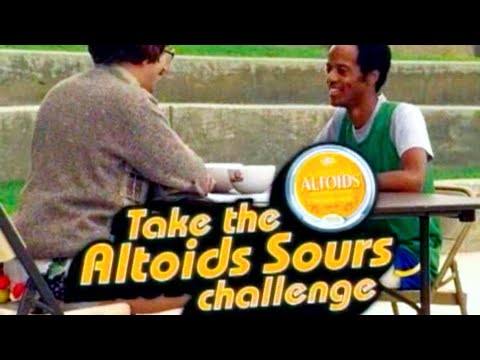
Altoids, the British brand known for its "curiously strong" mint and its iconic metal tin, took a radical turn with Altoids Sours. Its advertising completely abandoned the minimalist elegance of the main brand.
Visual Style: The commercials were an explosion of exaggerated physical reactions. Faces contorted into extreme grimaces, accompanied by neon visual effects and color explosions meant to represent the intensity of the sour flavor. The aesthetic resembled that of an energy drink or video game ad more than a mint.
Why It Was Weird: The dissonance between Altoids' classic brand identity and the visual madness of the Sours was total. It was as if the brand had had a personality attack. The slogan "The Curiously Strong Sours" tried to bridge both worlds, but the commercial suggested something closer to a psychedelic experience than a candy.
Result and Legacy: Altoids Sours survived until 2010, a relatively long time for such a niche product, but were ultimately discontinued. Today they are remembered as the eccentric and forgotten relative of the Altoids family, and their ads are archaeological gems of the mid-2000s "extreme" aesthetic.
Altoids Sours TV Spot (2005):
3. Crispy M&M’s: Crunchy Slapstick
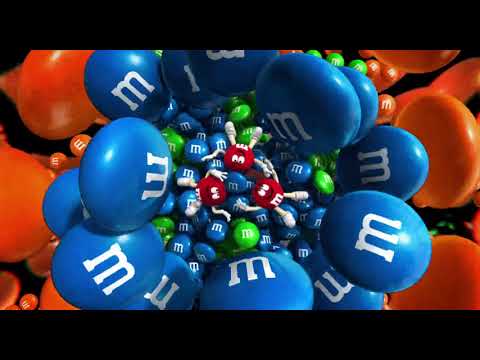
In 2005, M&M's launched its "Crispy" variety in some markets, and its advertising amplified the texture to cartoon levels.
Visual Style: Using the already famous animated M&M's characters (Red and Yellow), the commercials focused on the crunch. Every bite was accompanied by hyperrealistic and exaggerated sound effects, and the characters' reactions were pure slapstick: bulging eyes, jumps, vibrations. The humor was physical, simple, and very noisy.
Why It Was Weird: While other M&M's ads played with the characters' personalities and comedic situations, the Crispy campaign obsessed over a single sensory attribute, taking it to an almost abstract extreme. The exaggeration was so great it became absurd.
Result and Legacy: Crispy M&M's were pulled from the US market that same year (2005), though they remained in other countries. Their revival in 2015, driven by fan campaigns on social media, demonstrated that, however strange its advertising was, the product had left a powerful enough nostalgic imprint to justify its return.
Crispy M&M’s Ad (2005):
4. Wonka Shock Tarts: Neon Chaos
Wonka, Nestlé's fantasy brand, has always been characterized by its overflowing imagination. But with Shock Tarts (originally Tart 'n Tinys), it pushed exaggeration to the brink of paroxysm.
Visual Style: The commercials were a tsunami of stimuli. Fast editing, fluorescent neon colors (especially acid pink and green), kids screaming with scrunched-up faces, and slogans proclaiming "Extreme Sour Power" or "Shock Your Mouth." The feeling was that of a sped-up, chaotic trip.
Why It Was Weird: The intensity was so high the product was almost lost in the noise. More than advertising a candy, it seemed to advertise a sensory overload experience, a pure shot of sugar and acid. It was the advertising personification of ADHD.
Result and Legacy: The product was later rebranded as SweeTARTS Extreme Chewy Sours, losing much of the chaotic aesthetic and the "Shock" name. The original ads, however, remain as the epitome of the era's unfettered energy and neon aesthetic, a perfect document of what was considered "cool" and stimulating for pre-teens in 2005.
Wonka Shock Tarts Extreme Commercial:
📊 Comparative Table: The Anatomy of the Weird
| Skittles Bubble Gum | Surreal, infinite chewing, dreamlike | Confusing concept, unclear if candy or gum | Discontinued 2006 |
| Altoids Sours | Extreme reactions, neon explosions, "extreme energy" style | Total dissonance with Altoids' classic, elegant identity | Discontinued 2010 |
| Crispy M&M's | Animated slapstick, crunch exaggeration, noisy physical humor | Hyperbolic obsession with a single textural attribute | Pulled in US in 2005, revived 2015 |
| Shock Tarts (Wonka) | Neon chaos, fast editing, screams, "sensory overload" | Intensity eclipsed the product; pure visual/sonic energy | Rebranded, lost its original chaotic aesthetic |
| Pepsi Blue Collaborations | Y2K futurism, bright blues, digital grids, "extreme" youth culture | Over-stylized aesthetic that vaguely parodied youth culture | Pepsi Blue discontinued 2004, but its aura lingered |
🔑 Expert Insights: The Method in the Madness
The Quest for Radical Differentiation: "On a shelf full of brightly wrapped candies, the only way to stand out was through perceptual exaggeration," explains marketing historian Laura Simmons. "If your candy was sour, the commercial had to show a nuclear explosion in the mouth. If it was crunchy, it had to sound like an earthquake. It was a sensory arms race."
The Y2K Spirit: "This aesthetic didn't come from nowhere," adds cultural critic Diego Fernández. "It was the last gasp of the 'extreme' culture of the late 90s and early 2000s, fueled by the X Games, video games, and MTV. The ads treated candy not as food, but as fast-paced entertainment experiences."
⚠️ Risks and Consequences: When Weird Doesn't Work
Consumer Confusion
The case of Skittles Bubble Gum is emblematic. The lack of a clear positioning ("what is this?") doomed the product from the start. Consumers didn't know how to mentally categorize it, and without that mental space, there was no repeat purchase.
Short Commercial Life and Discontinuation
Most of these experimental products had a short shelf life. The novelty of the ad could generate a first purchase out of curiosity, but if the product didn't deliver or the premise was too weak (like gum trying to be candy), sales plummeted quickly.
The Expiration of "Cool"
What in 2005 seemed energetic, futuristic, and "extreme," a decade later could simply be seen as kitschy, chaotic, or ridiculously dated. These campaigns were so anchored to the visual codes of their time that they aged poorly, becoming period pieces rather than timeless messages.
📜 Historical Lineage: From Simplicity to Surrealism
1980s: Innocent and simple candy advertising, focused on flavor and fun in everyday settings (e.g., kids sharing M&M's).
1990s: Introduction of more energy and animated characters. More sarcastic humor emerges, and aesthetics become more colorful and fast-paced (e.g., Life Savers, Trix campaigns).
Early 2000s (Y2K Era): Explosion of surrealism and the "extreme." Brands compete in a more saturated media environment, resorting to absurdity, neon, and sensory exaggeration to capture attention.
Late 2000s - 2010s: Correction towards authenticity and the "real." After the recession and the rise of social media, the advertising tone softens. The weird gives way to more emotional, nostalgic, or "natural" ingredient-focused campaigns.
2020s - 2026: Nostalgia and Resurrection. The oddities of 2005 are rediscovered on YouTube and TikTok. Their value is no longer commercial, but cultural and archaeological. They are seen as fun artifacts of a bygone era, and that same retro charm drives relaunches like Crispy M&M's.
✅ Conclusion: Weird, But Unforgettable
The candy ads of 2005 represent a fascinating and eccentric chapter in marketing history. They were the product of a specific cultural moment: the twilight of the Y2K era, where visual experimentation and the search for the "extreme" clashed with the practical needs of selling a mass-consumer product.
Although strategically many were failures (discontinued products, confusing concepts), culturally they were a success. They were etched into the collective memory of a generation. Today, in 2026, they are not studied as examples of advertising "best practices," but as cult pieces, documents of a vanished aesthetic, and reminders that commercial creativity sometimes takes wonderfully strange paths when trying to connect with the spirit of its time.
These commercials prove that in advertising, even the weirdest experiments can, over the years, transform a simple failed candy into a nostalgia icon and a pop culture treasure. Their legacy is not on store shelves, but on YouTube servers and in the affective memory of those who, confused and entertained, first saw them on their CRT screens.
Discover effective strategies for conducting market research to enhance your campaigns. Learn how to gather insights that drive successful marketing decisions.
Discover how visuals enhance advertising effectiveness, capturing attention and driving engagement. Explore the science behind impactful visual strategies.
Discover the art of crafting a compelling brand story that connects with your audience. Learn essential tips to elevate your brand's narrative and impact.
Explore the vibrant world of classic iPod and Y2K tech ads. Discover how neon marketing shaped a generation and influenced today's digital landscape.
Discover why inclusive casting is crucial for brands in 2026. Embrace diversity to enhance your brand's image and connect with a broader audience.
Explore the latest trends in mental health advertising. Analyze modern visual tones and discover how they impact audience perception and engagement.
Explore how shocking visuals in advertising can raise awareness about climate change and drive social impact. Discover the power of impactful imagery today.
Discover the best social awareness campaigns of 2026, featuring impactful PSAs that inspire change and promote important causes.
Discover how ESPN and Sky Sports are revolutionizing marketing strategies for the 2026 sports season. Stay ahead with the latest insights and trends.
Discover the evolution of movie trailers with the 5-Second Teaser Trend. Explore how brevity is reshaping cinematic marketing and audience engagement.
Explore the 2026 Disney+ marketing analysis, where nostalgia intertwines with new IP, shaping the future of streaming and audience engagement.