

The 1980s didn't just witness the advent of personal computing; they orchestrated its grand, glamorous debut into the public consciousness. In an era of neon, synthesizers, and unbridled optimism, vintage tech advertising performed a critical cultural alchemy. It transformed cold, intimidating circuitry into vessels of liberation, family bonding, and corporate power. These commercials and print ads were far more than sales pitches; they were propaganda for a new way of life, shaping not only what people bought but how they felt about the seismic shift from an analog to a digital world. This deep dive explores the iconic campaigns that sold the dream of the future, one pixel at a time.
The Battle for the Future: A Clash of Philosophies
The 1980s tech advertising landscape was a stark ideological battleground, reflecting the fundamental question of the era: Who was computing for, and what did it mean?
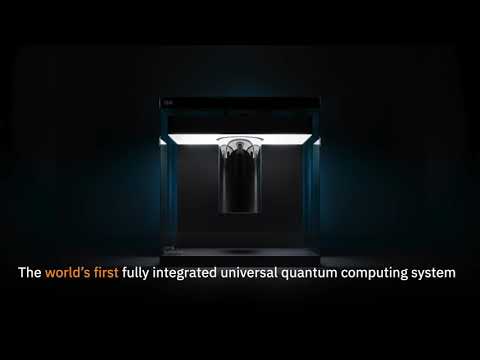
On one side stood IBM, the undisputed titan of the mainframe. Its advertising, characterized by sober, trustworthy voiceovers and imagery of skyscrapers and global networks, positioned the computer as the engine of corporate order and efficiency. IBM didn't sell fun or rebellion; it sold "solutions." Its famous "Charlie Chaplin" PCjr campaign, though a misstep, still aimed to make computing respectable and safe for the home, extending its corporate trust into the living room with a gentle, if awkward, touch.
YouTube:
Arrayed against this monolith were the populist pioneers: Commodore, Atari, and Radio Shack. Their ads screamed accessibility and fun. The Commodore 64, marketed as the "computer for the masses," was shown not in boardrooms but in chaotic, happy family rooms, used for gaming, homework, and programming simple lines of code. Its message was democratic: this powerful machine was affordable and for everyone.
YouTube:

Atari’s ads doubled down on this, often blurring the line between their game consoles and home computers, selling a vision of computing as pure, exhilarating entertainment.
YouTube:
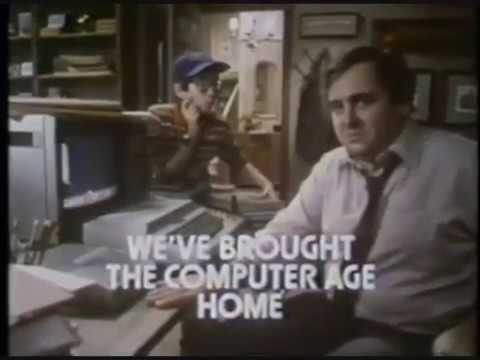
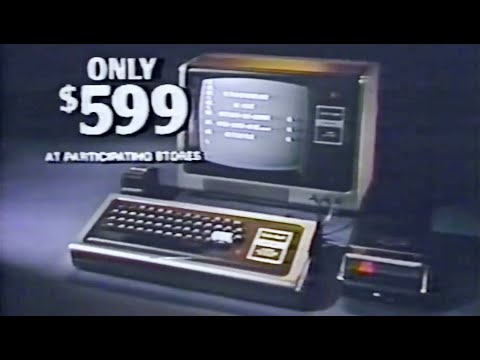
Radio Shack’s TRS-80 campaigns leveraged the company's vast retail presence, presenting computing as something you could casually pick up at the mall, making it feel familiar and approachable.
YouTube:
And then, there was Apple.
Apple's "1984": The Ad That Declared a War
If one commercial defined the era's technological and cultural schism, it was Apple's "1984," directed by Ridley Scott. Airing just once during Super Bowl XVIII, it was not an ad about specs, price, or software. It was a cinematic manifesto.
YouTube:

The ad portrayed a dystopian, gray world of conformist drones, implicitly IBM's domain, mesmerized by a giant screen. A lone, athletic heroine, representing Apple, sprinted in and hurled a sledgehammer into the screen, shattering it and "liberating" the masses. The promise: "On January 24th, Apple Computer will introduce Macintosh. And you'll see why 1984 won't be like *1984*."
This ad did something unprecedented. It positioned a technology product as a tool of individual liberation against corporate conformity. It sold a philosophy: Apple was for creators, thinkers, and rebels. IBM was for the faceless institution. "1984" framed the purchase of a computer not as a practical acquisition, but as a political and creative act. It remains the archetype for tech marketing that aspires to be culture-defining art.
The Creative Playbook: Selling the Invisible
The advertisers of the 80s faced a unique challenge: making the abstract tangible. Their strategies became the foundation for decades of tech marketing:
Humanizing the Machine: Since the average person had no idea what a microprocessor did, ads focused on human outcomes. They showed families playing together, students excelling, and small businesses thriving. The computer was a background character; the foreground was filled with joy, success, and connection.
The Aesthetic of "The Future": Visual shorthand was essential. Ads were saturated with digital rain, wireframe grids, glowing neon lines, and chrome—visual cues that screamed "high-tech." This aesthetic didn't explain functionality; it sold an emotion: futuristic cool.
The Promise of Potential: Perhaps the most powerful tool was selling what the computer could make you. It was a "brain expander," a gateway to creativity, a key to education, a ladder to business success. Ads sold the dream of the user's future empowered self, with the computer as the magical catalyst.
The 80s Tech Ad Paradigm: A Comparative Framework
| IBM | Computing as Institutional Power | Corporate America, cautious consumers. | Sober, trustworthy, imagery of global business, stability. | B2B "solutions" marketing; enterprise cloud branding. |
| Apple | Computing as Individual Liberation | Creatives, educators, "think different" rebels. | Cinematic, revolutionary, stark aesthetic, anti-establishment. | Apple's ongoing "creator" narrative; challenger brand positioning. |
| Commodore/Atari | Computing as Democratic Fun | Families, kids, gamers, hobbyists on a budget. | Energetic, family-centric, colorful, focused on games & affordability. | Gaming console marketing (PlayStation, Xbox); budget tech brands. |
| Radio Shack | Computing as Accessible Convenience | Mainstream, first-time buyers, curious adults. | Retail-focused, practical, "you can find it here" reliability. | Big-box store electronics marketing; entry-level device promos. |
Legacy, Impact, and Naivety
The influence of 80s tech advertising is immeasurable. It established the foundational narratives of tech branding: the rebel (Apple), the reliable enterprise (IBM), and the fun, accessible platform (Commodore). It proved that tech marketing could be high-art cinema ("1984") and that selling an aspirational lifestyle was more powerful than listing specifications.
However, this era was also marked by a charming, sometimes problematic, naivety. Ads often overpromised capabilities, suggesting computers would effortlessly make children geniuses or solve all business woes. There was a stark accessibility gap; despite populist messaging, these machines remained significant investments. Furthermore, the rapid pace of obsolescence meant the dazzling future being sold was often outdated within two years, a cycle that taught consumers both excitement and skepticism.
Conclusion: The Blueprint for the Digital Age
Vintage 80s tech ads were the storytelling bedrock upon which our digital world was built. They took the intimidating, abstract concept of the microprocessor and wrapped it in narratives of rebellion, family, power, and fun. They didn't just convince people to buy a product; they convinced culture to embrace an epochal change.
Looking back, these ads are a time capsule of boundless optimism. They capture the moment when society stood on the brink of the digital age, peering into a future they could only imagine in wireframe and neon. The computers they sold are now museum pieces, but the emotional frameworks they established—empowerment, creativity, and connection—remain the absolute core of how technology is sold to us today. They remind us that the most successful tech advertising doesn't sell the machine; it sells the dream of what the machine will help you become. In the 1980s, they weren't just selling computers; they were selling tomorrow.
Discover the full cast of the X Town Square ad, featuring diverse talents and engaging performances that bring the campaign to life. Explore now!
Discover the catchy song featured in the HP Work from Anywhere commercial. Uncover the artist and lyrics that make this ad memorable and engaging.
Discover effective strategies for conducting market research to enhance your campaigns. Learn how to gather insights that drive successful marketing decisions.

Discover how Nike and Adidas leverage influencer marketing in 2026 to shape streetwear branding and connect with the youth culture.

Discover the elegance of Rolex through their latest television spots, showcasing the art of prestige and timeless craftsmanship in luxury watchmaking.

Discover the art of perfume commercials in 2026, where cinematic storytelling captivates audiences and elevates fragrance marketing to new heights.

Discover the high-octane marketing strategies of Red Bull through a visual analysis that captures their adrenaline-fueled brand essence and impact.

Discover how McDonald's leverages ASMR in their latest ads to enhance customer experience and drive engagement in the fast food industry.

Discover the best beer ads of 2026! Explore top commercials that will elevate your sports season experience and keep you entertained all year long.

Explore the innovative strategies behind Pepsi's Global Campaign 2026. Discover creative insights and marketing tactics that drive brand engagement.

Discover how PlayStation and Xbox are engaging Gen Z with innovative advertising strategies that resonate with their values and interests.