
When the world abruptly shifted to remote work, Zoom ceased to be just a video conferencing tool and became a global cultural symbol. Overnight, its green interface became the stage where the professional, educational, and personal lives of millions played out. Its advertising campaigns didn't just promote features like gallery view or virtual background; they had the sagacity to capture the essence of a unique collective experience, portraying with humor, empathy, and authenticity the challenges, triumphs, and absurdities of the new normal.
This article analyzes how Zoom's ads managed to encapsulate remote work culture, exploring the narrative strategies it employed, the psychological impact of its messages, and why these campaigns resonated deeply with a global audience. Through an analysis of its most iconic spots, we'll discover how a technology brand became a chronicler of its time.
The Core Strategy: Why Zoom's Remote Work Ads Worked
In a moment of mass uncertainty, Zoom understood that its role went beyond the functional. Its advertising success was based on several key pillars:
Hyper-Relatability: The ads moved away from polished corporate scenarios and into real homes: kitchens, living rooms, and bedrooms converted into offices. They showed pet interruptions, children crashing meetings, and the struggle to find the perfect camera angle. This visual honesty created an instant connection.
Deep Empathy, Not Just Optimism: Instead of presenting a perfect remote world, Zoom acknowledged the difficulties. Its tone said: "This is hard for everyone, and we're here to make it a little easier." This emotional validation was more powerful than any promise of productivity.
Building a Global Community: By showing teachers, doctors, families, artists, and office employees using the same platform, Zoom positioned itself as the connective tissue of a dispersed society. It wasn't selling to companies; it was offering itself to humanity.
Humor as Collective Relief: Humor was the perfect antidote to "Zoom fatigue." By gently laughing at awkward situations (like the classic "You're on mute!"), the brand lightened the psychological load and allied itself with the user.
Narrative Flexibility: Its campaigns evolved with the pandemic. First, they showed survival and resilience, then adaptation and routine, and finally the vision of a hybrid future. This evolution showed the brand was in sync with its users' emotional journey.
Iconic Ads: Capturing the Pulse of a New Era
1. "Together We Can" - The Anthem of Resilience
This ad, launched at the height of the first wave of lockdowns, was more than a commercial; it was a global solidarity message.
The Narrative: With an emotive soundtrack, the video presents a mosaic of universal moments: a grandmother celebrating a virtual birthday, a band rehearsing remotely, a work team cheering each other on, a teacher explaining to attentive students. There is no dialogue, only powerful images.
The Strategy: Zoom positioned itself not as the protagonist, but as the invisible facilitator of these essential human connections. The brand understood that its value wasn't in its code, but in what people achieved with it. The message was clear: even though we are apart, we are not alone.
The Impact: This spot generated enormous emotional identification. It didn't sell technical features; it sold hope and community. It cemented Zoom's image as a tool of social purpose in a time of crisis.
YouTube Link: [Representative video of the emotional and community tone]
2. "Virtual Classrooms" - Honoring Everyday Heroes
With school closures, Zoom became the public square of education. This campaign focused on that phenomenon.
The Narrative: The ads showed the reality of teachers juggling to capture attention on a screen, students collaborating on projects from their homes, and parents assuming new roles. A notable example is the ad showing a music teacher trying to direct his students through the screen, with the inevitable delays and laughter, but with a touching final result.
The Strategy: Zoom took the side of educators, dignifying their effort and offering itself as their ally. By showing the challenges (unstable connections, distracted children) and the small triumphs (a student who finally understands a concept), the campaign was deeply authentic.
The Impact: The brand gained enormous credibility in the education sector, positioning itself not as a technological intruder, but as an essential bridge for learning. It humanized the distance learning experience.
YouTube Link:
 Watch YouTube video

3. "Work From Anywhere" - The Celebration of Freedom
Once the emergency phase passed, the narrative shifted towards the possibilities and flexibility of the new model.
The Narrative: These ads, with a more optimistic and energetic tone, showed professionals working from a mountain cabin, a cafe, or their home garden. It went from "working from home out of necessity" to "working from where you are happiest and most productive."
The Strategy: Zoom stopped being associated solely with confinement and became associated with freedom and autonomy. The campaign appealed to the desire to regain control over lifestyle and work-life balance.
The Impact: It helped transform the perception of remote work from a temporary measure to a permanent and desirable benefit. This was crucial for retaining business users and building loyalty among individual users.
YouTube Link:
Watch YouTube video
4. "Hybrid Future" - Defining the Next Chapter
With the partial return to offices, Zoom faced its greatest challenge: remaining relevant. Its response was to lead the conversation about the hybrid model.
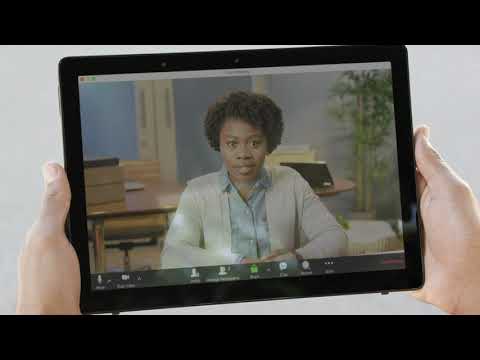
The Narrative: These ads show fluid scenarios: a meeting where some are in a conference room and others in their homes, seamlessly integrated; an employee connecting from the office for a quick meeting with a colleague who is traveling. The technology is shown as an equalizer that erases the hierarchies of physical presence.
The Strategy: Zoom repositioned itself as the operating system of hybrid work. The message was: "No matter where you are, you are a first-class participant." The campaign normalized the mix of in-person and virtual as the standard, not the exception.
The Impact: It projected Zoom beyond the pandemic, securing its place in the long-term infrastructure of companies. It was no longer the solution for a crisis, but the platform for the future of work.
YouTube Link:
Watch YouTube video

Risks and the Perfect Balance
This strategy was not without dangers. The biggest risk was overexposure and brand fatigue. By being so associated with forced remote work, Zoom could generate negative associations of burnout. The brand mitigated this with humor and, above all, by evolving its message towards flexibility and the hybrid future, gently decoupling itself from the initial trauma of the pandemic.
Conclusion: More Than a Tool, a Witness to Its Time
Zoom's ads during the remote work era offer a masterclass in culturally relevant marketing. The brand understood that, in a moment of historic disruption, its job was not simply to explain its software, but to interpret and make sense of the common experience of its users.
By accurately reflecting the emotional nuances of life at a distance—loneliness, resilience, absurdity, hope, and finally adaptation—Zoom achieved something extraordinary: it became humanized. It stopped being an application and became a companion, a witness, and a facilitator of human connection at its most necessary moment. In 2026, its legacy will not only be that of a platform that scaled massively, but that of a brand that knew how to listen, reflect, and celebrate the pulse of a defining era, reminding us that even through a screen, the most important thing is still the person on the other side.
Discover how to enhance your Zoom ad campaigns by fostering genuine human connections in the tech landscape. Elevate your marketing strategy today!
Zoom can sometimes cause problems, that is why we created this article to teach you How to fix zoom not working on Mac.

Discover how Uber Ads bring everyday stories to life, showcasing real experiences and connections that resonate with audiences everywhere.

Discover the commercials that transcended advertising to become iconic pop culture catchphrases. Explore their impact and lasting legacy today!

Explore ads that foresaw technological advancements, showcasing visionary marketing that predicted the future of tech. Discover the power of advertising today.

Discover the unique intersection of film and advertising as we explore directors who starred in their own commercials. Uncover their creative genius today!

Discover the iconic singers who have graced memorable ads. Explore their impact on marketing and how music enhances brand storytelling.

Discover how GoPro transformed its customers into passionate creators, fostering a vibrant community that shares stunning adventures and inspiring content.

Discover how Ben & Jerry’s champions social justice through impactful campaigns. Join the movement for equality and learn about their initiatives today.
Discover how LEGO ads spark creativity and inspire imaginative play, transforming simple bricks into limitless possibilities for builders of all ages.