
Advertising has always been a serious business of persuasion, where brands project confidence, desire, and aspiration. But in recent years, a profound and pervasive new trend has taken hold: the self-aware, ironic commercial. These ads break the fourth wall with a smirk, openly mock the very tropes of marketing, and weaponize humor and parody to forge a connection with an audience that has built up decades of resistance to traditional sales pitches.
In an era of deep consumer skepticism, irony has emerged as a powerful currency of authenticity. This article explores the cultural and technological forces behind the rise of the meta-ad, decodes the techniques that make it work, analyzes standout campaigns that defined the genre, and examines how this calculated irreverence is helping brands build genuine loyalty in a cynical age. Direct YouTube links to iconic campaigns will let you witness the masterful wink in action.
Deconstructing the Meta-Ad: A New Advertising Language
What Are Self-Aware and Ironic Commercials?
This genre operates on a different wavelength than traditional advertising. It acknowledges the elephant in the room: the viewer knows they're being sold to, and the brand knows the viewer knows.
Self-Aware Ads: Campaigns that explicitly acknowledge their own existence as advertisements. They might feature a director yelling "cut," a character commenting on the script, or a voiceover admitting the ad is running over budget. They deconstruct the artificiality of the format.
Ironic Ads: Commercials that use humor, sarcasm, parody, and absurdity to highlight the inherent silliness or exaggerated claims of advertising itself. They don't just sell a product; they sell an attitude—one that aligns with a viewer who rolls their eyes at a typical car commercial.
The Core Goal: To bypass sales resistance by disarming it. The message is, "We're in on the joke with you." This builds a perceived alliance against the noise of "serious" advertising.
Why the Wink Works: The Cultural Catalysts
The rise of the ironic ad is not a random creative choice; it's a direct adaptation to a transformed media and cultural landscape.
The Wall of Consumer Skepticism: Decades of exposure to hyperbolic claims ("The best thing ever!") and manipulative emotional appeals have made audiences, particularly younger ones, highly resistant. Traditional ads often trigger an internal eye-roll. Self-aware ads preempt this by rolling their eyes first, earning a point for honesty.
The Dominance of Digital & Meme Culture: Platforms like TikTok, YouTube, and Twitter run on humor, reference, and meta-commentary. Ads that feel like native content—that employ the sarcasm of a meme or the self-deprecation of a viral video—are more likely to be shared and accepted. They speak the internet's language.
The Gen Z Imperative: This generation, raised on the internet, has a finely tuned detector for inauthenticity. They value transparency, self-deprecation, and brands that don't take themselves too seriously. An ironic ad signals that a brand is culturally literate and humble enough to laugh at itself—a key trait for earning Gen Z's fleeting trust.
The Attention Economy Arms Race: In a hyper-saturated media environment, surprise is a superpower. An ad that breaks the established formula—by being deliberately cheap, openly mocking its competitors, or talking directly about its own mediocrity—jolts the viewer out of autopilot. It commands attention through novelty and shared complicity.
The Toolkit of Irony: Techniques of the Meta-Ad
Breaking the Fourth Wall: The most direct technique. An actor turns to the camera and says, "I know this is a car commercial, but..." or a voiceover sighs, "This is the part where we show the product in slow motion." It instantly creates a conspiratorial bond with the viewer.
Parody & Satire of Ad Tropes: These ads lovingly eviscerate industry clichés: the ecstatic family biting into a burger in synchronized bliss, the overly dramatic perfume ad, the sports drink that turns you into a superhero. By mocking these tropes, the brand positions itself as an outsider, more like the viewer than its competitors.
Minimalism as a Punchline: In a world of multi-million dollar Super Bowl productions, an ad that looks intentionally cheap or low-effort is a bold statement. It ironically comments on the extravagance of advertising itself, suggesting the brand is so confident in its product it doesn't need the glitz. It's anti-advertising advertising.
Meta-Humor & Self-Referential Jokes: The ad jokes about its own script, its media buy, or its celebrity spokesperson's fee. Ryan Reynolds, in his Aviation Gin ads, often makes jokes about the fact that he owns the company and is therefore obligated to do these ads. This layers the humor and deepens the sense of transparency.
Iconic Case Studies: When the Wink Went Mainstream
1. Old Spice – "The Man Your Man Could Smell Like" (2010)
The Campaign: Isaiah Mustafa delivers a rapid-fire, absurd monologue directly to the camera, seamlessly transitioning from a bathroom to a boat to a horse, all while holding a bottle of Old Spice.
Why It’s a Masterpiece of Irony: This campaign didn't just use humor; it used hyper-stylized, surreal, and self-aware humor. The ad's sheer over-the-top nature was a parody of the macho, serious tone of traditional men's grooming ads. It acknowledged its own ridiculousness, making it impossible to dismiss as just another "buy this to be a man" pitch. It broke the fourth wall by speaking directly to both women and men, and its viral success proved that irony could not just capture attention but completely reinvent a stale brand.
YouTube Link:

2. Dollar Shave Club – "Our Blades Are F*ing Great" (2012)**
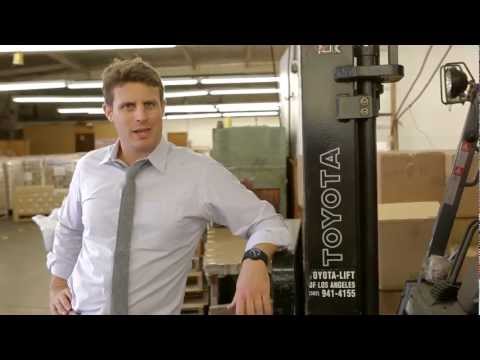
The Campaign: Founder Michael Dubin walks through a warehouse for a minute and a half, delivering a hilariously blunt monologue. He mocks the absurd features and high prices of competitor razors ("Are those lasers?") before simply holding up his product and stating its value.
Why It’s a Masterpiece of Irony: This was a launch video that felt like an anti-ad. It was minimalist, low-budget, and saturated with sarcasm. It directly parodied the complex, tech-jargon-filled ads of Gillette and Schick. By acknowledging the consumer's likely thought—"It's a razor, why is this so expensive and complicated?"—Dollar Shave Club positioned itself as the honest, no-BS alternative. The irony was in using a commercial to attack the very premise of traditional commercials in its category.
YouTube Link:
3. Skittles – "Touch the Rainbow" & "The Entire Ad is a Quiz" (Various)
The Campaign: Skittles has built its entire brand on a foundation of surreal, ironic, and often uncomfortable humor. Ads feature bizarre scenarios—a man with Skittles for fingers, a son who is a giant bag of Skittles—with a completely deadpan delivery.
Why It’s a Masterpiece of Irony: Skittles ads are ironic in their commitment to absurdity. While other candy ads sell happiness and friendship, Skittles sells awkward, inexplicable weirdness. The irony lies in the extreme disconnect between the product (a simple fruit candy) and the bizarre, high-concept narratives built around it. The brand winks at you by refusing to give you a normal, sentimental ad. Its tagline, "Experience the Rainbow," becomes an ironic understatement for the strange journey you're about to watch.
YouTube Link:

4. Aviation American Gin – Ryan Reynolds' Campaigns (2018-Present)
The Campaign: Owner Ryan Reynolds stars in ads that constantly break the fourth wall. He mocks focus groups, parodies celebrity endorsement tropes, and even created an ad where he's replaced by a lookalike actor to comment on his own marketability.
Why It’s a Masterpiece of Irony: Reynolds' persona is the product. The ads are less about the gin's tasting notes and more about his self-deprecating, meta-humor. He openly discusses the mechanics of advertising—budgets, contracts, branding—within the ads themselves. This creates a powerful authenticity; it feels like you're getting a peek behind the corporate curtain from a guy who finds it all as silly as you do. The irony is that the most effective way to sell his gin is to seemingly not take selling it seriously at all.
YouTube Link:

5. Pfizer – "Scientists Like These" (2021)
The Campaign: In a stark departure for the pharmaceutical industry, this ad for the Covid-19 vaccine featured scientists in lab coats... dancing awkwardly in a lab to "It's Like That" by Run-D.M.C. The text read: "Pfizer couldn't have created this vaccine without scientists. Not those scientists. Scientists like these."
Why It’s a Masterpiece of Irony: In a high-stakes, life-saving context, Pfizer used gentle, self-aware irony. It acknowledged the public's imagined "serious scientist" trope ("Not those scientists") and subverted it with a humanizing, humorous, and relatable moment. The irony was using a light, almost silly format to deliver a message of monumental importance, cutting through fear and clinical jargon with disarming warmth.
The Calculated Gambit: Benefits and Risks
Benefits for Brands:
Trust Through Transparency: Admitting "This is an ad" paradoxically makes everything else feel more honest.
The Viral Coefficient: Ironic, humorous ads are shared not just as ads, but as entertainment content.
Cultural Relevance: It signals that the brand is culturally savvy and understands the current mood of skepticism.
Memorability: The surprise and humor make these ads stick in memory far longer than a conventional spot.
Risks & Challenges:
The Sincerity Trap: If overused, the ironic stance can make a brand seem permanently flippant, incapable of making a sincere statement when it matters (e.g., during a crisis).
Misinterpretation: The nuance of irony can be lost. Some may take the parody at face value or miss the joke entirely.
Short-Term Buzz vs. Long-Term Love: These ads are exceptional at generating talk, but the brand must have a quality product or mission behind the wink to convert buzz into lasting loyalty.
The Future: The Permanent Wink
The ironic ad is not a fad; it's a permanent feature of the advertising landscape. We can expect:
Hybrid Campaigns: Brands will oscillate between sincere, purpose-driven messaging and ironic, humorous ads, using each tone where most effective.
Platform-Native Meta-Humor: On TikTok and Instagram Reels, ads will increasingly mimic the platform's own meme formats and inside jokes, blurring the line between ad and creator content even further.
AI-Powered Irony: As consumers become aware of AI-generated content, brands might use AI to create ironically bad or clichéd ads, then have a human spokesperson mock the AI's output—a new layer of meta-commentary.
Conclusion: The Shared Smirk
The rise of the self-aware, ironic commercial is a testament to the intelligence of the modern consumer and the adaptability of marketing. It represents an industry finally conceding that its audience is too smart for the old tricks and choosing instead to invite them in on the joke. From Old Spice's absurdist riffs to Ryan Reynolds' corporate satire, these ads succeed because they replace the hard sell with a shared smirk.
In the end, they prove a powerful paradox: In an age of skepticism, the most persuasive thing a brand can do is to stop pretending. By acknowledging the artifice of advertising with humor and humility, they build a more authentic, and ultimately more effective, connection. The fourth wall is broken, and there's no going back.
Discover effective strategies for conducting market research to enhance your campaigns. Learn how to gather insights that drive successful marketing decisions.
Discover how visuals enhance advertising effectiveness, capturing attention and driving engagement. Explore the science behind impactful visual strategies.
Discover the art of crafting a compelling brand story that connects with your audience. Learn essential tips to elevate your brand's narrative and impact.
Discover how clicking, whispering, and pouring sounds enhance product appeal and drive sales. Learn the psychology behind sound marketing strategies.
Discover how brands leverage seasonal drops to create urgency and boost sales. Learn effective strategies to engage customers and enhance brand loyalty.
Discover the most emotional Mother's Day campaigns of the year. Explore heartfelt previews that celebrate the love and bond between mothers and their children.
Discover how tech brands strategically engage students during the off-season, leveraging unique marketing tactics to boost brand loyalty and sales.
Discover how protein brands are breaking free from "Gym Bro" stereotypes, embracing inclusivity and diverse lifestyles in the fitness community.
Discover the most empowering women's sports campaigns of 2026, celebrating strength, resilience, and the drive for equality in athletics. Join the movement!
Explore the ultimate showdown between North Face and Patagonia in 2026. Discover their unique approaches to adventure gear and sustainability.
Explore the impact of Adidas' "Impossible is Nothing" 2026 campaign. Dive into our analysis of its strategies, messaging, and audience engagement.