

In the world of advertising, opinions are everywhere. The creative director loves the blue button. The CEO insists on a specific headline. The intern thinks the video should start with a question. But opinions—no matter how experienced the source—are not data.
A/B testing (also called split testing) is the scientific method applied to marketing. It allows you to pit two versions of an asset against each other, let real audience behavior determine the winner, and then scale what works. No guessing. No ego. Just results.
When executed correctly, A/B testing transforms your advertising from a creative gamble into a predictable growth engine. This guide will walk you through everything you need to know—from what to test to how to analyze results with statistical confidence.
📺Watch:"A/B Testing Explained: The Beginner's Guide"– VWO
🔗

Phase 1: Understanding the Fundamentals of A/B Testing
What Is A/B Testing?
A/B testing is a randomized experiment with two or more variants (A and B) that tests a single variable to determine which version performs better against a defined goal metric.
The Core Principle:Change one element at a time so you can attribute any difference in performance to that specific change.
Why A/B Testing Matters for Campaigns
Without A/B testing, you're flying blind. You might think a creative is working—or not—but you have no way of knowing whether your intuition is correct. A/B testing provides:
-
Certainty:You know what works because the data tells you
-
Compound Improvement:Small wins (2–5% lifts) compound over time
-
Risk Reduction:You validate changes before committing full budget
-
Audience Insights:You learn what resonates with your specific audience
The Difference Between A/B Testing and Multivariate Testing
Type What It Does Best Used For
| A/B Testing | Tests one variable at a time (e.g., headline only) | Clean, definitive answers; limited traffic |
| Multivariate Testing | Tests multiple variables simultaneously (e.g., headline + image + CTA) | Advanced testing; requires significant traffic volume |
📺Watch:"A/B Testing vs Multivariate Testing: What's the Difference?"– Optimizely
🔗
Phase 2: What to Test in Your Advertising Campaigns
Not all tests are created equal. Focus your testing efforts on elements that have the greatest potential impact on performance.
1. Ad Creative (Highest Impact)
Creative elements typically drive the largest performance swings—often 30–50% differences between winners and losers.
Elements to Test:
-
Headlines:Short vs. long; benefit-focused vs. curiosity-driven; question vs. statement
-
Visuals:Photos vs. illustrations; product shots vs. lifestyle images; user-generated content vs. studio photography
-
Video Hooks:First 3 seconds: problem statement vs. shocking statistic vs. question vs. bold claim
-
Ad Format:Single image vs. carousel vs. video vs. collection ads
-
Color Schemes:High contrast vs. brand colors; specific CTA button colors
📺Watch:"How to A/B Test Facebook Ad Creative"– Ben Heath
🔗
2. Copy and Messaging
The words you use directly impact whether someone stops scrolling and clicks.
Elements to Test:
-
Value Proposition:Price-focused vs. quality-focused vs. convenience-focused
-
Emotional Angle:Fear of missing out (FOMO) vs. aspirational vs. problem-solution
-
Length:Short and punchy vs. longer, story-driven copy
-
Tone:Professional vs. casual vs. humorous
-
CTA (Call to Action):"Buy Now" vs. "Learn More" vs. "Get Started" vs. "Claim Your Discount"
📺Watch:"How to A/B Test Ad Copy for Higher CTR"– Copyhackers
🔗
3. Targeting and Audiences
Even the best creative fails if shown to the wrong people.
Elements to Test:
-
Audience Size:Broad vs. narrow targeting
-
Lookalike Percentages:1% lookalike vs. 3% vs. 5%
-
Interest Stacking:Single interest vs. stacked interests
-
Retargeting Window:7-day vs. 14-day vs. 30-day
-
Demographic Segments:Age ranges, genders, income levels
📺Watch:"How to A/B Test Facebook Audiences"– Jon Loomer
4. Landing Pages and Post-Click Experience
Your ad is a promise. The landing page is the delivery. Misalignment here kills conversions.
Elements to Test:
-
Headline Match:Does landing page headline match ad headline?
-
Form Length:Short form (name + email) vs. long form (full address, phone, etc.)
-
Social Proof:Testimonials above the fold vs. below
-
Page Speed:Fast-loading vs. media-rich (but slower)
-
Mobile Optimization:Desktop-focused vs. mobile-first layout
📺Watch:"Landing Page A/B Testing: What to Test First"– Unbounce
5. Offers and Pricing
Sometimes the offer itself is the lever that moves the needle most.
Elements to Test:
-
Discount Type:Percentage off vs. dollar amount off vs. free shipping
-
Threshold:"10% off" vs. "10% off $50+"
-
Bundles:Single product vs. bundle pricing
-
Risk Reversal:Money-back guarantee vs. free trial vs. no guarantee
Phase 3: The A/B Testing Methodology
Step 1: Formulate a Hypothesis
A good hypothesis is specific, measurable, and based on insight (not a guess).
Formula:If [change], then [expected outcome], because [reason based on insight].
Bad Hypothesis:"Let's test a new headline."
Good Hypothesis:If we change the headline from "Best Coffee in Town" to "Locally Roasted. Delivered Fresh Daily." then CTR will increase because customers tell us freshness is their primary concern.
Step 2: Define Your Success Metric
What are you optimizing for? Choose one primary metric:
Campaign Goal Primary Metric
| Awareness | CTR, Video Completion Rate |
| Consideration | Landing Page View Rate, Add-to-Cart |
| Conversion | CPA, ROAS, Purchase Conversion Rate |
| Retention | Repeat Purchase Rate, LTV |
Critical Rule:Do not optimize for multiple metrics simultaneously. Pick one North Star for each test.
Step 3: Determine Statistical Significance
Statistical significance tells you whether your results are real or just random noise.
Key Concepts:
-
Confidence Level:95% is the standard threshold (meaning there's only a 5% chance the results are due to random chance)
-
Sample Size:You need enough conversions to reach significance. Tools like Evan Miller's A/B Test Sample Size Calculator can help you determine this upfront
-
Duration:Run tests for at least 7–14 days to account for day-of-week variations
Common Mistake:Stopping a test as soon as one variant appears to be winning. Let tests run their full duration.
📺Watch:"Statistical Significance in A/B Testing Explained"– CXL Institute
Step 4: Set Up Your Test Properly
Implementation Checklist:
-
Isolate one variable (test A vs. test B)
-
Split traffic evenly (50/50)
-
Ensure no overlap (users should see only one variant)
-
Run test simultaneously (not sequential)
-
Document test parameters before launch
Step 5: Analyze Results with Objectivity
When the test concludes:
Check significance:Did you reach 95% confidence?
Check sample size:Did you get enough conversions?
Check for anomalies:Were there external factors (holiday, platform outage)?
Declare a winner:If significant, implement the winner
Document learnings:What did you learn about your audience?
If No Clear Winner:
-
Inconclusive results are still valuable—you learned what doesn't produce a significant difference
-
Consider testing a different variable or running the same test with a larger sample
📺Watch:"How to Analyze A/B Test Results"– Google Analytics
Phase 4: A/B Testing Across Different Ad Platforms
Google Ads A/B Testing
Google offers native A/B testing through Drafts and Experiments.
What to Test:
-
Bidding strategies:Manual CPC vs. Target ROAS vs. Maximize Conversions
-
Match types:Exact match vs. phrase match for the same keywords
-
Ad copy:Responsive search ads vs. expanded text ads
-
Landing pages:Different URLs within the same ad group
Best Practice:Use Google's Experiment feature with a 50/50 split for at least 2–4 weeks.
📺Watch:"Google Ads A/B Testing: Drafts and Experiments"– Surfside PPC
🔗
Meta (Facebook/Instagram) A/B Testing
Meta offers three testing methods:
Method Best For
| A/B Test (Native) | Testing one variable across comparable audiences |
| Dynamic Creative | Testing combinations of creative elements automatically |
| Manual A/B Testing | Creating separate ad sets with one variable changed |
What to Test on Meta:
-
Creative (highest impact)
-
Ad copy
-
Call-to-action buttons
-
Audience segments
Best Practice:Use Dynamic Creative for rapid testing across multiple variables, then validate winners with native A/B tests.
📺Watch:"Facebook Ads A/B Testing: Complete Guide"– Nick Theriot
🔗
Email Marketing A/B Testing
Email platforms offer robust A/B testing capabilities.
What to Test:
-
Subject lines (highest impact on open rate)
-
Sender name (personal vs. brand)
-
Send time (day and hour)
-
Content length
-
CTA placement and design
Best Practice:Test subject lines on 20% of your list, then automatically send the winner to the remaining 80%.
📺Watch:"Email A/B Testing: What to Test and How"– Mailchimp
🔗

Phase 5: Common A/B Testing Mistakes to Avoid
1. Testing Too Many Variables at Once
When you change headline, image, and CTA simultaneously, you won't know which change drove the result.
Fix:Test one variable at a time. Run sequential tests if you need to optimize multiple elements.
2. Stopping Tests Too Early
Peeking at results and stopping as soon as one variant leads is a classic mistake. Early results are often misleading.
Fix:Determine your test duration and sample size upfront. Commit to running the test to completion.
3. Ignoring Statistical Significance
Declaring a winner based on a 5% lift after 50 conversions is not valid.
Fix:Use a significance calculator. Aim for 95% confidence and sufficient conversion volume.
4. Testing Low-Impact Elements First
Testing button color before testing headline or offer is like rearranging deck chairs on the Titanic.
Fix:Prioritize tests by potential impact. Start with creative and value proposition, then refine smaller elements.
5. Not Documenting Learnings
If you don't document what you learned, you'll test the same things again—or fail to apply insights across campaigns.
Fix:Maintain a testing log with hypothesis, results, and actionable takeaways.
📺Watch:*"5 A/B Testing Mistakes That Ruin Your Results"*– ConversionXL
Phase 6: Building a Culture of Continuous Testing
The Testing Maturity Model
Stage Characteristics
| Level 1: Ad Hoc | Occasional tests, no documentation, decisions by opinion |
| Level 2: Structured | Regular tests, documented, basic significance requirements |
| Level 3: Systematic | Always testing, testing roadmap, statistically rigorous |
| Level 4: Predictive | Historical learnings inform hypotheses, testing velocity optimized |
How to Scale Your Testing Program
Create a Testing Calendar:Plan tests 30–60 days out
Build a Testing Library:Document past tests and learnings
Set a Testing Budget:Allocate 10–20% of ad spend specifically to testing
Establish a Review Cadence:Weekly test reviews; monthly test summaries
Empower Your Team:Give media buyers autonomy to run tests within guardrails
The 80/20 Rule of Testing
80% of your improvements will come from 20% of your tests. Focus testing energy on elements that historically produce the biggest lifts:
Creative(30–50% potential lift)
Offer(20–40% potential lift)
Value Proposition(15–25% potential lift)
Targeting(10–20% potential lift)
Minor Elements(1–5% potential lift)
A/B Testing Toolkit: Resources and Templates
Sample Testing Log Template
Test ID Date Variable Variant A Variant B Hypothesis Primary Metric Duration Conversions Winner Lift Learnings
| T001 | 03/15 | Headline | "Best Coffee" | "Fresh Daily" | Freshness resonates | CTR | 14 days | 1,247 | B | +18% | Audience prioritizes freshness over quality claims |
Recommended Tools
Tool Best For
| Google Optimize | Landing page A/B testing (free) |
| Optimizely | Advanced website experimentation |
| Unbounce | Landing page builder with built-in A/B testing |
| VWO | All-in-one testing and personalization |
| Meta A/B Testing | Native Facebook/Instagram ad testing |
| Google Ads Experiments | Native Google Ads testing |
Summary Checklist: A/B Testing Excellence
-
Hypothesis:Is it specific, measurable, and insight-driven?
-
Single Variable:Are we testing only one element at a time?
-
Primary Metric:Have we defined the one metric that determines success?
-
Sample Size:Do we have enough traffic to reach statistical significance?
-
Duration:Are we running the test for at least 7–14 days?
-
Split:Is traffic evenly split with no overlap?
-
Significance:Are we waiting for 95% confidence before declaring a winner?
-
Documentation:Are we logging results and learnings?
-
Implementation:Are we rolling winners into permanent campaigns?
-
Iteration:Are we planning the next test based on what we learned?
Conclusion: From Testing to Transformation
A/B testing is not a one-time activity—it's a mindset. The most successful advertisers don't rely on intuition or past experience alone. They create a culture of continuous experimentation where every campaign is an opportunity to learn something new about their audience.
Each test, whether it yields a 2% lift or a 50% lift, adds to your institutional knowledge. Over time, these compound improvements transform your advertising from mediocre to exceptional.
Discover the full cast of the X Town Square ad, featuring diverse talents and engaging performances that bring the campaign to life. Explore now!
Discover the catchy song featured in the HP Work from Anywhere commercial. Uncover the artist and lyrics that make this ad memorable and engaging.
Discover effective strategies for conducting market research to enhance your campaigns. Learn how to gather insights that drive successful marketing decisions.
Discover how local advertising can boost your small business visibility, attract nearby customers, and enhance community engagement for lasting success.

Discover effective strategies to leverage customer feedback for enhancing your advertising campaigns and driving better results. Improve your ads today!

Discover effective strategies for managing and scaling your advertising budget. Maximize ROI and optimize your campaigns with our expert tips.
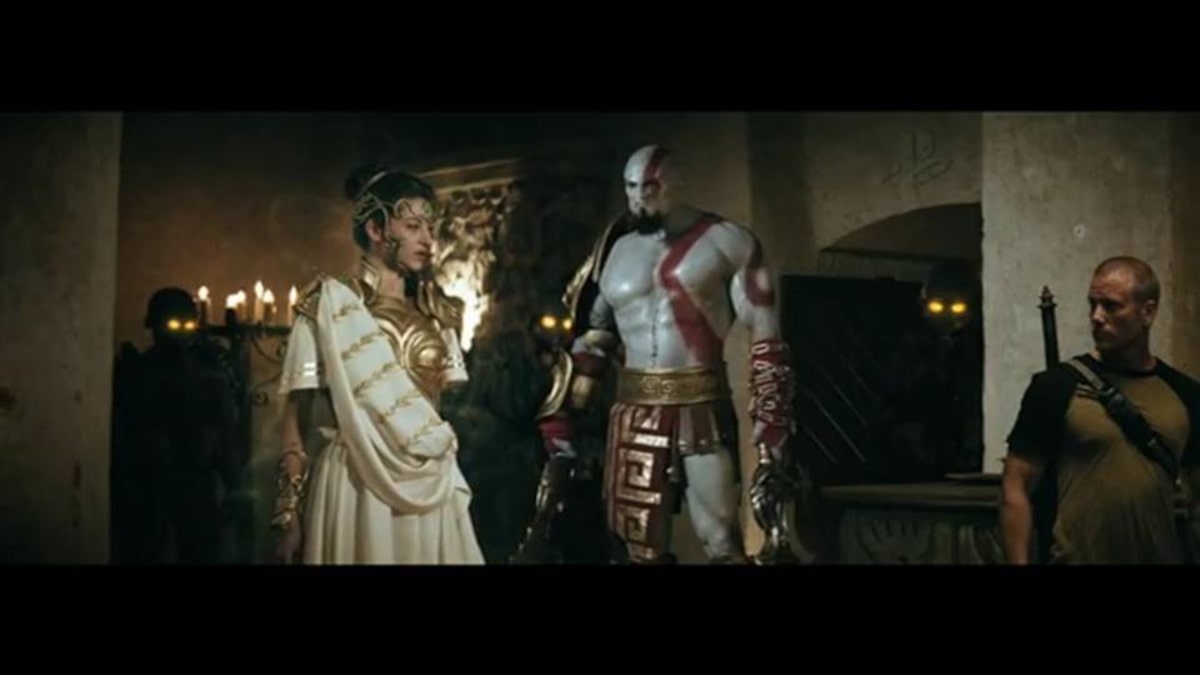
Discover the filming locations of the iconic PlayStation live action commercial. Uncover the behind-the-scenes details and stunning settings used in the ad.

Discover the celebrity featured in the Fortnite skin commercial! Uncover the details and insights behind this exciting collaboration in our latest article.
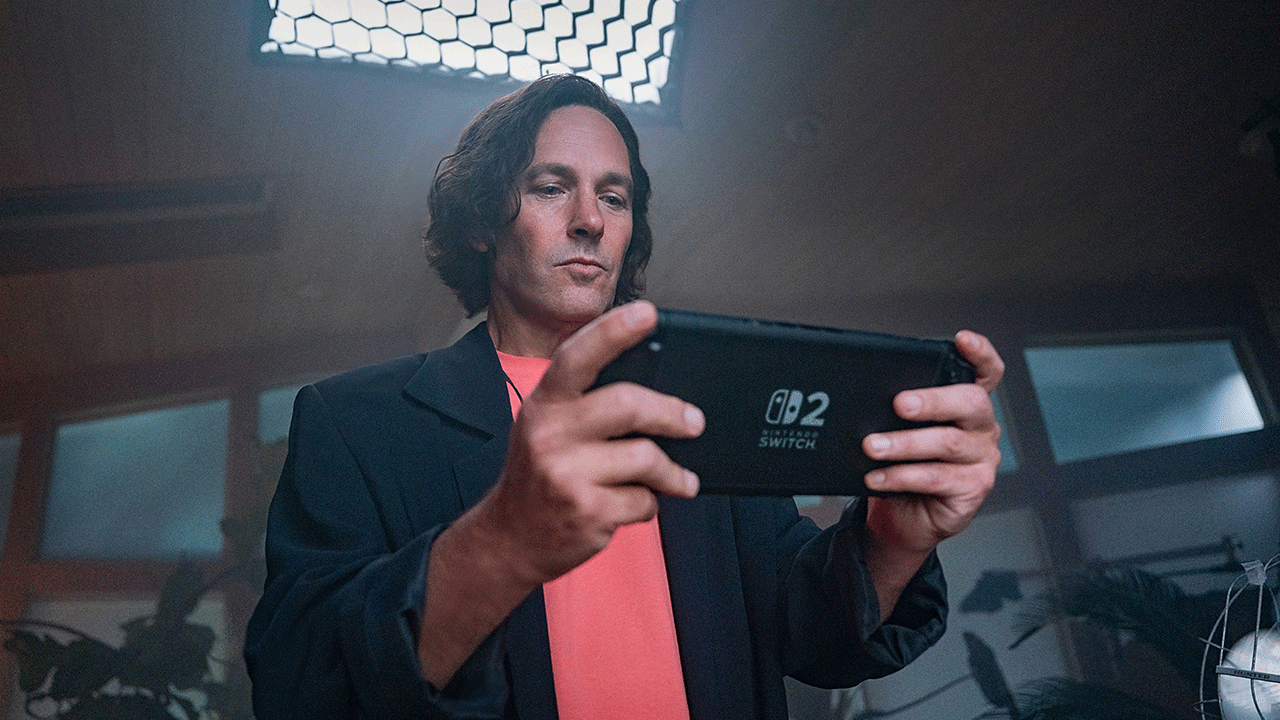
Discover the stars of the Nintendo Switch 2 commercial! Find out who features in this exciting ad and what makes it a must-watch for gamers.

Discover the background song featured in the NBA 2K 2026 ad. Uncover the artist and track details that set the perfect vibe for the game.

Discover the artists featured in the EA Sports FC 2026 commercial. Uncover the music that sets the tone for this exciting gaming experience.