

When Slack launched in 2014, it entered a market saturated with communication tools. Email was the entrenched monarch; instant messaging apps were the noisy courtiers. Slack's challenge wasn't just to be another app but to sell an entirely new operating system for work. To do this, it didn't rely on specs or features lists. Instead, Slack's advertising pioneered a new genre: the workplace comedy-drama. By using humor, authentic storytelling, and a deep understanding of office pain points, Slack’s campaigns didn't just market a product—they narrated a cultural shift, positioning Slack as the liberator from the drudgery of the modern inbox and the hero of productive, human connection.
The Slack Advertising Philosophy: Selling a Feeling, Not a Feature
Slack’s marketing succeeded because it was built on a foundation of emotional intelligence rather than technical bravado. Its philosophy can be distilled into three core principles:
Humor as a Trojan Horse: Slack understood that the frustrations of work communication are universal and ripe for comedy. Its ads weaponized this shared experience, using wit and relatability to disarm skeptical audiences. By laughing with viewers about the absurdity of a 50-email thread to decide on a lunch order, Slack positioned itself not as a corporate mandate from IT, but as a savvy solution from a friend who gets it.
Productivity as a Lifestyle: Slack’s campaigns rarely shouted about "enterprise-grade solutions." Instead, they showcased productivity as a state of flow—a seamless, almost effortless integration into the workday. They sold the feeling of being in control, organized, and connected, transforming the software from a utility into an enabler of a better, more fulfilling work life.
Storytelling Over Specification: Before showing a single interface, Slack ads told stories. They dramatized the "before" (chaos, missed messages, siloed information) and the "after" (clarity, alignment, team synergy). This narrative approach allowed them to demonstrate the product’s value in human terms, making the complex simple and the technical profoundly personal.
Iconic Campaigns: Charting the Revolution
1. "So Yeah, We Tried Slack" (2014) – The Authentic Origin Story
This wasn't a glossy ad; it felt like a candid testimonial. The video featured the team at Metalab, an early adopter, simply explaining how Slack changed their work. The low-fi, talking-head format was its genius. It felt authentic, unscripted, and trustworthy. This campaign didn't just explain what Slack did; it provided social proof that it worked, setting the tone for the brand’s relatable, human-centric voice.
YouTube:

2. "Slack vs. Email" Campaign (2016) – The David vs. Goliath Narrative
With this campaign, Slack moved from friendly disruptor to declared revolutionary. Ads humorously but pointedly contrasted the sluggish, clunky experience of email with the speed and clarity of Slack. One iconic spot depicted email as a literal dragon hoarding precious information, slain by the knight, Slack. This bold comparison framing was crucial. It didn't ask users to add another tool; it asked them to question the foundational tool of modern work and choose a better alternative.
YouTube:

3. "Work, Simplified" (2018) – Scaling the Vision
As Slack grew, its advertising expanded its scope. The "Work, Simplified" campaign moved beyond startups to showcase diverse teams across industries—from engineers to marketers to non-profits. The message evolved from "this fixes email" to "this is how modern, complex work gets done." It emphasized Slack’s ability to bring order to chaos, simplifying collaboration across departments and continents.
YouTube:

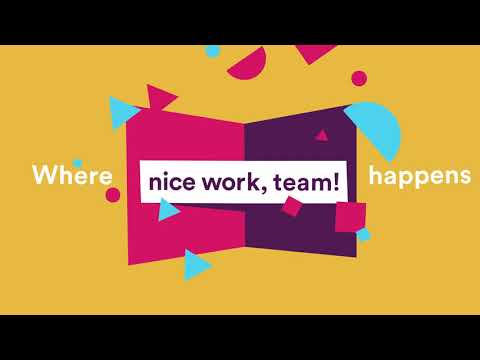
4. "Where Work Happens" (2019) – Claiming the Digital HQ
This campaign marked Slack’s ambition to become the central nervous system of organizations. Ads highlighted deep integrations with tools like Google Drive, Salesforce, and Asana. The visual metaphor of a vibrant, bustling "digital headquarters" replaced the earlier comparisons. Slack was no longer just a communication app; it was the platform where all work converged, the indispensable hub of the digital workplace.
YouTube:
5. "Slack for Remote Work" (2020) – The Pandemic Pivot
When the COVID-19 pandemic forced the world into remote work overnight, Slack's advertising met the moment with agility. Campaigns quickly pivoted to emphasize connection, continuity, and culture for distributed teams. They showcased features like video calls and asynchronous channels not as mere functionalities, but as lifelines keeping teams human and cohesive during a crisis. This cemented Slack’s role as essential infrastructure for the new world of work.
Table: The Evolution of Slack's Advertising Narrative
| So Yeah, We Tried Slack (2014) | Authentic Transformation | Real teams use it and love it. | The rise of startup culture. |
| Slack vs. Email (2016) | Humorous Disruption | Ditch the old way (email) for the new way (Slack). | Digital transformation backlash. |
| Work, Simplified (2018) | Universal Productivity | Brings order to complex, cross-functional work. | The scaling of tech into all industries. |
| Where Work Happens (2019) | Central Platform | The indispensable hub that connects all your tools. | The platform-ification of work. |
| Slack for Remote Work (2020) | Essential Connection | Keeps teams together and culture alive, anywhere. | The global shift to remote work. |
Expert Analysis: The Alchemy of Relatability and Revolution
Why It Worked: The Psychology of a Shared Win
Slack’s advertising tapped into powerful psychological drivers. It masterfully exploited the "curse of knowledge"—the frustration experts feel when information is trapped in silos. By showing this pain point being alleviated, it offered catharsis. Its use of humor created in-group bonding; getting the joke meant you were part of the forward-thinking crowd that "got" Slack. Furthermore, by focusing on outcomes (clarity, time saved, less stress) over inputs (channels, integrations), it spoke directly to universal workplace desires.
Strengths and Lasting Impact:
Cultural Resonance: Slack ads became conversation starters themselves, often shared internally by employees to convince management to adopt the tool ("bottom-up" adoption).
Brand as a Verb: Like Google or Xerox, "Slack me" entered the lexicon, the ultimate sign of advertising success.
Humanizing Tech: In an era of tech skepticism, Slack’s warm, funny, and empathetic voice stood in stark contrast to the cold, impersonal tone of many enterprise software vendors.
Challenges and Evolution:
The very landscape Slack helped create spawned formidable competitors, most notably Microsoft Teams, which leveraged deep integration with the ubiquitous Office 365 suite. This forced Slack to shift from disruptive challenger to defending a maturing market. Its later campaigns had to balance its beloved, quirky personality with the credibility required for large enterprise sales, a tension that continues to define its marketing evolution.
Conclusion: A Blueprint for Marketing Disruption
Slack’s advertising journey offers a masterclass in how to market a paradigm shift. It proved that for a transformative B2B product, the most effective path to market is often B2C (Business-to-Culture) storytelling. By understanding the emotional texture of the workplace—its frustrations, its absurdities, and its aspirations—Slack crafted campaigns that felt less like advertisements and more like manifestos for a better way to work.
In the history of advertising, Slack stands alongside brands like Apple in its ability to imbue technology with a palpable sense of humanity and purpose. Its campaigns did more than drive downloads; they defined an era of work, turning a collaboration tool into a character in the ongoing story of how we connect, create, and communicate. The legacy of "So Yeah, We Tried Slack" is the enduring proof that the most powerful feature you can advertise is not a line of code, but a profound sense of relief.
I will tell you how to fix Slack continues to register
Wondering how to fix Slack notifications not working? Here we leave you a guide that will help you with it.

Discover the most shocking GoDaddy ads that captivated Super Bowl audiences. Explore the creativity and impact behind these unforgettable commercials.

Discover the art of Nikon Adventure Ads, where marketing photography meets the wild. Explore stunning visuals and innovative strategies for outdoor campaigns.

Discover the captivating Canon ads that immortalized iconic photography moments. Explore the artistry and innovation behind these unforgettable campaigns.
Discover innovative marketing strategies with HP Printing Ads. Explore how digital print can elevate your brand's creativity and engagement.

Discover Dell's innovative ads showcasing business solutions designed to enhance productivity and drive success. Explore how Dell can transform your enterprise.

Discover how Intel transforms microchips into pop culture icons through innovative advertising. Explore the intersection of technology and creativity today.

Explore the visual history of Microsoft Cloud Ads and discover how cloud innovation has transformed the digital landscape. Dive into the evolution today!

Discover how Google Ads can enhance everyday utility for your business. Learn effective strategies to reach your audience and boost engagement today.