
In the high-stakes world of 2026 fashion, the distance between the gilded runway of a Parisian couture house and a suburban shopping mall has collapsed to a matter of weeks. This astonishing feat is the engine of the "Fast Fashion Loop," a meticulously engineered system perfected by giants Zara and H&M. Their core strategy is not design in the traditional sense, but high-speed translation: observing, interpreting, and mass-producing the aesthetic codes of luxury fashion at breakneck speed and accessible price points. This article deconstructs how this loop operates, its cultural and commercial impact, and the intensifying contradictions it faces in an era demanding sustainability.
The Mechanics of the Loop: From Catwalk to Cart in 21 Days
The process is a blend of industrial espionage, agile manufacturing, and psychological marketing.
1. The Digital Hunt: Long before a model hits the catwalk, trend forecasters and digital "cool hunters" for Zara and H&M are scouring pre-show leaks, designer social media, and influencer previews. During Fashion Weeks, teams of observers—both in-person and via live streams—document everything: silhouettes, fabrics, colors, and even specific details like buckle shapes or neckline cuts.
2. The Lightning-First Interpretation: Design teams work concurrently with the shows. At Zara, renowned for its vertical integration, sketches are turned into prototypes within days. The goal isn't to create a counterfeit, but to extract the "wearable essence" of a trend. A $5,000 sculptural blouse becomes a $49.90 puff-sleeve top; intricate beading is translated into an all-over print.
3. Micro-Production and Instant Feedback: Both brands leverage small-batch production. Instead of betting millions on one style, they produce limited quantities of hundreds of styles. These hit stores within 2-3 weeks. Sales data from the first 48 hours is analyzed fanatically. A trending item is re-ordered instantly; a dud is pulled and marked down. This data then informs the next micro-cycle, creating a self-perpetuating loop of trend and response.
YouTube Link (The Fast Fashion Loop Documentary):

Divergent Paths Within the Loop: Zara vs. H&M
While united in speed, Zara and H&M employ distinct flavors within the same strategy.
Zara: The Aspirational Mimic
Philosophy: "Democratizing designer aesthetic." Zara's interpretations are often the most direct and fashion-forward. They focus on cut, drape, and a minimalist, editorial feel that closely mirrors high-fashion sensibilities.
Marketing & In-Store Experience: Stores are sleek, minimally merchandised, and have a high turnover, creating a sense of scarcity and exclusivity. The messaging is about being "first" and "fashion-aware."
Consumer Promise: "You can look like you shopped at a boutique, for a fraction of the price."
H&M: The Democratic Curator
Philosophy: "Fashion and quality at the best price." H&M casts a wider net, offering broader, more wearable interpretations alongside basics. Their strategy includes high-profile designer collaborations (like recent ones with Mugler or Simone Rocha) that serve as massive marketing events, lending an aura of legitimacy to the entire brand.
Marketing & In-Store Experience: Stores are brighter, more crowded, and family-oriented. Campaigns emphasize inclusivity, versatility, and styling for everyday life.
Consumer Promise: "You can participate in every trend, refresh your whole wardrobe, and not break the bank."
YouTube Link (Spring 2026 Trends at Zara & H&M): https://www.youtube.com/watch?v=dXWVgs-XMb
The Psychological and Cultural Engine: Why the Loop Works
The loop's power lies in its mastery of modern consumer psychology:
The Dopamine of Newness: In the social media age, wearing something "new" is a form of social currency. The loop provides a constant drip of novelty, feeding the addiction to post fresh content.
The Illusion of Inclusion: It sells the fantasy of participating in the exclusive world of high fashion. For the price of a dinner out, you can own a piece of the seasonal conversation.
FOMO as a Business Model: The limited stock and rapid turnover create a powerful Fear Of Missing Out. If you don't buy it now, it will be gone, replaced by the next trend.
The Stylization of Everyday Life: Influencers and TikTok hauls (#ZaraHaul, #HMFind) show how to integrate these runway snippets into a relatable lifestyle, completing the cycle by making high fashion feel necessary for daily existence.
The Cracks in the Loop: Sustainability, Ethics, and Backlash
By 2026, the environmental and ethical cost of the loop is impossible to ignore, creating a profound brand contradiction.
1. The Greenwashing Dilemma: Both brands have launched sustainability initiatives—H&M's "Conscious Collection," Zara's "Join Life" line. However, critics argue these are marketing tactics that distract from the core, unsustainable business model of overproduction. The very premise of the loop—constant newness—is antithetical to a circular, less wasteful fashion economy.
2. The Waste Crisis: The industry is grappling with the reality of "deadstock"—unsold clothing often incinerated or sent to landfill—and the low-quality, synthetic materials that make garments difficult to recycle. The loop accelerates this waste stream.
3. The Labor Paradox: To maintain speed and low costs, supply chains are pressured, often at the expense of fair wages and safe working conditions in manufacturing countries. The human cost of a $14.99 dress is a growing part of the consumer consciousness.
4. Cultural Fatigue and "Deinfluencing": A counter-movement is growing. A segment of consumers, particularly younger ones, is rejecting the loop in favor of thrifting, slow fashion, and "capsule wardrobes." The hashtag #Deinfluencing on TikTok often critiques hauls and promotes mindful consumption, directly challenging fast fashion's core message.
YouTube Link (Fast Fashion Explained - Critique):
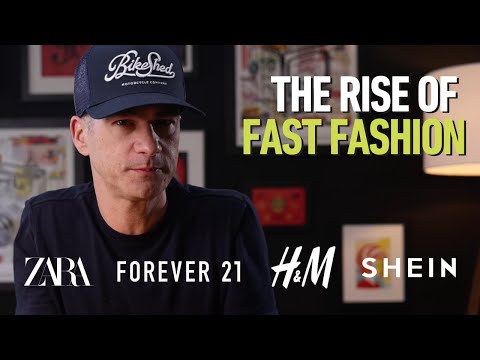
The 2026 Adaptation: Can the Loop Evolve?
Facing these pressures, Zara and H&M are attempting to adapt the loop, not abandon it:
AI and Data for Efficiency: Using advanced AI to predict trends and optimize production volumes more accurately, aiming to reduce overstock.
Investing in Circularity: Piloting garment collection, repair, and resale programs (like H&M's partnership with ThredUp) to create a secondary lifecycle for their products.
Material Innovation: Increasing the use of recycled polyester and exploring new bio-based materials, though scaling these remains a challenge.
Transparency Tech: Experimenting with blockchain and QR codes to provide supply chain transparency, addressing the ethics critique.
Conclusion: A Brilliant, Flawed Machine
The fast fashion loop of Zara and H&M is a brilliant commercial machine that expertly manipulates desire, speed, and accessibility. It has democratized style in an unprecedented way, making fashion a participatory, global conversation.
However, in 2026, the loop is also a cautionary symbol. It represents the pinnacle of linear, extractive consumption—take, make, dispose—at a planetary scale. The central question for the future is whether this incredibly profitable machine can be retrofitted for a sustainable future, or whether its fundamental mechanics are inherently at odds with one. Can the loop become circular, or will the relentless pursuit of the new ultimately fashion its own unraveling? The answer will define not just these two giants, but the very culture of clothing in the decades to come.
Discover Zara's captivating ads featuring renowned celebrities. Explore the latest fashion trends and star-studded campaigns that inspire your style.
Explore the seasonal visual ad strategies of Walmart and Target in 2026. Discover how these retail giants engage customers and enhance brand loyalty.
Explore the narrative behind Amazon's "Smiling Box" icon. Discover how this clever ad strategy enhances brand identity and customer engagement.
Discover the impact of zero-dialogue ads in minimalist marketing. Explore how simplicity can elevate your brand and engage audiences effectively.
Explore the intriguing world of CGI humans in advertising. Discover successes and failures in the uncanny valley that challenge our perception of realism.
Discover the best typography and motion ads of 2026. Explore how text-only designs can drive success and captivate your audience effectively.
Discover the top 5 commercials that transformed into viral memes. Explore the reasons behind their popularity and the impact on advertising culture.
Discover the charm of Japanese Kawaii ads and learn why cute characters dominate Tokyo's advertising landscape. Explore the impact of cuteness on culture.
Discover the future of urban mobility with our E-Bike Marketing 2026 insights. Learn how to sell freedom and enhance city living through innovative strategies.