

In the competitive realm of global technology, where consumer brands often dominate the cultural conversation, Fujitsu has charted a distinct and influential course. As one of Japan’s largest IT services companies, its advertising has never been about capturing fleeting trends but about forging enduring relationships. Over decades, Fujitsu’s marketing has masterfully evolved, shaping not only its own identity but also influencing broader tech marketing paradigms by prioritizing trust, pioneering sophisticated B2B tactics like Account-Based Marketing (ABM), and, most recently, anchoring its message in sustainability and human-centric innovation.The Foundational Era: Engineering Trust (1980s-1990s)In its early global expansion, Fujitsu faced the challenge of establishing credibility in Western markets dominated by IBM, HP, and others. Its advertising from this period was a direct reflection of its corporate ethos: unwavering reliability and technological depth.
Strategy & Themes: Campaigns were quintessentially B2B, targeting IT directors and C-suite executives with messages centered on mission-critical reliability, mainframe computing power, and telecommunications infrastructure. The visuals were often stark and technical, featuring data centers, server racks, and global network maps. The narrative wasn't about lifestyle or design; it was about dependability, precision, and the security of a long-term partnership. Fujitsu sold the idea that its systems were the invisible, unshakable backbone of enterprise operations.
Cultural & Marketing Impact: This focus was foundational. In an era where IT failures could cripple corporations, Fujitsu’s advertising helped codify trust as the paramount currency in enterprise tech marketing. It reinforced the notion that for business customers, the most persuasive "feature" is not speed or price alone, but the assurance of uptime, security, and a vendor that stands by its solutions. This established a blueprint for how to market complex, high-stakes technology to rational, risk-averse buyers.
Strategy & Themes: Advertising shifted to promote comprehensive IT solutions, consulting, and outsourcing. Messaging focused on business outcomes—operational efficiency, cost reduction, and competitive advantage. Fujitsu began using case studies and testimonials from large global corporations, providing social proof and illustrating tangible ROI. The brand position evolved from "we make reliable servers" to "we help you optimize and transform your entire business operations."
Cultural & Marketing Impact: This era’s campaigns were instrumental in normalizing the concept of the integrated IT partner. They influenced corporate procurement culture, moving businesses away from purchasing discrete pieces of hardware toward investing in holistic, vendor-managed solutions. Fujitsu’s advertising helped shape the narrative that technology’s value is measured not in teraflops, but in streamlined workflows and empowered workforces.
Strategy & Themes: Fujitsu moved decisively away from generic messaging. Its marketing became hyper-personalized, targeting specific decision-makers within key client accounts. This included Deal-Based Marketing (DBM), where custom campaigns were built around individual, high-value opportunities. Tactics became creatively bespoke—tailored content, personalized events, and direct engagement that demonstrated a deep understanding of each client’s unique challenges.
Cultural & Marketing Impact: Fujitsu’s success with ABM, widely documented in case studies, provided a powerful proof-of-concept for the entire B2B tech industry. It demonstrated conclusively that in enterprise sales, depth of relationship trumps breadth of awareness. This shift influenced a generation of marketers, proving that the future of B2B lay in one-to-one, value-driven conversations rather than one-to-many broadcast advertising. It set a new benchmark for how to build relevance and trust at the executive level.
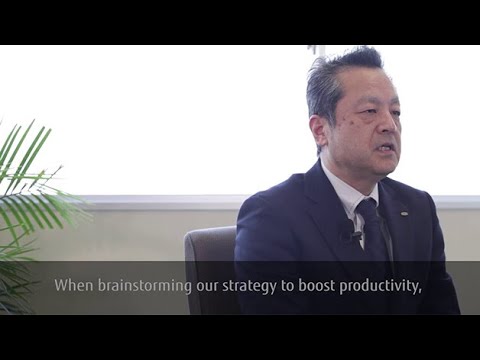
The Purpose-Driven Present: "Uvance" and Sustainable Innovation (2020s)
In response to rising global consciousness around climate change and social responsibility, Fujitsu’s most recent advertising chapter aligns its technological prowess with a higher purpose. The launch of its Uvance business framework marks this strategic pivot.
Strategy & Themes: Contemporary campaigns are visually striking and emotionally resonant, connecting Fujitsu’s work in AI, cloud, and cybersecurity to sustainability, societal resilience, and human well-being. Ads depict technology helping to create smarter cities, reduce carbon footprints, and foster trust in digital societies. The messaging frames Fujitsu not just as an IT vendor, but as a co-creation partner for a sustainable future.
Cultural & Marketing Impact: This purpose-driven approach places Fujitsu at the forefront of a major trend in B2B marketing. It shows that even the most complex B2B brands must articulate their "why." By linking its solutions to the United Nations Sustainable Development Goals (SDGs), Fujitsu’s advertising influences the sector to move beyond selling products to selling positive impact, appealing to the values of modern enterprises and their stakeholders.
Watch the Fujitsu Uvance Purpose Campaign: 
Watch a Fujitsu Sustainability Campaign: 
Watch a Fujitsu Digital Transformation Ad: 
Watch a Fujitsu AI and Data-Driven Marketing overview: 
Expert Analysis: The Enduring Pillars of Fujitsu’s Strategy
Marketing analysts point to several consistent threads in Fujitsu’s advertising success:
The Unshakeable Foundation of Trust: Every era of Fujitsu marketing reinforces reliability and partnership. This consistency has built immense brand equity in sectors where risk is unacceptable.
Anticipating Market Shifts: From hardware to services, from mass marketing to ABM, from technical specs to sustainability, Fujitsu’s advertising has consistently evolved one step ahead of market expectations, keeping the brand relevant.
The Human Connection in B2B: Even at its most technical, Fujitsu’s messaging has always implied a human partnership. The ABM era made this explicit, and the purpose era emotionalized it, proving B2B buying decisions are deeply human.
Leveraging Innovation in Marketing Itself: Fujitsu doesn’t just advertise technology; it uses technology—like AI for marketing analytics—to make its advertising more effective, practicing what it preaches.
The Broader Influence: Shaping the Tech Marketing Ecosystem
Fujitsu’s impact is visible in the strategies of its peers and the broader industry:
Elevating B2B Creativity: Its sophisticated ABM and purpose-led campaigns have raised the bar for creativity and strategic thinking in a sector once known for dry, feature-led ads.
Validating the Partnership Model: Fujitsu’s long-term focus on co-creation and partnership has influenced how all enterprise tech companies frame their client relationships, moving from vendor to strategic ally.
Championing Data-Driven Personalization: Its early adoption of ABM provided a roadmap for the industry’s shift towards targeted, measurable, and personalized marketing approaches.
Conclusion: A Legacy of Intelligent Evolution
Fujitsu’s advertising legacy is a testament to intelligent, values-led evolution. It is the story of a brand that built a global reputation on the bedrock of trust, had the courage to reinvent its marketing methodology with ABM, and now seeks to define its era by connecting technology to humanity’s greatest challenges. In a sector obsessed with the new, Fujitsu’s campaigns remind us that the most powerful messages are timeless: trust matters, relationships drive business, and technology, at its best, should serve a purpose greater than itself. This consistent, principled evolution has not only shaped Fujitsu’s identity but has also provided a masterclass in enduring and influential B2B brand building.

Discover how Acer Ads revolutionized laptop marketing strategies, influencing consumer behavior and setting new industry standards for advertising effectiveness.

Discover how Oracle Ads revolutionized enterprise marketing strategies, enhancing targeting, engagement, and ROI for businesses in the digital landscape.

Discover how IBM Ads revolutionized tech culture, influencing innovation and shaping the digital landscape. Explore the impact on advertising and technology.

Explore Renault's innovative advertising journey in automotive safety, highlighting groundbreaking campaigns that prioritize driver and passenger protection.

Discover the iconic athletes who have starred in Pepsi commercials, showcasing their talent and charisma while promoting the brand's refreshing image.

Discover the most iconic Adidas campaigns in running sports, showcasing innovation, inspiration, and the spirit of athletes. Explore their impact on the sport.

Discover how Hitachi's innovative advertising strategies have reshaped tech marketing, driving engagement and setting new industry standards.

Discover Burger King’s most daring advertising slogans that have captured attention and sparked conversations. Explore the boldness behind their marketing genius.