

Coca-Cola has spent over a century teaching the world to sing, to pause, and to believe that Christmas arrives by truck. But perhaps its most culturally significant campaign of the 21st century arrived not during a season of celebration, but during a season of crisis.
In 2009, as the global financial system convulsed and unemployment lines lengthened, Coca-Cola launched “Open Happiness.” It was not a campaign about refreshment, hydration, or even product superiority. It was a campaign about permission—permission to smile, to connect, to find joy in small moments when the headlines offered only despair.
This article explores why “Open Happiness” was created, how it executed its vision through music and experiential marketing, and why it remains a benchmark for emotional branding in difficult times.
Why “Open Happiness” Was Created
H2: Context of the 2008–2009 Financial Crisis
By early 2009, consumer confidence had collapsed. Luxury brands retreated into safety; automotive giants begged for bailouts. Coca-Cola recognized that advertising as usual—bright smiles, product close-ups, lifestyle montages—would feel disconnected from lived reality. The brand needed to offer something more tangible than refreshment. It needed to offer reassurance.
H2: Strategic Shift
The preceding campaign, “Coke Side of Life” (2006–2008), had emphasized the brand’s role in celebratory moments. “Open Happiness” shifted from observation to prescription. Coca-Cola was not merely present during happy moments; it was an active contributor to them. The slogan was declarative: Open Happiness. Not wait for it. Not hope for it. Open it.
H2: Global Consistency
“Open Happiness” was among Coca-Cola’s most rigorously unified global campaigns. The English slogan traveled intact across continents, accompanied by localized executions that respected cultural specificity while maintaining visual and tonal coherence. This balance—one voice, many dialects—became the campaign’s signature achievement.
Landmark Elements of the Campaign
Launch in 2009
The campaign debuted on American Idol, then television’s most powerful cultural platform, and extended to Super Bowl XLIII. The rollout was simultaneous across television, print, outdoor, and emerging digital channels. Coca-Cola treated the launch not as a media buy but as a cultural announcement.
Music Integration
Coca-Cola commissioned an original anthem, “Open Happiness,” performed by an improbable supergroup: Cee‑Lo Green, Patrick Stump, Brendon Urie, Travie McCoy, and Janelle Monáe. The song was exuberant, genre-fluid, and deliberately anachronistic—a pop confection that sounded both timeless and immediate.
Local versions featured regional superstars: Nancy Ajram in Arabic, Joey Yung in Cantonese, Wang Leehom in Mandarin. These adaptations were not translations but reimaginations, ensuring the campaign’s emotional core resonated within distinct musical traditions.
🎥 Watch the global anthem version here:

(Note: This link features the Australian summer adaptation, reflecting the campaign’s global reach.)
🎥 Watch Nancy Ajram’s Arabic version here:
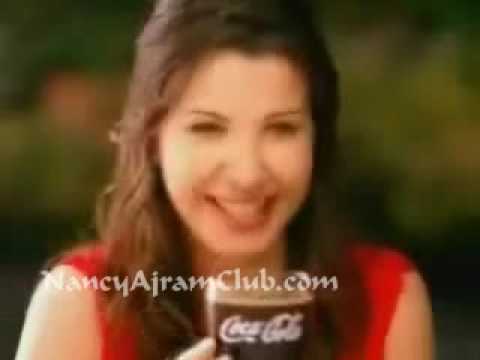
(Note: This link currently shows limited metadata; the full commercial is available via YouTube search.)
Experiential Marketing: Happiness Trucks
Perhaps the campaign’s most beloved innovation was the Happiness Truck. In cities worldwide, Coca-Cola dispatched vehicles that dispensed not just free product but unexpected delights—oversized surprises, personalized gifts, spontaneous celebrations. The trucks transformed advertising from passive viewing into active participation.
Videos of Happiness Truck activations became early examples of viral brand content, shared millions of times across emerging social platforms. The message was implicit but unmistakable: Coca-Cola does not just advertise happiness; it delivers it.
🎥 Watch the Happiness Truck activation here:

The Happiness Barometer
Coca-Cola commissioned a multi-country study, the “Happiness Barometer,” measuring joy across sixteen nations. The research was not merely observational; it was integrated into campaign storytelling. Coca-Cola positioned itself not as a soft drink manufacturer but as a student of human contentment
📊 Table: Key Features of “Open Happiness”
| Optimism in Crisis | Launched during 2009 recession | Reinforced Coca-Cola as emotional comfort brand |
| Music Integration | Global supergroup + localized superstars | Strengthened cultural relevance across markets |
| Experiential Marketing | Happiness Trucks, pop-up activations | Created shareable, participatory brand moments |
| Global Consistency | Unified slogan with local adaptation | Cemented Coca-Cola’s identity as universal yet intimate |
| Transition | Replaced by “Taste the Feeling” (2016) | Shifted focus from emotional benefit to product sensation |
Expert Analysis: Why It Worked
Emotional Resonance: “Open Happiness” succeeded because it diagnosed the cultural mood with precision. In 2009, consumers did not need to be told that Coca-Cola was delicious. They needed to be told that joy remained accessible.
Cultural Adaptability: The campaign’s local music collaborations were not cosmetic. By investing in authentic regional artists, Coca-Cola signaled respect for cultural specificity. The brand was not imposing a global message; it was participating in local conversations.
Experiential Innovation: The Happiness Trucks anticipated the experiential marketing revolution by nearly a decade. Coca-Cola understood that in an era of increasing digital mediation, physical surprise would carry disproportionate emotional weight.
Strategic Timing: The campaign launched at the precise moment when optimism was scarcest. Coca-Cola did not manufacture happiness; it simply reminded consumers that happiness had never disappeared.
Global Consistency: By maintaining visual and tonal coherence across dozens of countries, Coca-Cola reinforced its identity as one of the few truly universal brands. A consumer in Buenos Aires and a consumer in Bangkok recognized the same campaign, the same promise, the same red.
Broader Cultural Significance
Advertising History: “Open Happiness” is studied as a definitive example of emotional branding during macroeconomic adversity. It demonstrated that consumer confidence is not solely determined by economic indicators but can be influenced by cultural leadership.
Pop Culture: The campaign’s music video, featuring five distinct musical artists in animated collaboration, anticipated the cross-genre, cross-platform collaborations that now define streaming-era pop. It was both advertisement and artifact.
Consumer Psychology: “Open Happiness” understood that brand loyalty is not rational but associative. Consumers who encountered the Happiness Truck did not calculate the caloric value of the free Coke; they encoded the experience as memory. Years later, that memory remains accessible.
Global Reach: The campaign’s unified execution across more than one hundred countries reinforced Coca-Cola’s status as a shared cultural reference point. In an increasingly fragmented media environment, “Open Happiness” was a rare moment of collective attention.
Transition to “Taste the Feeling” (2016)
In 2016, Coca-Cola retired “Open Happiness” in favor of “Taste the Feeling.” The new campaign represented a strategic pivot from emotional benefit to sensory experience. Commercials focused less on happiness as an abstract concept and more on the specific, intimate pleasure of drinking an ice-cold Coca-Cola.
This transition was not a repudiation but an evolution. “Open Happiness” had restored emotional relevance during crisis; “Taste the Feeling” recentered the brand on its product during recovery. The two campaigns exist in productive tension—one looking outward at the world, the other inward at the bottle.
Conclusion / The Legacy of “Open Happiness”
Coca-Cola’s “Open Happiness” campaign remains one of the most accomplished emotional branding initiatives of the 21st century. It arrived at a moment of genuine cultural despair and offered not escapism but acknowledgment. The campaign did not pretend the world was not struggling; it simply insisted that struggle and joy could coexist.
Its legacy is visible in every brand that has since attempted to align itself with consumer emotion rather than consumer transaction. But few have matched Coca-Cola’s executional discipline, cultural intelligence, and strategic patience.
“Open Happiness” proved that advertising’s highest function is not to sell products but to articulate shared aspirations. The campaign ended in 2016, but its central insight endures: happiness is not a destination. It is something we open, sip by sip, moment by moment.
🎥 Iconic “Open Happiness” Ads on YouTube (Raw Links)
Open Happiness Global Ad (2009):
 Watch YouTube video
Open Happiness Song – Cee‑Lo Green, Janelle Monáe & Supergroup (2009):
Watch YouTube videoNancy Ajram Arabic Version (2009):
Watch YouTube videoHappiness Truck Activation (2010):
Watch YouTube video
Discover the catchy tune featured in Coca-Cola's 2026 "Real Magic" commercial. Uncover the artist and song details that are captivating audiences worldwide.
Discover the song featured in Coca-Cola's 2026 "Real Magic" commercial. Uncover the artist and lyrics that bring this captivating ad to life.
Discover the enchanting song featured in the 2025 Coca-Cola Christmas truck commercial. Unwrap the festive spirit and find out more about this holiday classic.

Discover how celebrities shape high-end advertising, influencing trends and consumer behavior. Explore the intersection of fame and luxury branding.

Discover Salma Hayek's influential role in cosmetics ads, showcasing her beauty and charisma while redefining beauty standards in the industry.

Discover the captivating power of Morgan Freeman's voice in advertisements. Explore how his iconic narration enhances brand storytelling and engages audiences.

Discover how Citroën's innovative advertising campaigns have shaped cultural trends and influenced consumer behavior throughout the decades.

Discover the iconic songs that have defined Heineken commercials. Explore the music that enhances the brand's storytelling and captivates audiences worldwide.

Discover the allure of Gucci ads featuring iconic celebrities. Explore stunning visuals and captivating campaigns that redefine luxury fashion.

Discover Taco Bell's most memorable advertising slogans that have captured hearts and appetites. Explore the creativity behind their catchy phrases today!
Discover the iconic Adidas commercials that shaped the landscape of TV advertising. Explore memorable campaigns and their impact on pop culture.