

Before you write a single word, you must build a strategic foundation. A persuasive message aimed at the wrong person is just noise.1. Know Your Audience Intimately (Psychographics > Demographics)
Go Beyond Demographics: While age and location are useful, psychographics are the key to persuasion. What are their fears, frustrations, dreams, and aspirations? What keeps them up at night? What solution have they been desperately searching for?
Create a Customer Avatar: Give your ideal customer a name and a story. "Marketing Mary" is a 45-year-old CMO who is stressed about proving her team's ROI to the board and fears being seen as out-of-touch. Your message can then speak directly to Mary's specific pain point.
People don't buy products; they buy better versions of themselves. A drill isn't bought because someone wants a drill; it's bought because they want a hole to hang a shelf, and ultimately, they want a more organized, beautiful home.
Frame your product as the solution. What is the single most important problem it solves? Focus your message on that.
What makes your solution unique and better than the alternative? This is your Unique Selling Proposition (USP).
Be specific. Don't say "high quality." Say "hand-stitched Italian leather that lasts a decade." Specifics are more believable and persuasive than vague superlatives.
Reciprocity: People feel obliged to give back when they receive something. Offer valuable free information (e-book, webinar), a free sample, or a useful tool.
Scarcity: Highlight limited availability or time. "Only 5 left in stock" or "Sale ends tonight." This taps into the fear of missing out (FOMO).
Authority: People trust experts. Showcase endorsements from credible figures, display industry awards, or demonstrate your expertise through well-researched content.
Consistency: People like to be consistent with their past actions. Use small, initial commitments (e.g., "Sign up for our free newsletter") before asking for the big one (e.g., "Buy our course").
Liking: We are persuaded by people we like. Create a relatable, authentic brand voice. Use real customer testimonials and photos.
Social Proof: People follow the crowd. Show how many customers you have, display glowing testimonials, and feature user-generated content. "Join 10,000+ happy customers."
The Emotional Hook: Most purchasing decisions are made emotionally (fear, joy, belonging, status). A charity doesn't just say "we need funds"; they show a picture of a single, sad child. An ad for a car doesn't list engine specs; it shows a family laughing on a road trip.
The Logical Justification: After the emotional hook, provide the logical reasons to justify the decision. This is where you list the specs, the features, and the pricing. The emotion makes them want it; the logic makes them feel good about buying it.
This is the oldest rule in the book, yet it's constantly ignored.
Feature: "This laptop has a 10-hour battery life."
Benefit: "Work from any coffee shop, all day long, without hunting for an outlet."
For every feature you list, ask yourself: "So what? What does this do for the customer?" The answer to that question is your persuasive message.
Attention: Grab them immediately. Use a shocking statistic, a provocative question, a bold statement, or a visually stunning image. (e.g., "Are you making these expensive marketing mistakes?")
Interest: Keep them engaged. Explain the problem in a way that resonates with their pain points. Show them you understand their situation.
Desire: Paint a picture of the solution. Show them how their life will be better with your product. Use vivid language and emotional benefits.
Action: Tell them exactly what to do next. "Buy Now," "Sign Up Today," "Get Your Free Quote." Make the call to action (CTA) clear, direct, and easy to find.
On average, 5x as many people read the headline as read the body copy. If your headline doesn't sell, you've wasted 80% of your money (according to copywriter David Ogilvy).
4 Types of High-Performing Headlines:
Direct ("USP"): "World's Quietest Dishwasher."
Question ("Problem-Aware"): "Tired of sore feet after a long run?"
How-to ("Solution-Oriented"): "How to Bake a Perfect Soufflé in 5 Easy Steps."
Provocative ("Curiosity"): "Why Everything You Know About Dieting is Wrong."
Clarity Trumps Cleverness: Don't be cute. Be clear. If they don't understand what you're offering in the first 3 seconds, they're gone.
Use Simple Language: Write as if you're talking to one person. Avoid jargon and big words.
Be Concrete: Use specific numbers, examples, and vivid descriptions. Instead of "delicious food," say "perfectly seared steak with a rich rosemary-garlic butter."
The most persuasive word in advertising is "You." It forces the reader to put themselves into the message.
"You can achieve glowing skin in just 7 days." This is far more powerful than "Our customers achieve glowing skin."
If you claim to be the "best," prove it. Use data, case studies, testimonials, and guarantees.
A strong guarantee removes risk and makes the decision to buy much easier. "Love it or your money back" is incredibly persuasive.
No one gets it perfect on the first try.
A/B Testing: Test two different headlines. Test two different images. Test a short version of copy vs. a long version. See what your specific audience actually responds to.
Use analytics to see where people are dropping off and refine your message based on real data.
📺 YouTube Resources: Channels & Iconic Campaigns
To see these principles in action, here are the best YouTube channels and specific campaign videos.
YouTube Channels to Learn From
| Alex Hormozi | https://www.youtube.com/@AlexHormozi | The current guru of conversion. Learn how to make irresistible offers. |
| The Futur (Chris Do) | https://www.youtube.com/@TheFutur | His series "The Copy" analyzes ads live, showing the thought process behind word choice. |
| MasterClass | https://www.youtube.com/@MasterClass | Clips from legends like Malcolm Gladwell on what makes ideas "sticky." |
| Social Media Examiner | https://www.youtube.com/@smexaminer | Practical social media marketing strategies. |
| Ahrefs | https://www.youtube.com/@Ahrefs | In-depth analysis of marketing and SEO strategies, including viral campaigns. |
Iconic Advertising Campaigns (With Links)
Apple - "1984" Watch YouTube video | Storytelling and revolutionary brand positioning. | |
Dove - "Real Beauty Sketches" Watch YouTube video | Emotional appeal and the "Liking" principle. | |
Old Spice - "The Man Your Man Could Smell Like"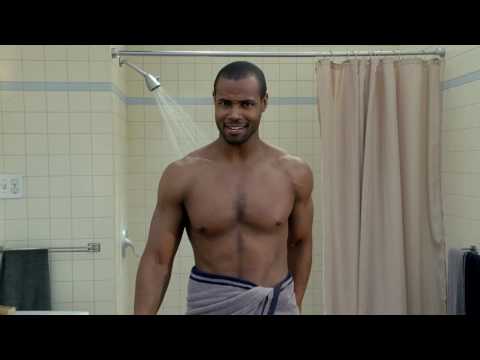 Watch YouTube video | Humor, viral marketing, and brand revitalization. | |
Nike - "Find Your Greatness"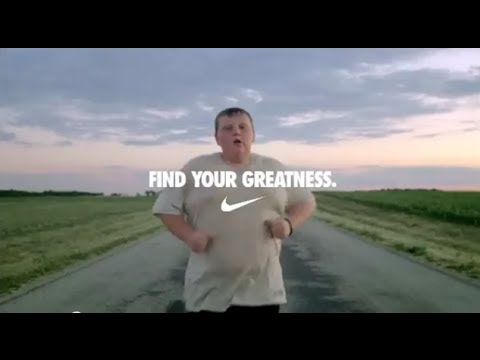 Watch YouTube video | Selling an emotional benefit (achievement). | |
Nike - "Dream Crazier" Watch YouTube video | Empowerment and breaking stereotypes. | |
Coca-Cola - "Hilltop" (I'd Like to Buy the World a Coke) Watch YouTube video | Unity, happiness, and emotional connection. | |
Always - "#LikeAGirl"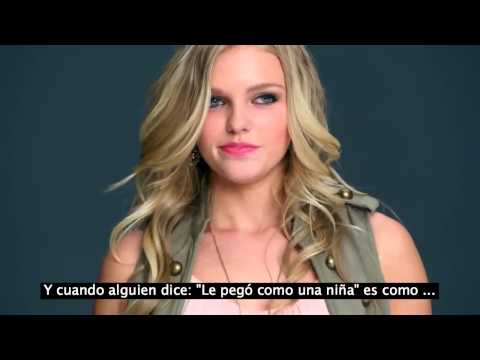 Watch YouTube video | Changing cultural narratives and empowerment. |
Strategy Analyses & Frameworks
| How a Blue Glasses Ad Masters Controversy | Using controversy as a hook. | |
| 30yo's Lead Framework on YouTube Ads | Frameworks: Problem-Solution, Story Lead, Proclamation Lead. | |
| How One Sentence Turned a Boring Ad Into a Winner | The power of a single phrase. | |
| Ryan Trahan's 50 States Challenge (Ahrefs) | Unconventional brand integration. |
Recent Success Stories & News
Google "Aunty M" Series Watch YouTube video | Google's educational series with humor. | |
Breakthrough Brand Storytelling (Google) Watch YouTube video | Case studies: Supergoop, Olaplex, Lucid Motors. |
🎯 Types of Leads in Advertising (Real Examples)
Based on Michael Masterson's "Great Leads" framework:
| Problem-Solution | Present a problem, then the solution | Mouse iPhone Case (analysis) |
| Story Lead | Tell a story to connect emotionally | Transformer Table (analysis) |
| Proclamation Lead | Declare a shocking truth or fact | Mouse Day Backpack (analysis) |
| Big Secret Lead | Reveal a secret few people know | Government Spending Card (analysis) |
| Controversy Hook | Use a controversial topic to grab attention | Clarity Blue (analysis) |
💡 Final Tip for Watching These Resources
Don't just watch the ads. Watch them like a strategist. Ask yourself:
Who is this ad talking to? (Target audience)
What emotion is it trying to spark? (Emotional hook)
What problem does it solve? (Value proposition)
Which of Cialdini's principles is it using? (Reciprocity, scarcity, authority, etc.)
How is the message structured? (Does it follow AIDA?)
By following these steps and studying these examples, you move from simply describing a product to creating a compelling, customer-centric narrative that resonates on a deep psychological level and compels action.
Discover effective strategies for conducting market research to enhance your campaigns. Learn how to gather insights that drive successful marketing decisions.
Discover how visuals enhance advertising effectiveness, capturing attention and driving engagement. Explore the science behind impactful visual strategies.
Discover the art of crafting a compelling brand story that connects with your audience. Learn essential tips to elevate your brand's narrative and impact.

Discover the filming locations of the iconic Nike running commercial. Uncover the stunning backdrops that brought this powerful ad to life.

Discover the identity of the girl in the Lululemon yoga commercial and learn about her journey, inspiration, and impact on the yoga community.
Discover the song featured in the Gymshark fitness campaign commercial. Uncover the artist and track that energizes your workout routine today!

Discover the celebrity featured in the latest Under Armour performance gear ad. Uncover their connection to the brand and what makes them a perfect fit.

Discover the song featured in the latest Adidas football commercial. Uncover the artist and track that sets the perfect tone for the game.
Discover the athlete featured in the 2026 Nike basketball commercial. Uncover insights and details about this exciting campaign and its star player.

Discover proven marketing strategies to build customer loyalty and enhance retention. Learn how to create lasting relationships with your audience today.
Discover the latest digital marketing trends that are shaping the industry. Stay ahead of the competition and enhance your strategy with our expert insights.