

In 1959, Volkswagen faced a seemingly impossible challenge: how to sell a small, oddly shaped German car—the Beetle—in a United States market utterly dominated by large, luxurious automobiles. The era was defined by tailfins, chrome, and the annual ritual of bigger and flashier models. The Beetle, with its humble design and Nazi-era origins, seemed destined for failure.
But what emerged from this unlikely scenario was not just a successful ad campaign, but a revolution in how brands communicate. "Think Small," created by the Doyle Dane Bernbach (DDB) agency, didn't just sell cars; it shattered the conventions of advertising, introducing honesty, wit, and minimalist design to a world of exaggerated claims and cluttered visuals. It is consistently ranked as the greatest advertising campaign of the 20th century, and its influence is still felt today.
This article explores the origins, creative genius, and lasting legacy of "Think Small."
📜 Origins of the Campaign
Market Context
Post-World War II America was in love with the automobile, but a very specific kind: large, powerful, and ostentatious. Cars were status symbols, and size mattered. The Volkswagen Beetle, designed in Germany in the 1930s, was the antithesis of this. It was small, rounded, and looked nothing like the chrome-laden behemoths from Detroit. Selling a "Nazi car" to a nation with fresh memories of the war added another monumental hurdle.
Agency & Creatives
The task fell to Doyle Dane Bernbach (DDB), a relatively young New York agency led by the visionary William Bernbach. Unlike other agencies that relied on market research and formulaic approaches, Bernbach fostered a culture of creativity, encouraging close collaboration between copywriters and art directors. For the Volkswagen account, this dream team consisted of art director Helmut Krone and copywriter Julian Koenig.
The Strategy
The conventional approach would have been to ignore the Beetle's small size or try to convince Americans that it was actually bigger than it looked. Krone and Koenig did the opposite. Their radical strategy was to acknowledge the elephant—or rather, the Beetle—in the room. They decided to celebrate the car's smallness, turning its biggest perceived weakness into its greatest strength. Honesty and a self-deprecating sense of humor became the foundation of their message.
🎨 Creative Approach
Minimalist Design
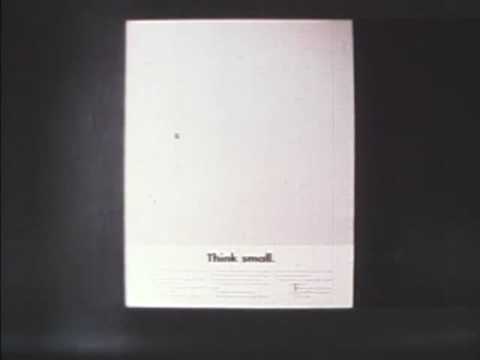
The "Think Small" print ad is a study in restraint. It features a photograph of the tiny Beetle, not in the center, but placed awkwardly in the upper-left corner of a vast, empty white page. This was a radical departure from the era's advertising norms, which dictated cramming every inch of space with illustrations, bold headlines, and copy. The empty space was not wasted; it was a statement. It visually communicated the car's small size and invited the reader's eye to rest, to contemplate, to think.
Witty Copy
The headline, "Think Small," was a direct challenge to the consumer's mindset. The body copy was conversational and disarmingly honest. Lines like "It's ugly, but it gets you there" (paraphrased from the famous "Ugly is only skin-deep" ad) admitted the car's unconventional looks while touting its practical virtues: reliability, economy, and durability. This self-deprecating humor was unheard of in an industry that took itself very seriously.
Honesty
The campaign's genius was its honesty. It didn't claim the Beetle was a luxury car or a speed machine. It admitted its limitations—its size, its air-cooled engine, its heater that wasn't the warmest. But in doing so, it built an incredible level of trust with consumers. In a marketplace of exaggerated boasts, Volkswagen's voice of reason was a breath of fresh air.
📺 YouTube References
Original "Think Small" Ad (1959 retrospective):
 Watch YouTube video
Volkswagen Beetle Commercials (1960s humor ads):
Watch YouTube videoAdvertising History Features – "Think Small" Analysis:
Watch YouTube videoLegacy Retrospectives (Modern Marketing Analysis)

📊 Campaign Highlights
| Visual Style | Flashy, crowded layouts | Minimalist, lots of white space |
| Tone | Boastful, exaggerated | Honest, witty, self-aware |
| Product Positioning | Luxury, size, power | Practicality, economy, reliability |
| Impact | Short-term sales boosts | Long-term cultural shift in advertising |
🌍 Market Impact
Sales Growth
The results were astonishing. The campaign resonated deeply with American consumers who were growing weary of the excess of the 1950s. The Beetle went on to become one of the best-selling cars in U.S. history, selling millions of units over the next two decades.
Cultural Resonance
The Beetle, and its advertising, became a symbol for a burgeoning counter-culture that valued simplicity, anti-establishment thinking, and practicality over status. It was the car for people who didn't want to be like everyone else.
Industry Influence
"Think Small" didn't just sell cars; it changed advertising forever. It proved that creativity, wit, and honesty could be far more effective than bombast and repetition. It ushered in the "Creative Revolution" of the 1960s, inspiring a generation of advertisers to prioritize ideas over formulas.
🔎 Expert Analysis
Revolutionary Simplicity
The campaign proved that less is more. By stripping away clutter and focusing on a single, honest message, Volkswagen captured attention in a saturated market. The vast white space wasn't empty; it was full of meaning.
Consumer Trust
By embracing its flaws, Volkswagen built an unshakeable credibility. Consumers, tired of being lied to, appreciated the refreshing honesty. This trust translated directly into brand loyalty.
Advertising Legacy
"Think Small" is consistently ranked by industry publications like Ad Age as the greatest advertising campaign of the 20th century. Its DNA can be seen in countless campaigns that followed, from Apple's "Think Different" to the honest, conversational tone of modern digital marketing. It taught the world that the boldest move can sometimes be to whisper when everyone else is shouting.
⚠️ Risks & Challenges
Initial Skepticism: Selling a German car in post-WWII America was a significant cultural hurdle. The campaign's humor was essential in disarming this prejudice.
Cultural Barriers: The very concept of a "small" car was initially seen as a compromise, a step down from a "real" American car. The campaign had to reframe "small" as a positive attribute: efficient, nimble, and intelligent.
📜 Decade-by-Decade Context
1950s–1960s: Birth of "Think Small"
The campaign launched in 1959, and its impact grew throughout the 1960s as the Beetle became a cultural icon, synonymous with the decade's spirit of change.
1970s: Expansion & Adaptation
During the oil crises, the Beetle's fuel efficiency became its strongest selling point, and Volkswagen's advertising continued to emphasize practicality, building on the foundation of trust laid by "Think Small."
1980s–1990s: Nostalgia & Reinvention
The Beetle became a beloved classic. While the original model was discontinued, its legacy was cemented in popular culture, and Volkswagen's later campaigns often referenced the honesty and wit of the original ads.
2000s–2010s: Retro Revival
When Volkswagen revived the Beetle (as the New Beetle), its advertising heavily leaned on nostalgia, reminding a new generation of the car's iconic status and the revolutionary campaign that launched it.
2020s: Legacy in Modern Marketing
"Think Small" continues to be the benchmark for authentic, minimalist advertising. Its principles are taught in every marketing class and are more relevant than ever in a cluttered digital world where consumers value transparency and connection.
Conclusion
Volkswagen's "Think Small" campaign is more than an ad—it is a turning point in advertising history. By embracing simplicity, honesty, and wit, it redefined how brands communicate with consumers. It proved that a small car could make a monumental impact by celebrating its own identity rather than trying to be something it wasn't.
Its legacy continues to influence modern marketing, serving as a timeless reminder that authenticity and creativity can triumph over convention. From the 1950s to today, "Think Small" remains the ultimate benchmark for advertising excellence, showing that sometimes, the boldest move is to embrace humility.
Discover the catchy song featured in the Volkswagen ID.4 EV road trip ad. Uncover the artist and lyrics that make this commercial unforgettable.
Explore Volkswagen's profound cultural impact on advertising, showcasing iconic campaigns that shaped perceptions and influenced generations of consumers.

Explore Levi's innovative campaigns in youth fashion advertising, showcasing how the brand connects with young audiences through creativity and style.

Discover the most iconic Christmas campaigns in Latin America, showcasing creativity and cultural richness that capture the festive spirit across the region.

Discover the actors who have represented top sports brands, blending talent and athleticism in unforgettable campaigns. Explore their impact on sports marketing.

Discover Hugh Jackman's captivating coffee advertising campaigns, showcasing his charm and charisma while promoting your favorite brews.

Discover the captivating world of Julia Roberts in jewelry advertising campaigns, showcasing her elegance and charm in stunning visual narratives.

Discover how data-driven Spotify campaigns can elevate your music marketing strategy. Unlock insights to maximize your reach and engagement today.

Explore Chevrolet's profound influence on advertising and culture, showcasing iconic campaigns that shaped perceptions and connected with audiences worldwide.

Discover the iconic soundtracks of Corona ads that have captivated audiences. Explore how music enhances brand storytelling and creates lasting impressions.