

Taco Bell has never been just another fast-food chain. While competitors fought battles over burger patties and chicken nuggets, Taco Bell built an identity rooted in humor, rebellion, and a distinctly different kind of dining experience. Its weapons? Words.
From the simple promise of freshness to the lifestyle declaration of "Live Más," Taco Bell's slogans have done more than sell tacos and burritos. They have captured cultural moments, sparked conversations, and occasionally stirred controversy. They have evolved with the times while maintaining a core identity: Taco Bell is the brand that doesn't take itself too seriously, that invites you to try something different, that encourages you to live a little.
This essay explores Taco Bell's most famous slogans, tracing their evolution from the 1970s to the present day, analyzing their cultural impact, and examining their legacy in advertising.
📜 Timeline of Iconic Slogans
"The Fresh Food Place" (1977–1982)
Concept: In its early years, Taco Bell needed to differentiate itself from the burger giants. This slogan emphasized freshness and quality, positioning the brand as a place where ingredients mattered. It was a straightforward, no-nonsense promise.
Impact: While not as memorable as later slogans, this campaign laid the groundwork for Taco Bell's identity. It established that the brand could compete on quality, not just price or novelty.
🎥 Watch a vintage Taco Bell ad from this era here:

"Make a Run for the Border" (1988–1992)
Concept: This slogan was pure adventure. It encouraged consumers to "cross the border" for a flavor experience they couldn't get from traditional burger chains. The imagery was bold, the tone was exciting, and the message was clear: Taco Bell was a destination worth traveling for.
Impact: The campaign was enormously memorable and successful in its time. However, in later years, it faced criticism for cultural insensitivity, reflecting a growing awareness of how brands use—and sometimes exploit—cultural imagery.
🎥 Watch a "Make a Run for the Border" commercial here:
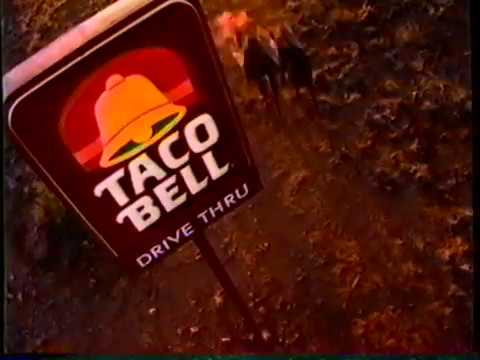
"Yo Quiero Taco Bell" (1997–2000)
Concept: A talking Chihuahua named Gidget expressed an existential longing for Taco Bell with the phrase "¡Yo quiero Taco Bell!" The ads were quirky, funny, and utterly unforgettable. The dog became a pop culture phenomenon, appearing on merchandise, in talk shows, and in the collective consciousness.
Impact: This campaign was a masterclass in viral marketing before the internet made it easy. The Chihuahua became synonymous with the brand, and "Yo quiero Taco Bell" entered everyday language. However, the campaign eventually faced criticism for relying on a Latino stereotype, highlighting the fine line brands must walk when using cultural imagery.
🎥 Watch the iconic Chihuahua commercial here:

"Think Outside the Bun" (2001–2012)
Concept: This slogan was a direct challenge to the burger establishment. It positioned tacos not just as an alternative, but as a smarter, more interesting choice. "Think Outside the Bun" was a double-entendre that invited consumers to literally choose a tortilla over a bun, and metaphorically to think differently about fast food.
Impact: The campaign defined Gen X and Millennial non-conformity. It resonated with a generation that prided itself on rejecting the mainstream and making unconventional choices. Sales rose significantly, and the slogan cemented Taco Bell's identity as the anti-burger brand.
🎥 Watch a "Think Outside the Bun" commercial here:

"Live Más" (2012–present)
Concept: Taco Bell's current slogan shifts focus from food to lifestyle. "Live Más" (Spanish for "Live More") is an invitation to embrace experiences, not just meals. The campaign coincided with major product innovations like the Doritos Locos Tacos and positioned Taco Bell as a brand for those who seek adventure and fun.
Impact: The slogan has proven remarkably durable, lasting over a decade. It appeals to millennial and Gen Z values, emphasizing experiences over possessions and individuality over conformity. "Live Más" has become more than a slogan; it's a philosophy that extends beyond the restaurant into merchandise, events, and cultural partnerships
Taco Bell has never been just another fast-food chain. While competitors fought battles over burger patties and chicken nuggets, Taco Bell built an identity rooted in humor, rebellion, and a distinctly different kind of dining experience. Its weapons? Words.
From the simple promise of freshness to the lifestyle declaration of "Live Más," Taco Bell's slogans have done more than sell tacos and burritos. They have captured cultural moments, sparked conversations, and occasionally stirred controversy. They have evolved with the times while maintaining a core identity: Taco Bell is the brand that doesn't take itself too seriously, that invites you to try something different, that encourages you to live a little.
This essay explores Taco Bell's most famous slogans, tracing their evolution from the 1970s to the present day, analyzing their cultural impact, and examining their legacy in advertising.
📜 Timeline of Iconic Slogans
"The Fresh Food Place" (1977–1982)
Concept: In its early years, Taco Bell needed to differentiate itself from the burger giants. This slogan emphasized freshness and quality, positioning the brand as a place where ingredients mattered. It was a straightforward, no-nonsense promise.
Impact: While not as memorable as later slogans, this campaign laid the groundwork for Taco Bell's identity. It established that the brand could compete on quality, not just price or novelty.
🎥 Watch a vintage Taco Bell ad from this era here:
"Make a Run for the Border" (1988–1992)
Concept: This slogan was pure adventure. It encouraged consumers to "cross the border" for a flavor experience they couldn't get from traditional burger chains. The imagery was bold, the tone was exciting, and the message was clear: Taco Bell was a destination worth traveling for.
Impact: The campaign was enormously memorable and successful in its time. However, in later years, it faced criticism for cultural insensitivity, reflecting a growing awareness of how brands use—and sometimes exploit—cultural imagery.
🎥 Watch a "Make a Run for the Border" commercial here:
"Yo Quiero Taco Bell" (1997–2000)
Concept: A talking Chihuahua named Gidget expressed an existential longing for Taco Bell with the phrase "¡Yo quiero Taco Bell!" The ads were quirky, funny, and utterly unforgettable. The dog became a pop culture phenomenon, appearing on merchandise, in talk shows, and in the collective consciousness.
Impact: This campaign was a masterclass in viral marketing before the internet made it easy. The Chihuahua became synonymous with the brand, and "Yo quiero Taco Bell" entered everyday language. However, the campaign eventually faced criticism for relying on a Latino stereotype, highlighting the fine line brands must walk when using cultural imagery.
🎥 Watch the iconic Chihuahua commercial here:
"Think Outside the Bun" (2001–2012)
Concept: This slogan was a direct challenge to the burger establishment. It positioned tacos not just as an alternative, but as a smarter, more interesting choice. "Think Outside the Bun" was a double-entendre that invited consumers to literally choose a tortilla over a bun, and metaphorically to think differently about fast food.
Impact: The campaign defined Gen X and Millennial non-conformity. It resonated with a generation that prided itself on rejecting the mainstream and making unconventional choices. Sales rose significantly, and the slogan cemented Taco Bell's identity as the anti-burger brand.
🎥 Watch a "Think Outside the Bun" commercial here:
"Live Más" (2012–present)
Concept: Taco Bell's current slogan shifts focus from food to lifestyle. "Live Más" (Spanish for "Live More") is an invitation to embrace experiences, not just meals. The campaign coincided with major product innovations like the Doritos Locos Tacos and positioned Taco Bell as a brand for those who seek adventure and fun.
Impact: The slogan has proven remarkably durable, lasting over a decade. It appeals to millennial and Gen Z values, emphasizing experiences over possessions and individuality over conformity. "Live Más" has become more than a slogan; it's a philosophy that extends beyond the restaurant into merchandise, events, and cultural partnerships.
📊 Comparison Table
| The Fresh Food Place | 1977–1982 | Freshness | Early attempt at quality positioning |  Watch YouTube video |
| Make a Run for the Border | 1988–1992 | Adventure | Memorable but controversial |  Watch YouTube video |
| Yo Quiero Taco Bell | 1997–2000 | Humor, mascot | Viral fame, Chihuahua became iconic |  Watch YouTube video |
| Think Outside the Bun | 2001–2012 | Anti-burger rebellion | Defined Gen X/Millennial non-conformity |  Watch YouTube video |
| Live Más | 2012–present | Lifestyle, experiences | Current philosophy, tied to menu innovation |  Watch YouTube video |
🌍 Cultural Impact
Humor & Virality: The Chihuahua campaign demonstrated the power of mascots and catchphrases long before social media. It proved that a funny, memorable character could drive brand recognition more effectively than any product demonstration.
Competitive Positioning: "Think Outside the Bun" was a strategic masterstroke. It reframed tacos as a rebellious alternative to burgers, appealing to consumers who wanted to define themselves against the mainstream.
Lifestyle Branding: "Live Más" shifted the brand's focus from what you eat to how you live. This move aligned Taco Bell with broader cultural trends toward experiences, individuality, and authenticity.
Risk & Controversy: The backlash against "Make a Run for the Border" and the Chihuahua campaign illustrates the risks of cultural humor. What seems playful at one moment can be perceived as insensitive later, forcing brands to evolve.
🔎 Expert Analysis
Taco Bell's slogans succeed because they capture cultural moods. "Yo Quiero Taco Bell" tapped into the late-90s appetite for irony and mascots. "Think Outside the Bun" resonated with a generation defined by its rejection of convention. "Live Más" speaks to modern desires for experience and authenticity.
They consistently differentiate Taco Bell from burger chains. From its earliest days, the brand has positioned itself as the alternative, the choice for those who want something different.
By blending humor, rebellion, and lifestyle, Taco Bell created slogans that transcend food. They become statements about identity, choices, and values.
The evolution from product-focused to lifestyle-focused messaging reflects broader trends in advertising. Taco Bell has consistently been ahead of these curves, not just following them.
⚠️ Risks & Challenges
Controversy: "Make a Run for the Border" and the Chihuahua campaign faced cultural backlash that the brand had to navigate carefully.
Consistency: With multiple slogan changes over the decades, Taco Bell risked diluting its brand identity. However, the through-line of being "different" has remained consistent.
Authenticity: Lifestyle branding requires that the customer experience matches the advertising promise. Taco Bell has invested heavily in menu innovation and restaurant experiences to ensure that "Live Más" feels real.
📜 Decade-by-Decade Context
1970s–1980s: Freshness & Adventure
"The Fresh Food Place" established quality credentials. "Make a Run for the Border" used bold adventure messaging that would later be viewed differently through a more culturally sensitive lens.
1990s: Humor & Mascots
"Yo Quiero Taco Bell" became a viral sensation, proving that humor and a memorable character could drive unprecedented brand engagement.
2000s: Rebellion Against Burgers
"Think Outside the Bun" positioned Taco Bell as the smart, non-conformist choice, resonating deeply with a generation that defined itself against the mainstream.
2010s–2020s: Lifestyle Branding
"Live Más" shifted focus to experiences and identity, aligning Taco Bell with the values of millennials and Gen Z.
Conclusion
Taco Bell's slogans—from "Yo Quiero Taco Bell" to "Think Outside the Bun" and "Live Más"—have defined eras of fast-food marketing. They show how a brand can evolve from humor and mascots to lifestyle positioning, making Taco Bell not just a place to eat, but a cultural icon.
The brand's genius has been its ability to capture the spirit of each era while maintaining a consistent core identity: Taco Bell is for those who want something different. Whether through a talking Chihuahua, a clever pun, or a lifestyle declaration, the message has always been the same: step outside the ordinary, try something new, live a little more.
By tracing this evolution from the 1970s to the present, we see how Taco Bell's slogans have influenced global fast-food advertising trends, proving that a catchy phrase can shape brand identity for decades.
Discover the stars of Taco Bell's "Live Más" late-night commercial and learn what makes this ad a fan favorite. Click to find out more!
Discover the identity of the girl in the Taco Bell Cantina Chicken ad. Uncover her story and what makes her a standout in this popular campaign.
Discover Taco Bell's most memorable advertising slogans that have captured hearts and appetites. Explore the creativity behind their catchy phrases today!

Explore Lenovo's innovative journey in technology advertising, showcasing how the brand has transformed its marketing strategies to connect with consumers.

Discover the H&M commercials that revolutionized fashion marketing, showcasing innovative strategies and iconic visuals that shaped the industry.

Explore the evolution of Intel's advertising strategies and innovations that have shaped the tech industry. Discover key campaigns and their impact.

Discover the most emotional technology campaigns that resonate deeply with audiences. Explore how innovation meets heartfelt storytelling in marketing.

Discover the legacy of Coca-Cola's "Share a Coke" campaign, exploring its impact on branding, personalization, and consumer connection. Join the celebration!

Discover the social media ads that revolutionized digital marketing. Explore their impact and learn how they shaped advertising strategies today.

Discover the captivating evolution of Calvin Klein perfume ads, showcasing bold creativity and iconic imagery that transformed the fragrance industry.

Discover the most iconic summer campaigns in the U.S. that shaped advertising history. Explore creative strategies and memorable moments that defined the season.