

Levi's is more than a denim brand—it is a cultural symbol. Since its founding in 1853, Levi Strauss & Co. has used advertising not only to sell jeans but to tell stories about identity, rebellion, authenticity, and inclusivity. Its campaigns mirror cultural shifts, making Levi's a brand that evolves with society while maintaining its core identity. For over 170 years, Levi's has understood that a pair of jeans is never just a pair of jeans; it is a canvas upon which generations paint their values, their dreams, and their sense of self.
This essay explores the evolution of Levi's advertising, tracing campaigns from the late 1800s to the 2020s, analyzing their cultural impact, and highlighting iconic commercials with YouTube references.
🏗️ Foundations: Durability and Utility (Late 1800s–1940s)
The story of Levi's advertising begins not with rebellion or style, but with pure, uncompromising functionality. In the late 1800s, Levi's target audience was not fashion-conscious youth but miners, cowboys, and railroad workers—people who needed clothing that could withstand the harshest conditions imaginable.
The iconic imagery from this era was the Two Horse Pull Test, a visual demonstration of durability that became the brand's first enduring symbol. Early ads showed two horses straining to pull apart a pair of Levi's jeans, only to fail. The message was simple and powerful: these pants are unbreakable. The ads were straightforward line drawings in catalogs and trade publications, emphasizing the patented rivets and the rugged construction. This focus on utility laid the foundation for everything that followed, establishing Levi's as a brand built on trust and reliability.
YouTube reference: (Early print ads, no video available)
🚬 Post-War Shift: Rebellion and Youth Culture (1950s–1960s)
The 1950s transformed denim forever. When Marlon Brando wore jeans in The Wild One and James Dean wore them in Rebel Without a Cause, denim was suddenly charged with a new meaning: rebellion. It became the uniform of youth pushing back against conformity, the fabric of rock 'n' roll and counterculture.
Levi's advertising adapted masterfully to this shift. The brand began featuring young, attractive people in leisure settings, moving away from workwear imagery and toward lifestyle aspirations. The jeans were no longer just durable; they were cool. Levi's balanced its new rebel image with mainstream appeal, positioning itself as the uniform of a generation. These ads reflected the freedom and individuality that young people craved, cementing Levi's place at the heart of youth culture.
YouTube reference:

🎶 Golden Age: Mythology and Authenticity (1970s–1980s)
By the 1980s, Levi's had become an American institution. The brand's advertising during this period is widely considered its golden age, as Levi's leaned into American mythology and nostalgia with extraordinary results.
The "501 Blues" Campaign (1984) was a masterpiece of understated storytelling. Shot in black and white and accompanied by soulful blues music, these television spots portrayed everyday American life with remarkable authenticity. A young man waiting at a bus stop. A couple in a laundromat. Ordinary moments, rendered extraordinary by the emotional weight of the music and the undeniable cool of the 501 jeans. The campaign didn't sell features; it sold a feeling—a sense of authenticity, rugged individualism, and connection to a shared cultural heritage. "501 Blues" turned jeans into mythology.
YouTube reference:
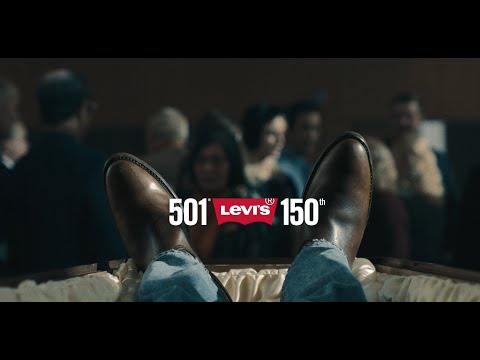
📺 Reinvention and Global Reach (1990s–2000s)
The 1990s and 2000s brought new challenges. Fashion-forward competitors like Diesel, Guess, and Calvin Klein began eroding Levi's dominance, offering more trend-driven styles and edgier advertising. Levi's responded by reinventing its approach.
Campaigns like "Live Unbuttoned" (2008) emphasized freedom and individuality, returning to the core values that had always defined the brand. The ads became more cinematic, with higher production values and a global perspective. Levi's began to consciously highlight diversity and inclusivity in its casting, reflecting the multicultural reality of its audience. The message was clear: Levi's belongs to everyone.
YouTube reference:

🌍 Modern Era: Inclusivity and Sustainability (2010s–2020s)
In the current era, Levi's advertising has evolved to address the values of a new generation. The "Live in Levi's" Campaign (2014–present) celebrates everyday authenticity, featuring real people from diverse communities around the world. The ads are less about aspiration and more about representation, showing how Levi's fits into the actual lives of actual people.
Sustainability has become a central theme. Levi's advertising now prominently features the brand's water-saving techniques, recycled materials, and commitment to reducing its environmental footprint. The company understands that for Gen Z consumers, a brand's values are as important as its products.
Recent campaigns have also embraced gender fluidity and social responsibility, positioning Levi's as a brand that not only reflects cultural shifts but actively participates in them. The jeans that once symbolized rebellion now symbolize inclusivity and environmental consciousness.
YouTube reference:

📊 Comparison Table: Levi's Advertising Evolution
| 1800s–1940s | Durability, utility | Two Horse Pull Test | (Print only) |
| 1950s–1960s | Rebellion, youth culture | Lifestyle ads with young models | Watch YouTube video |
| 1970s–1980s | Authenticity, nostalgia | 501 Blues | Watch YouTube video |
| 1990s–2000s | Freedom, global reach | Live Unbuttoned | Watch YouTube video |
| 2010s–2020s | Inclusivity, sustainability | Live in Levi's | Watch YouTube video |
Expert Analysis and Decade-by-Decade Evolution
Levi's advertising genius lies in its ability to sell identity, not just clothing.
1950s–1960s: Youth Rebellion. Levi's became the uniform of rock 'n' roll and counterculture, capturing the spirit of freedom and individuality.
1970s–1980s: Authentic Americana. The "501 Blues" campaign captured everyday life, reinforcing Levi's as authentic and deeply American.
1990s–2000s: Global Expansion. Facing competition, Levi's adapted with cinematic ads that appealed to international audiences while maintaining core values.
2010s–2020s: Inclusivity & Sustainability. The "Live in Levi's" campaign emphasizes diversity and eco-friendly production, aligning with Gen Z values.
🌍 Cultural Impact
Levi's advertising has shaped culture for over a century. The brand's campaigns have become cultural touchstones, referenced in academic studies, celebrated in museums, and remembered fondly by generations of consumers. They have reflected and influenced societal shifts—from the rebellion of the 1950s to the authenticity movement of the 1980s to the inclusivity revolution of today.
⚠️ Risks and Challenges
Levi's faces ongoing challenges. Fashion-forward competitors constantly threaten its relevance. The brand must avoid accusations of "greenwashing" in its sustainability messaging, ensuring that its environmental claims are backed by real action. And as it balances nostalgia with modern values, Levi's must continue to evolve without losing the authentic core that has sustained it for 170 years.
Conclusion
Levi's advertising evolution reflects 150+ years of cultural transformation. From durability to rebellion, authenticity to inclusivity, Levi's campaigns have consistently captured the zeitgeist. More than selling jeans, Levi's sells identity, belonging, and cultural resonance, ensuring its place as a legendary brand. By adapting to each era—durability in the 1800s, rebellion in the 1950s, authenticity in the 1980s, global reach in the 2000s, and inclusivity in the 2020s—Levi's demonstrates the enduring power of advertising to shape culture. In every era, the message remains the same: these are not just pants. They are a part of who we are.
Explore Levi's innovative campaigns in youth fashion advertising, showcasing how the brand connects with young audiences through creativity and style.
Discover how Levi's iconic ads shaped cultural trends and influenced fashion, music, and social movements throughout the decades. Explore their impact today.

Discover the most iconic holiday ads in U.S. history. Explore the creativity and nostalgia that shaped festive marketing campaigns over the years.

Discover the latest luxury fashion campaigns featuring your favorite celebrities. Explore stunning visuals and exclusive insights into high-end style trends.

Discover the actors who brought tech brands to life, showcasing their unique roles in advertising and brand representation. Explore their impact on the industry.

Discover the top actors who have made a splash in drink commercials. Explore rankings, insights, and memorable performances that quench your curiosity.

Discover the iconic personalities behind automotive advertising. Explore how famous faces have shaped car marketing and influenced consumer choices.

Discover Tom Hanks' impactful humanitarian ads that inspire change and promote kindness. Explore his commitment to making the world a better place.

Discover how Emma Watson champions sustainability through her impactful roles in eco-friendly ads, promoting a greener future for all.

Discover how Jeep ads have shaped cultural trends and influenced consumer behavior, showcasing the brand's impact on society and lifestyle choices.