











Discover the identity of the captivating singer featured in the YouTube Music ad. Uncover the artist behind the music and their latest hits.
Watch YouTube video
Release Date: 2026-02-28

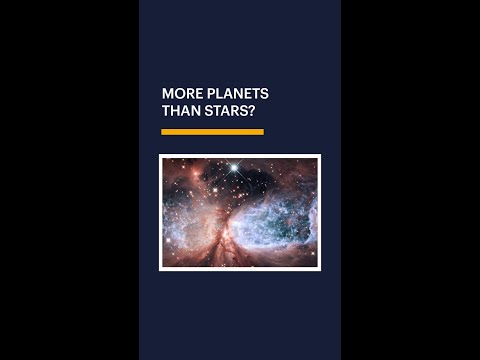
The CuriosityStream – Living Universe series has been updated for 2026 to reflect a staggering new reality: there are more planets than stars in our galaxy. With over 6,000 confirmed exoplanets as of early 2026, the statistical probability of life elsewhere has never been higher. This documentary explores the groundbreaking data from the James Webb Space Telescope (JWST) and the newly launched Pandora spacecraft, which together are identifying "biosignatures" in distant atmospheres.
This content is a must-watch for anyone who has ever looked at the night sky and wondered about our "cosmic neighbors." By focusing on the sheer volume of Earth-sized worlds—estimated at over 25 billion in the Milky Way alone—the series moves the conversation from science fiction to imminent scientific discovery.
🌟 Section 1: Could a Planet Hold Life?The video breaks down the criteria for habitability, moving beyond the simple "Goldilocks Zone" (liquid water) to more complex requirements. In 2026, astronomers are focusing on Superhabitable Planets—worlds that may actually be better suited for life than Earth.
Key scientific insights from the series include:
Impossible Atmospheres: Discover how JWST found a thick, heat-redistributing atmosphere on the scorched super-Earth LHS 3844b, a world previously thought to be a barren rock.
Hycean Worlds: Exploration of planets like K-218b, which may have hydrogen-rich atmospheres and vast surface oceans, providing a completely different blueprint for life.
The Trappist-1 Miracle: A deep dive into the system with seven Earth-sized planets, three of which sit firmly in the habitable zone.
Technosignatures: Learn how researchers are scanning these planets for artificial radio signals or atmospheric pollutants that would indicate an advanced civilization.
The primary objective of this series is to reframe our place in the cosmos. It provides value by translating the massive data sets of 2026 into a human narrative of exploration. The main message is that humanity is no longer just looking for planets—we are looking for homes. CuriosityStream aims to educate viewers on how we detect life across lightyears of space using the "transit method" and infrared spectroscopy.
📊 Section 3: Key Video Data| Element | Detail |
| Video Title | Living Universe: The 2026 Update |
| Author / Channel | CuriosityStream Original |
| Publication Date | January 2026 |
| Duration | 52:00 Minutes |
| Category | Science & Space Documentary |
| SEO Keywords | More Planets Than Stars, CuriosityStream 2026, Habitable Exoplanets |
Cutting-Edge Visuals: Features 2026-grade CGI powered by Unreal Engine 5, providing the most realistic renderings of exoplanet surfaces ever created.
Expert Testimony: Interviews with leading astrobiologists like Stephen Kane and Meredith Hughes regarding the "teenage years" of planetary systems.
Atmospheric Mapping: See the first-ever 3D vertical maps of alien atmospheres, a breakthrough achieved only recently by the JWST.
The "Are We Alone?" Timeline: A realistic projection of when we might officially confirm the first signs of extraterrestrial microbial life.
More Planets Than Stars CuriosityStream
Exoplanet Discoveries 2026
James Webb Space Telescope Life Search
Superhabitable Worlds vs Earth
Habitable Zone Planets 2026 List
Pandora Spacecraft Exoplanet Mission
The CuriosityStream – Living Universe 2026 update is a powerful reminder that we are part of a crowded, vibrant galaxy. As our tools become more sensitive, the silence of the universe is being replaced by the data of billions of potential living worlds.
Discover the identity of the captivating singer featured in the YouTube Music ad. Uncover the artist behind the music and their latest hits.
Discover the song featured in the Apple Music 2026 commercial. Uncover the artist and track details that are captivating listeners worldwide.
Discover the artist behind the captivating Spotify Wrapped campaign ad. Uncover their music journey and impact on the streaming world today.
Discover the catchy tune featured in the Spotify Premium 2026 commercial. Uncover the song's title and artist, and explore its impact on the ad's vibe.
Discover the captivating song featured in the Bose immersive sound ad. Uncover the artist and track details that enhance your listening experience.
Discover the artist behind the captivating Beats campaign commercial. Uncover the story and inspiration that brought this powerful ad to life.
Discover the stars of the latest Marshall speaker commercial and learn about their roles and impact on the brand's iconic image. Click to find out more!
Discover the catchy background song featured in the JBL portable speaker commercial. Uncover the artist and track details that make it unforgettable.
Discover the artist behind the captivating song in the Apple AirPods Pro ad. Uncover the details and enhance your listening experience today.