
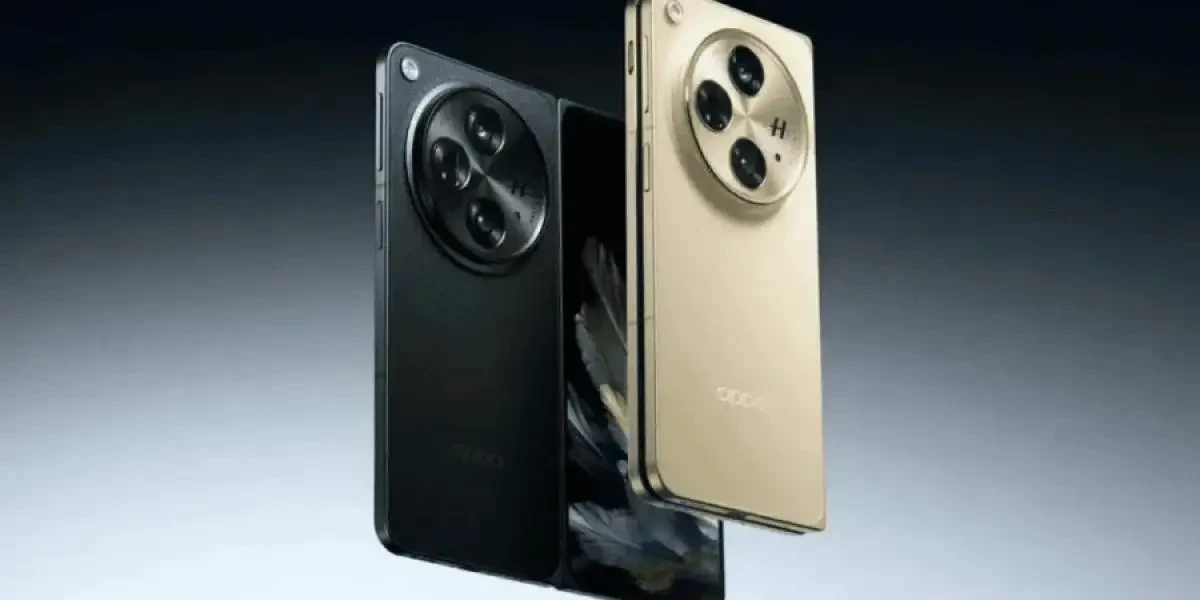
Découvrez le Oppo Find N5 dans notre test complet. Explorez ses fonctionnalités, ses performances et découvrez pourquoi il est le smartphone pliable le plus fin du marché!
Oppo a mis le paquet avec le Find N5, le présentant comme « le téléphone pliable le plus fin au monde ». Au-delà de la véracité de cette affirmation, la question qui m'est venue à l'esprit était de savoir si cette extrême finesse se traduirait par un confort d'utilisation au quotidien. Et la réponse est un oui retentissant: le Oppo Find N5 est devenu le téléphone pliable pliable que j'ai le plus apprécié jusqu'à présent. Lui dire adieu a été un véritable supplice.
Le marketing actuel met l'accent sur des chiffres impressionnants: mégapixels exorbitants, appareils photo multiples, puissance brute et énormes quantités de RAM. Cependant, une tendance nostalgique refait surface: l'obsession de la finesse extrême, une mode que j'ai déjà observée sur les téléphones d'avant le XXIesiècle. Et les appareils pliables n'échappent pas à cette tendance. Si le Honor Magic V3 m'avait déjà surpris par sa finesse, la proposition d'Oppo place la barre encore plus haut.
Test du Oppo Find N5: le pliable le plus fin
Spécifications techniques du Oppo Find N5
| Fonctionnalité | OPPO Find N5 |
| Affichage interne | Écran AMOLED de 8,12 pouces, 2480 x 2248 pixels, rapport écran/corps de 96 %, LTPO 120 Hz, 2100 nits (max.) |
| Écran externe | Écran AMOLED de 6,62 pouces, 2616 x 1140 pixels, rapport écran/corps de 92 %, LTPO 120 Hz, 2450 nits (max.) |
| Dimensions et poids | Plié: 160,87 x 74,42 x 8,93 mm; Déplié: 160,87 x 146,58 x 4,21 mm; 229grammes |
| Processeur | Qualcomm Snapdragon 8 Elite, GPU Adreno 830 |
| BÉLIER | 12/16 Go LPDDR5X |
| Stockage | 256/512 Go/1 To UFS 4.0 |
| Caméra frontale | Interne : 8 MP (f/2,4, 91º) ; Externe : 8 MP (f/2,4, 91º) |
| Caméra arrière | Objectif principal: 50MP (f/1,8, OIS, 89º); Téléobjectif: 50MP (f/2,7, OIS, 30x); Ultra grand-angle: 8MP (f/2,2, OIS, 116º) |
| Batterie | 5600 mAh, charge rapide SUPERVOOC 80 W, charge sans fil 50 W |
| Système opérateur | Android 15, ColorOS 15 |
| Connectivité | 5G, Wi-Fi 7, Bluetooth 5.4, GPS, GNSS, GLONASS, Galileo, USB-C (USB 3.1 Gen 2) |
| Autre | Haut-parleurs stéréo doubles, certification IPX6, IPX8 et IPX9 |
| Prix | - |
Design : fin, oui, mais pas seulement
Le Oppo Find N5 est présenté dans une boîte carrée qui dévoile le téléphone dès l'ouverture. L'écran interne présente un format 9,9:9, presque aussi carré que la boîte, ce qui lui confère une hauteur considérable une fois plié (format de l'écran externe: 20,7:9).
Son design se distingue par ses deux formats d'utilisation, sa finesse extrême et sa hauteur remarquable une fois plié. Oppo a utilisé des matériaux de haute qualité: un corps en aluminium massif et un dos en verre trempé. Les bords droits et biseautés offrent une prise en main confortable, plié comme déplié.
Cependant, le positionnement trop haut des boutons d'alimentation et de volume les rend difficiles à appuyer d'une seule main et l'accès au haut de l'écran est fastidieux. Le bouton d'alimentation intègre le lecteur d'empreintes digitales capacitif, ce qui oblige parfois à chercher son emplacement. Un positionnement plus centré améliorerait l'ergonomie.
Malgré l'emplacement des boutons, l'intégration du curseur de réglage du volume, hérité de OnePlus, est une excellente nouvelle. Mettre le téléphone en mode vibreur est un geste simple et rapide.
Ouvrir le téléphone demande également un effort: la charnière est très solide et maintient l'écran ouvert sous presque tous les angles, avec un pli à peine perceptible qui s'est creusé légèrement à l'usage, sans être exagéré. C'est sur le modèle pliable que j'ai le moins remarqué ce pli.
L'arrière du Oppo Find N5 est minimaliste, avec un module photo peu proéminent, ce qui favorise la prise en main. Cependant, ce design compact semble nuire à la qualité photographique, qui s'est avérée inférieure à mes attentes.
Écrans: un plaisir visuel avec les inconvénients inhérents au format
Un petit écran externe vertical et un grand écran interne presque carré: la polyvalence d'un écran pliable vous permet de choisir celui qui convient le mieux à vos besoins. Les deux écrans de l'Oppo Find N5 offrent une excellente qualité, avec toutefois une différence essentielle: l'écran interne pliable est plus visible en plein soleil. L'écran externe rend le contenu difficile à lire dans des conditions de forte luminosité.
Les deux écrans sont parfaitement calibrés par défaut, offrant une transition visuelle fluide, un taux de rafraîchissement variable jusqu'à 120 Hz, un contraste élevé et une sensibilité tactile élevée. Comme d'habitude, le pli de la charnière est perceptible lorsque l'on glisse les doigts, un compromis acceptable pour un smartphone pliable. De plus, l'écran pliable est plus sensible aux marques et nécessite une manipulation prudente avec les ongles et les stylets (il est compatible avec les stylets).
Jouer à des jeux et regarder du contenu multimédia offre une expérience immersive, surtout lorsque le contenu s'adapte au format de l'écran pliable. Les jeux exploitent pleinement l'écran interne, même si certains peuvent afficher des bandes noires s'ils ne sont pas optimisés.
Oppo inclut des améliorations visuelles basées sur la puissance et l'IA du téléphone, telles que la mise à l'échelle des vidéos et des images pour améliorer leur résolution (paramètres optionnels dans la personnalisation de l'écran).
Son : en adéquation avec sa catégorie
La qualité audio globale est excellente, quelle que soit la source. Le Oppo Find N5 est équipé de puissants haut-parleurs stéréo externes qui ne produisent pas de distorsion excessive à volume élevé, bien qu'ils présentent une certaine stridence dans les aigus aux niveaux maximum. Mes mesures sur téléphone ont atteint un maximum de 90 dB.
With Bluetooth headphones, the listening experience was pleasant, with a clear and slightly flat sound. I missed some bass reinforcement, even with the optimization enhancements and a ten-band equalizer (only with headphones connected). The Oppo Find N5 supports Hi-Res audio and most Bluetooth codecs, and includes a player anchored in the front camera (folded), similar to iOS's Dynamic Island.
With wired headphones, the phone offers very good quality through the USB-C port, even slightly better than the Bluetooth connection. It does not have an analog audio output (requires an external DAC) but does have DisplayPort, allowing you to project the screen onto a monitor or television with the appropriate USB-C cable.
Performance: Unable to Sustain Maximum Power for Long
I have tested several phones with the Snapdragon 8 Elite and confirmed its excellent performance and efficiency in light tasks. The Oppo Find N5 inherits these benefits, although with the usual limitation of noticeable "throttling." The chip offers very high raw power figures but fails to maintain them for extended periods. Performance stability is around 49% (according to 3D Mark data), a somewhat low figure. However, for everyday use, the demands of apps and games do not usually reach these peaks.
The drop in sustained power is due to the phone's thinness and its limited ability to dissipate heat. Despite this, the Oppo Find N5 does not overheat excessively, neither during charging nor in long gaming sessions (hence the drop in sustained performance).
The phone runs very smoothly in all tasks and executes games with maximum graphics settings. Enjoying a Genshin Impact perfectly adapted to the unfolded screen dimensions and with maximum graphics is an absolute delight.
Below is a comparative table of the Oppo Find N5's performance with similar devices in benchmark tests:
| Device | Processor | RAM | Geekbench 6 (Single/Multi) | 3D Mark Wild Life Unlimited | 3D Mark Wild Life Stress Unlimited | PCMark Work |
| Oppo Find N5 | Qualcomm Snapdragon 8 Elite | 16 GB | 2864/7902 | 25334 | 25004/12404 | 15059 |
| Honor Magic V3 | Qualcomm Snapdragon 8 Gen 3 | 12 GB | 1366/4992 | 18727 | 18680/9337 | 18068 |
| Samsung Galaxy Z Fold 6 | Qualcomm Snapdragon 8 Gen 3 for Galaxy | 16 GB | 2012/5462 | 12672 | 13052/11600 | 15691 |
| Huawei Mate X5 Ultimate Design | Kirin 9010 | 16 GB | 1312/6541 | 15412 | 18431/15412 | 16959 |
| Samsung Galaxy S25 Ultra | Qualcomm Snapdragon 8 Elite | 12 GB | 3851/9451 | 23731 | 23965/19531 | 25251 |
| iPhone 16 Pro Max | Apple A18 Pro | 8 GB | 3106/7799 | 16809 | 16906/8538 | - |
The rest of the hardware works perfectly: fast, stable, with more than enough RAM and storage, zero problems with Wi-Fi and 5G networks, the fingerprint reader under the power button rarely causes issues beyond its high position, the phone unlocks instantly, includes a dual nano SIM tray, and is also compatible with an eSIM. It allows two simultaneous numbers (two physical SIMs or eSIM and SIM).
Software: ColorOS 15 Suits it Well, the AI Better
The Oppo Find N5 comes updated to Android 15 with the latest version of its layer, ColorOS 15. The software offers a large number of options, as usual, and does not include an excess of pre-installed apps beyond Oppo's own. The gallery is duplicated (Google Photos comes pre-installed), and it has its own app store.
In my experience with the evolution of ColorOS, I have appreciated the brand's effort to make a layer quite similar in design to Google's Android (within logical limits). The extreme customization, the option to apply a Material look to the icons, the app drawer, and a minimalist interface style are aspects I like. However, I didn't like not being able to adjust the shortcut grid on the desktop (limited to 4x7).
As I mentioned, the Oppo Find N5 is highly customizable, offers many advanced options, is well adapted to extended use (floating apps, parallel window, expanded multitasking), apps adapt to the screen size being used, and in general, the phone allows you to make good use of the extra extension of the internal screen. Working with this phone is very comfortable.
Artificial intelligence is a key feature, and Oppo's AI has earned a recognizable place in ColorOS. In my opinion, it is very well implemented. In addition to text summaries, text creation, and transcription (the floating side bar activates AI in almost any app), the real-time translator was very useful to me. By simply activating it from the floating menu, I could automatically translate all navigation in Chinese to Spanish, with the text placed in its original position.
Another point where AI stands out positively is in photo editing. Oppo's gallery includes its own magic image editor that allows you to remove unwanted objects and people (with very good results) and generate new portions of the image. Not only that, but this AI can also upscale photos, correct blur, and remove reflections. The entire process requires internet but has no added cost.
Battery: Surprisingly Long-Lasting
The battery life is one of the aspects that surprised me the most about the phone, especially considering its thin and foldable design. Oppo has integrated a 5600 mAh battery made of silicon and carbon, which is not only generous on paper but also in practice. With excellent standby consumption supported by the efficiency of the Snapdragon 8 Elite, the Find N5 does not consume more than 2% of battery in an 8-hour night.
If standby consumption is minimal, consumption with the screen on is not excessive either, even when unfolding the internal foldable screen. On average, I got almost two days of autonomy, even with intensive use outside the home, obtaining about seven or eight hours of screen time with games and streaming consumption (folded and unfolded). It has more battery than many "normal" phones, even those with larger capacities.
The phone charges very quickly. It includes the charger in the box and does not overheat excessively during the process. Consumption is very contained, the battery capacity is large (there are two, one in each wing of the phone), and the 80 W SuperVOOC fast charging (with charger included) is outstanding. It also has 50 W fast wireless charging and reverse wireless charging. The charging times with its cable and charger were:
- 5 minutes of charge: 15% battery.
- 10 minutes of charge: 27% battery.
- 15 minutes of charge: 40% battery.
- 20 minutes of charge: 50% battery.
- 25 minutes of charge: 60% battery.
- 30 minutes of charge: 70% battery.
- Total: 51 minutes.
Photography: The Very Thin Thickness Ends Up Being Noticeable
An extremely thin foldable phone usually entails a smaller battery and a significant thickness in the area of the rear cameras. We have already seen that the battery of the Oppo Find N5 is not exactly small, which plays in its favor. And the lenses do not protrude excessively from the body, which is initially positive for grip. However, this compaction seems to affect the photographic quality, which was lower than my expectations.
Oppo's Find N5 camera system is composed of:
- Main camera: 50-megapixel sensor (f/1.8, 21mm equiv., 1/1.56", PDAF, two-axis OIS).
- Ultra-wide camera: 8-megapixel sensor (f/2.2, 15mm equiv., 1/4", 116º).
- Periscope telephoto camera: 50-megapixel sensor (f/2.7, 75mm equiv., 1/2.75", 3x optical zoom, two-axis OIS).
- Internal and external selfie camera: 8-megapixel sensor (f/2.4, 21mm equiv., 1/4", 91º).
On paper, the performance does not seem bad, especially considering the extreme thinness of the OPPO Find N5 and the low thickness of the camera module. However, this size reduction implies a shorter focal length and sensors that are not too large.
Added to the physical limitations of the cameras is the automatic shooting system: in my tests, all tend to underexpose. Outdoors and with plenty of light, there are usually no problems (the ultra-wide shows watercolors with some zoom), but when the light drops, it is difficult to distinguish the elements of the image with the naked eye.
The automatic HDR with the main camera needs to be more active in automatic shots: the darkest areas tend to be very underexposed. In addition, the camera app tends to be very conservative with the shutter speed, even when the main and telephoto cameras are stabilized. The result is an underexposure that does not usually correspond to the general lighting of the scene.
The color treatment is good, respecting the original colorimetry and saturation. However, the detail in the automatic processing is not the best, showing watercolors with some zoom even with good lighting. At night, this situation is more pronounced.
In backlight situations, with a somewhat limited dynamic range, the shots suffer especially, resulting in an indistinguishable foreground after processing.
Le mode automatique du Oppo Find N5 m'a semblé très améliorable, obtenant de meilleurs résultats en mode manuel, en ajustant les prises de vue au millimètre près. Il enregistre en RAW une taille moyenne d'environ 30 Mo par photo.
Le téléphone dispose d'un mode manuel polyvalent et performant, mais il ne s'adresse pas uniquement à ceux qui souhaitent gérer les capteurs en détail: Oppo propose plusieurs modes ludiques. Les modes portrait habituels (flou naturel avec profilage précis des contours), le mode nuit (fonctionne correctement dans les situations très sombres), la haute résolution pour exploiter les 50mégapixels du capteur principal (les photos sont plus détaillées), divers filtres d'image, des modes beauté, la création d'autocollants… Et il porte le label Hasselblad, même si sa marque est moins visible que sur le Find X.
J'ai rassemblé toutes les photos et vidéos dans ce dossier Google Photos. Elles sont intactes, telles qu'elles ont été prises sur mon téléphone.

Découvrez la revue Google Pixel 9a, avec une analyse approfondie, des informations sur les performances et l'appareil photo

Découvrez comment utiliser efficacement les cartes de tarot avec le guide complet de Balatro.